



The Federal Government has unveiled a strategic partnership between the Ministry of Solid Minerals Development and the National Identity Management Commission (NIMC) to deploy digital identity technology in tracking mining activities, combating illegal mining and strengthening governance across the solid minerals sector.
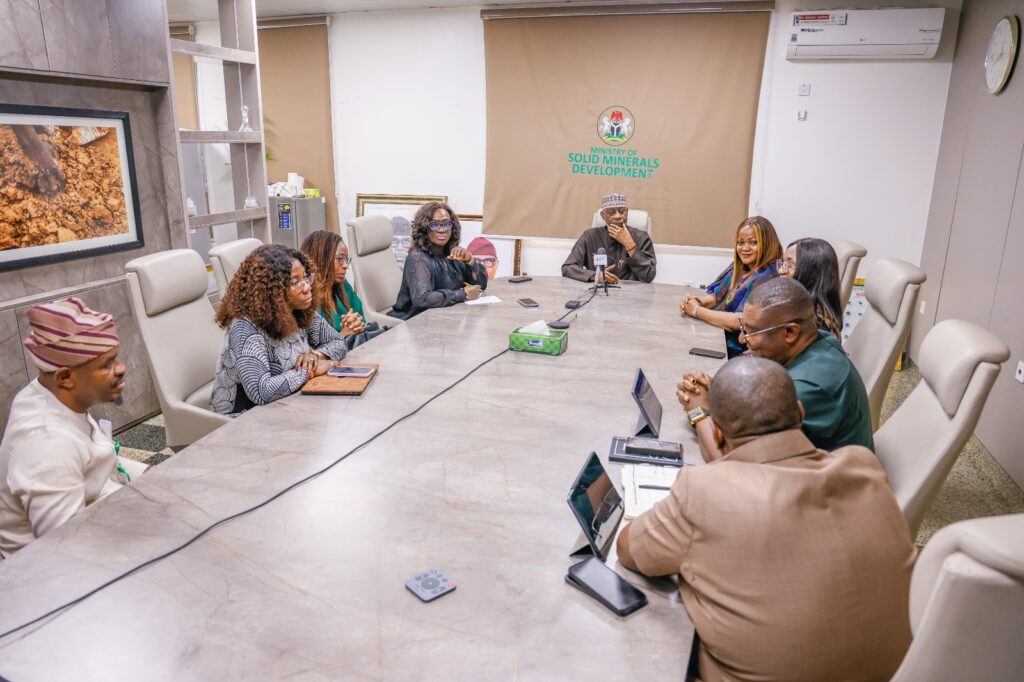
Minister of Solid Minerals Development, Dr. Dele Alake, announced the collaboration while receiving the Director-General of NIMC, Dr. Abisoye Coker-Odusote, and her management team during a courtesy visit to his office in Abuja.

Alake described NIMC as a key institution in Nigeria’s development architecture, stressing that technology, reliable data and digital identity had become indispensable tools for effective governance, security and economic development.
“NIMC occupies a critical position in translating policy into reality. Governance today is driven by data, technology and credible identity systems,” he said.
The minister explained that the ongoing reforms in the mining sector require stronger collaboration with NIMC to improve transparency, accountability and effective monitoring of mining operations.

“Without identification, we cannot trace; we cannot track, and insecurity will flourish. In the solid minerals sector, we need effective tracking of both legal and illegal operations. A credible identity ecosystem will strengthen regulation, improve enforcement and support our efforts to sanitise the sector,” Alake stated.
He identified technology, statistics, data gathering and digital identity as critical tools for evidence-based policymaking, efficient licensing, investment promotion and national development.
Earlier, NIMC Director-General, Dr. Abisoye Coker-Odusote, said the newly enacted National Identity Management Commission Act, 2026, has provided a stronger legal framework for Nigeria’s digital governance ecosystem.
She noted that integrating digital identity into the mining sector would improve database integration across government agencies, strengthen regulatory compliance, enhance security and law enforcement, improve monitoring of operators and support the implementation of Community Development Agreements in mining host communities.
According to her, the Commission’s digital identity infrastructure would enable government agencies to build reliable databases, improve service delivery and deepen transparency in public administration.
Both organisations pledged to deepen collaboration through technology-driven initiatives to support reforms in the mining sector, strengthen governance, improve security and promote sustainable development.
The meeting also highlighted the significance of the NIMC Act, 2026, which is expected to accelerate secure identity verification, improve inter-agency data sharing, enhance public service delivery and support Nigeria’s transition to a modern digital economy.
The statement was signed by Lara Owoeye-Wise, Special Assistant on Media to the Honourable Minister of Solid Minerals Development.