


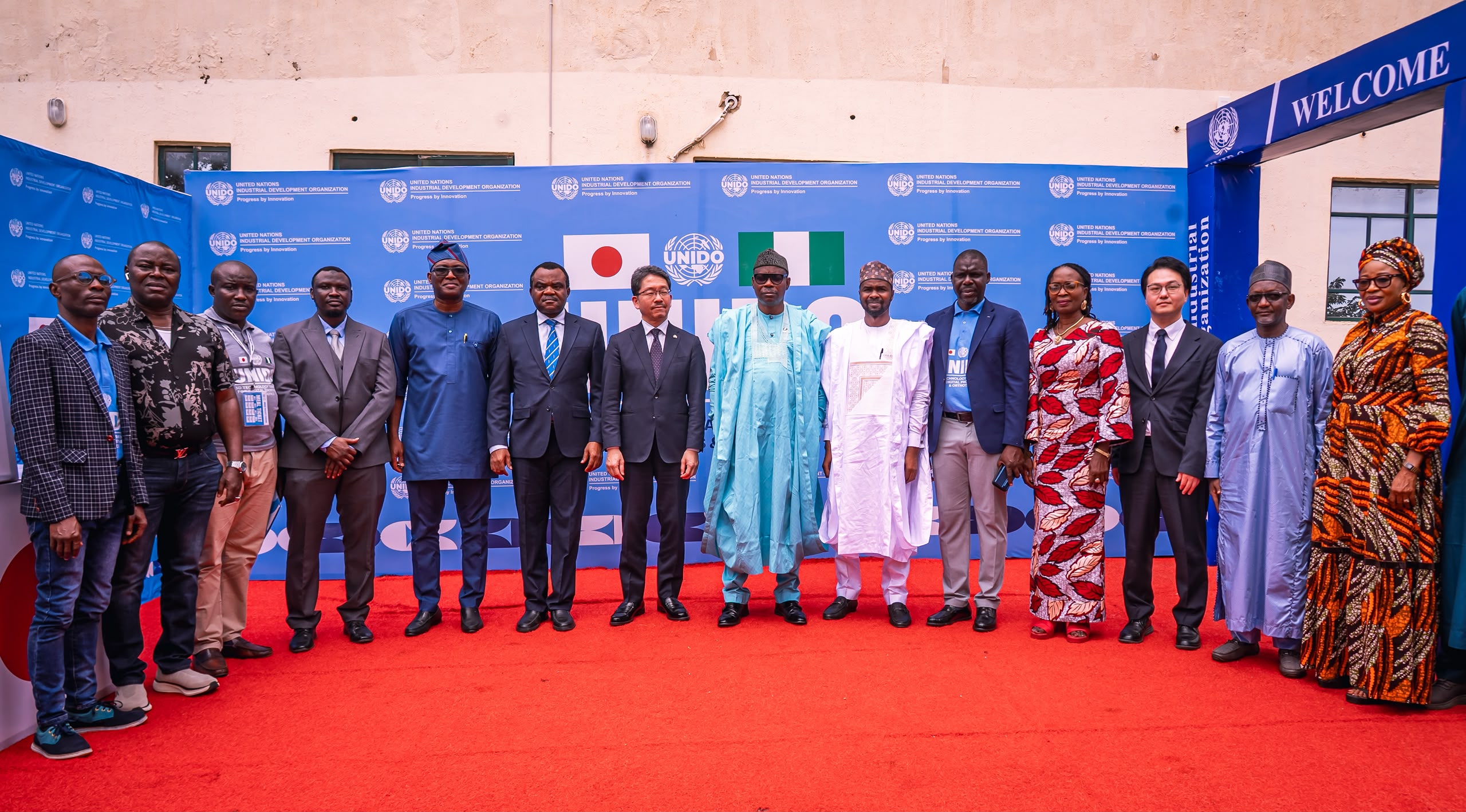
The Federal Government has unveiled a 3D-printed prosthetics technology designed to improve access to artificial limbs and other assistive devices, reduce production time and strengthen local capacity in Nigeria’s rehabilitation sector.
Minister of State for Health and Social Welfare, Dr Iziaq Adekunle Salako, disclosed this on Thursday in Abuja while declaring open a showcase of the technology at the Medical Rehabilitation Therapists Board (MRTB) National Secretariat, Daki-Biyu, Jabi.
The initiative is being implemented under a United Nations Industrial Development Organisation (UNIDO) project, “Transferring Japanese 3D-Printed Prosthetics Technology to Support Landmine Victims in Africa”, with funding from the Government of Japan.
Salako said the project, introduced in Nigeria in 2024, marked an important step towards modernising prosthetics and orthotics services, improving rehabilitation outcomes and developing technical expertise within the country’s healthcare system.
He said the technology uses artificial intelligence, digital scanning, computer-aided design (CAD) and 3D printing to support faster and more efficient production of prosthetic devices.
According to him, the digital system could improve consistency in design, reduce production timelines and help lower costs, thereby expanding access to rehabilitation services.
The minister said Nigerians requiring prosthetic devices often face challenges such as high costs, long distances to rehabilitation centres, limited availability of skilled professionals, production delays and difficulty accessing suitable materials.
“These challenges can affect mobility, education, employment, family life, and participation in the community,” he said.
However, Salako warned that technology must remain centred on the needs of the patient, stressing that producing a prosthetic device was only one component of comprehensive rehabilitation.
“Technology must always serve the person. A digital scan or a printed component is not, by itself, a complete rehabilitation service,” he said.
He explained that proper rehabilitation must include professional assessment, appropriate design and fitting, patient education, follow-up, maintenance and adjustments.
Salako also stressed that the new technology was not intended to replace existing prosthetic solutions and expertise in Nigeria, but to complement and strengthen them.
The equipment supplied under the project includes P&O Printer 3.0 systems, 3D printers, 3D scanners, testing devices, replacement components and specialised printing consumables.
The minister commended the Japanese government for funding the initiative and praised UNIDO for its leadership in implementing the technology-transfer project.
He also acknowledged Instalimb Japan for its technical expertise and contribution of equipment and knowledge, while commending the MRTB and Nigerian institutions and professionals participating in the programme.
Salako urged institutions benefiting from the technology to put in place sustainable plans for equipment management, staff training, maintenance, consumables, quality assurance and patient follow-up.
He said continuous training was necessary to ensure that Nigerian professionals could keep pace with developments in technology, materials and rehabilitation practice.
The minister further challenged the MRTB to ensure that the technology was introduced responsibly and in line with professional standards.
He said the project could help create a wider prosthetics and orthotics ecosystem involving healthcare, education, technical skills, innovation, manufacturing and entrepreneurship.
Salako urged Nigerian entrepreneurs, engineers, technicians, health professionals, educators and manufacturers to explore opportunities in rehabilitation technology.
He said greater local production could create jobs, encourage private-sector participation and reduce the country’s dependence on imported assistive devices.
The minister, however, said affordability, safety, quality control and reliable supply chains for components and consumables must remain central to the development of the sector.
He also called for persons with disabilities and their representative organisations to be involved in the development and improvement of rehabilitation services.
According to him, the experiences of users should guide decisions on how the technology is introduced, services organised and the success of the programme measured.
Salako disclosed that the Federal Government had made a budgetary provision for a state-of-the-art centre at the MRTB to accommodate training on the 3D technology.
He said the investment demonstrated the government’s commitment to sustaining the gains of the project beyond the initial technology-transfer phase.
The minister said the Federal Government’s National Policy and Strategic Plan for Rehabilitation and Assistive Technology would also provide a framework for expanding access to rehabilitation services and assistive technology.
He urged stakeholders to translate the policy into concrete action through stronger partnerships, trained personnel, appropriate infrastructure and sustainable financing.
“No single institution can achieve these goals alone. We must sustain this spirit of partnership after today’s showcase,” Salako said.
He formally declared the showcase open, urging stakeholders to use the initiative to share knowledge and develop practical strategies for responsibly expanding access to 3D-printed prosthetics for Nigerians who require rehabilitation and assistive devices.


