


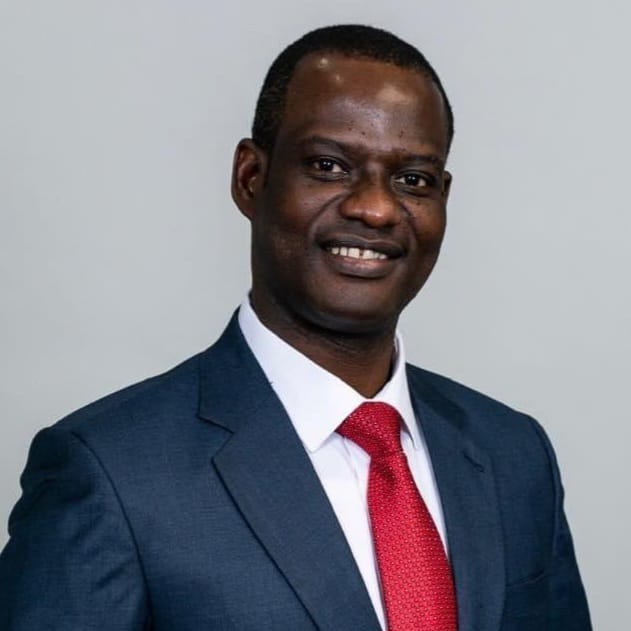
The Federal Government has unveiled fresh measures to cushion Nigerians from the impact of rising petrol prices, including a 30-day discount at NNPC Limited filling stations, a proposed ₦1,350 per litre ceiling on petrol ex-gantry or landing costs and increased cash transfers to vulnerable households.
Minister of Finance and Coordinating Minister of the Economy, Prof. Taiwo Oyedele, announced the measures on Thursday at a press briefing in Abuja on fuel prices and the subsidy debate.
Oyedele said the package was designed to provide immediate relief to households and businesses without returning the country to a blanket petrol subsidy regime.
The minister, who briefed journalists alongside the Group Chief Executive Officer of NNPC Limited, Heineken Lokpobiri, the Comptroller-General of the Nigeria Customs Service and the Executive Chairman of the Presidential Initiative on Compressed Natural Gas (Pi-CNG), among others, acknowledged the hardship caused by higher fuel prices.
He said NNPC Limited would offer a discount on petrol sold at its stations for the next 30 days, with priority given to public transport operators across the country.
Oyedele also disclosed that the government was negotiating a ceiling of ₦1,350 per litre for petrol ex-gantry or landing costs as part of efforts to shield consumers from sharp fluctuations in international crude prices and the foreign exchange market.
Under the proposed arrangement, he explained, refiners and importers would absorb any temporary shortfall when their costs rise above the ceiling and recover the difference when crude prices or exchange rates become more favourable.
He stressed that the arrangement should not be interpreted as a subsidy or price control, describing it instead as a mechanism to smoothen pump-price fluctuations and provide greater certainty for consumers and businesses.
The ceiling, he said, would be reviewed monthly, with the figures made public to promote transparency.
Cash transfers, cheaper credit for Nigerians
According to Oyedele, the Federal Government is also working to increase funding for cash transfers to vulnerable households while providing subsidised credit for small businesses and consumers.
He said government was taking steps to remove illegal road taxes and levies that increase transportation and logistics costs and would accelerate the deployment of CNG-powered vehicles in partnership with state governments.
The minister also disclosed plans to consider an excess profit tax on operators found to be exploiting consumers along the energy value chain.
He said proceeds from such a tax would be channelled exclusively into measures to cushion fuel-price pressures, including transport support and vouchers for vulnerable urban minimum-wage earners.
Oyedele added that the Federal Government would work with the National Assembly on enhanced tax relief for low-income earners under the proposed 2027 Finance Bill.
FG plans strategic fuel reserve
Another major measure is the planned establishment of a National Strategic Fuel Reserve, which would enable government to release refined petroleum products into the market during global disruptions or periods of hoarding that threaten supply and price stability.
Oyedele said the reserve would not be used to fix petrol prices or restore subsidies, but to prevent artificial scarcity, discourage market manipulation and reduce the impact of global energy shocks.
He also disclosed plans for forward sales of crude oil to domestic refineries as production increases and previously committed volumes become available.
According to him, the arrangement would help protect domestic petrol prices from excessive volatility in the international market.
The minister said government was also reviewing regulatory costs that contribute to the cost of doing business and ultimately push up the prices of goods and services.
He said improved traffic management in major cities would help reduce fuel consumption, while the address codes recently introduced by NIPOST would make logistics operations more efficient and affordable.
Global oil shock pushes petrol to ₦1,400
Oyedele attributed the latest surge in petrol prices largely to a global energy shock linked to the conflict in the Gulf, noting that Brent crude had risen above $100 per barrel.
He said petrol, which sold for about ₦830 per litre when crude was around $70 per barrel before the conflict, now averages about ₦1,400 per litre.
While acknowledging the pressure on households and businesses, the minister maintained that returning to a blanket petrol subsidy would expose the country to serious fiscal and economic risks.
He estimated that restoring petrol to its pre-reform price would cost the government more than ₦20 trillion annually, while a pump price of ₦500 per litre would require over ₦16 trillion every year.
Such expenditure, he warned, would have implications for government funding of salaries, pensions, schools, hospitals and security.
Subsidy removal freed ₦15.8trn — FG
Oyedele said the removal of petrol subsidy had released ₦15.8 trillion to the Federation Account between June 2023 and December 2025, with states and local governments receiving ₦10.4 trillion.
He said part of the savings, alongside additional independent revenue and borrowing, had been deployed to higher wages, infrastructure, electricity subsidy and social transfers, while some funds were used to stabilise the economy.
The minister said the government had also provided relief through tax and duty waivers on petroleum products, putting the value of waivers on petrol alone at more than ₦3.3 trillion between January and September 30, 2026.
According to him, the waivers currently translate to savings of between ₦400 and ₦600 per litre for consumers when compared with African and global averages.
Over 120,000 vehicles now run on CNG
Oyedele also highlighted the expansion of CNG as an alternative to petrol, saying more than 120,000 vehicles were now operating on CNG nationwide.
He said the programme was supported by more than 400 conversion centres, 96 refuelling stations and 18 L-CNG stations.
More than 550 CNG buses, he added, had been deployed, with transport fares dropping by between 30 and 50 per cent in areas where the buses operate.
The minister said the Federal Government would continue to focus relief on vulnerable Nigerians rather than return to a blanket subsidy.
“We remain open to ideas. But any credible proposal should answer three questions: What will it cost? How will it be funded sustainably? And what pump price will it deliver?” Oyedele said.
He added that the government was working on a comprehensive package of fiscal measures aimed at reducing inflation to single digits in the near term.