


Calgary, Canada — Nigeria and Canada have agreed to strengthen cooperation on carbon capture, emissions reduction, and natural gas development as both countries deepen energy transition partnerships at the 2026 Global Energy Show in Calgary.
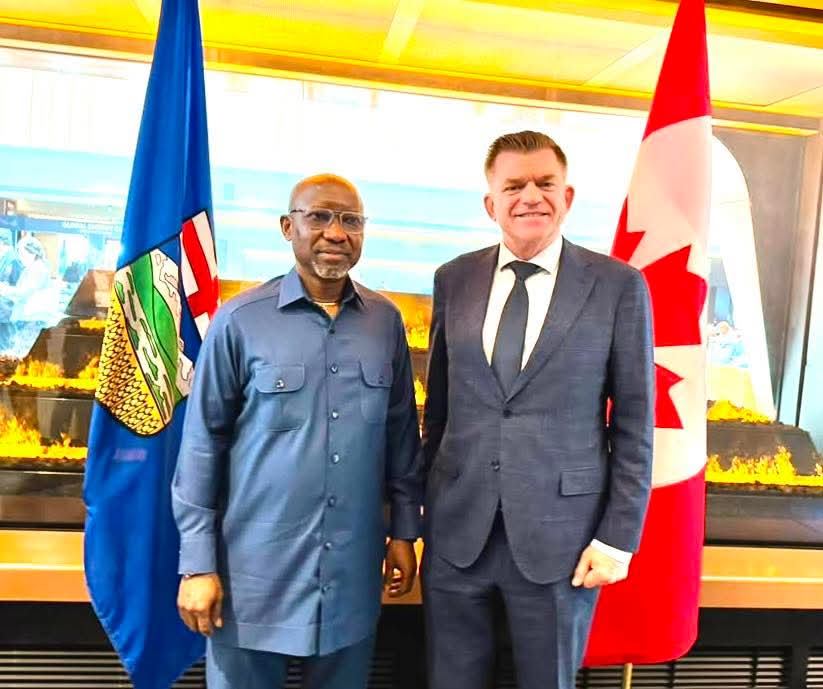
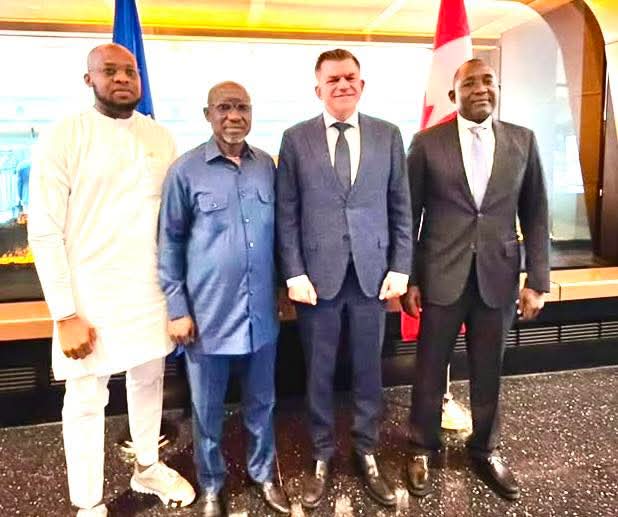
The agreement emerged from a high-level meeting between Nigeria’s Minister of State for Petroleum (Gas), Rt. Hon. Ekperikpe Ekpo, and Alberta’s Minister of Energy and Minerals, Hon. Brian Jean, on the sidelines of the summit.
Both officials underscored the need for closer collaboration on carbon capture and storage (CCS) technologies as part of global efforts to reduce greenhouse gas emissions and promote environmental sustainability.
Ekpo highlighted Nigeria’s vast gas potential, estimated at about 215 trillion cubic feet (TCF) of proven reserves and over 600 TCF of unproven deepwater reserves, describing it as a strategic foundation for the country’s energy transition and net-zero ambitions.
“We are committed to advancing policies that position Nigeria for net-zero emissions while unlocking our vast gas resources for global energy security,” Ekpo said, noting ongoing progress in projects such as TotalEnergies’ OML 100 development.
He also sought Canada’s technical support in capacity building, technology transfer, and knowledge sharing to strengthen Nigeria’s carbon reduction initiatives.
In response, Minister Brian Jean said Canada possesses advanced expertise in carbon management and is willing to collaborate with Nigeria through technical partnerships and training programmes for engineers and energy professionals.
Both sides agreed to establish a joint technical working group to drive implementation of the proposed cooperation framework.
At a separate Nigeria–Canada Gas Commercialisation and Investment event organised by the Gas Aggregator Company of Nigeria (GACN), Nigeria reaffirmed its commitment to positioning itself as a key global gas hub.
The Chief Executive of the Nigerian Upstream Petroleum Regulatory Commission (NUPRC), Mallam Rabiu Umar, said Nigeria is shifting from “reserve-based rhetoric to utilisation-driven performance,” stressing that the country is fully open to investment under its Decade of Gas Initiative (2021–2030).
“We are here to present an industry that is structured, open for business, and ready for global partnership,” Umar said.
He added that Nigeria is actively pursuing industrialisation through gas utilisation, aiming to strengthen energy security, attract foreign investment, and support global decarbonisation goals.