


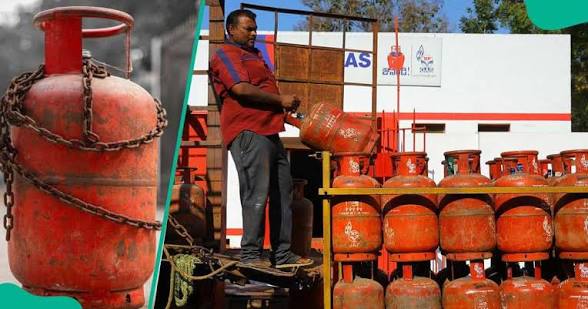
Abuja — The Nigerian Midstream and Downstream Petroleum Regulatory Authority (NMDPRA) has moved to curb alleged profiteering in the liquefied petroleum gas (LPG) market as cooking gas prices continue to rise nationwide, despite improved supply levels and increased stock availability.
The intervention followed a gas emergency meeting convened by the Minister of State for Petroleum Resources (Gas), where NMDPRA’s Authority Chief Executive, Engr. Farouk Ahmed, raised concerns over market distortions driving persistent price increases.
According to the regulator, profiteering along the distribution chain—particularly by wholesalers and retailers—remains a major factor behind the sustained high cost of cooking gas, alongside global supply disruptions, infrastructure gaps, and domestic supply constraints.
“The pricing behaviour in the market is not fully reflective of supply improvements,” the authority noted, indicating ongoing monitoring and enforcement actions against operators found engaging in exploitative pricing.
Data presented at the meeting showed that Nigeria’s average daily LPG supply rose to 5,040 metric tonnes in June 2026, up from 4,262 metric tonnes in May, while national stock sufficiency improved from 11 days to 22 days within the same period.
Despite this improvement, retail prices have remained elevated across regions. In the North Central, LPG sells between ₦1,066 and ₦1,224 per kilogram, while the North-West records ₦1,076 to ₦1,234. Prices in the North-East have reached as high as ₦1,244 per kilogram, with similar trends in southern markets.
NMDPRA attributed the disconnect between supply growth and pricing to structural inefficiencies and deliberate market exploitation.
The regulator also disclosed that part of Nigeria’s locally produced LPG continues to be exported, worsening domestic shortages. It noted that 100 percent of Chevron’s LPG output during the review period was exported, reducing volumes available for local consumption.
While acknowledging improvements in overall supply coverage—from 78.7 percent in 2024 to 88.4 percent in 2025—the authority said the figure has slipped to 86 percent in 2026 year-to-date, with a recorded deficit of 91,966 metric tonnes.
To address the situation, NMDPRA said it is intensifying enforcement, expanding import permits, enforcing domestic supply obligations, and working with producers to redirect more LPG into the local market. It also pledged support for infrastructure expansion and storage capacity development.
Analysts say the development highlights a growing contradiction in Nigeria’s energy sector—rising production alongside persistent domestic price pressure—driven by weak distribution systems and export-heavy supply patterns.
For millions of households relying on LPG as a cleaner energy source, sustained price increases continue to raise concerns over affordability and energy transition goals.