


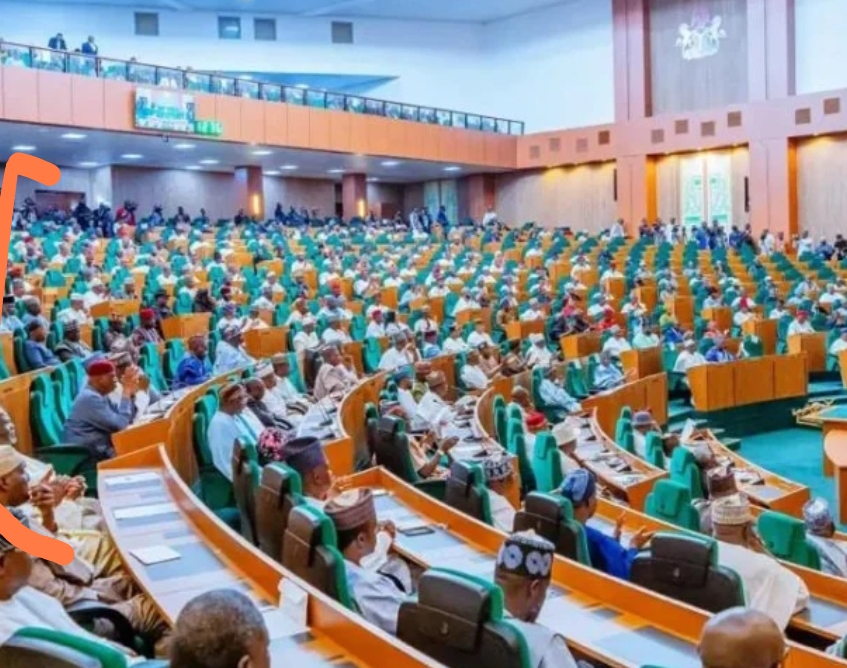
The House of Representatives has stepped down a bill seeking to establish the Nigeria Mines Ranger Service (NMRS) following a heated debate over provisions that could give the proposed agency investigative powers and encroach on the constitutional responsibilities of the Nigeria Police Force.
The controversy centred on Clause 23 of the bill, which empowers the proposed service to obtain information and access records considered necessary for the discharge of its duties.
Deputy Speaker of the House, Rt. Hon. Benjamin Okezie Kalu, questioned the need to confer such powers on the mining rangers, warning that the provision could create a conflict with the existing mandate of the police.
The bill, titled A Bill for an Act to Establish the Nigeria Mines Ranger Service to Prevent and Combat Illegal Mining, Artisanal Mining and Other Crimes and Related Matters (SB.253), is a Senate Bill sponsored by the Leader of the House, Hon. Julius Ihonvbere.
It came up for consideration during Wednesday’s Committee of the Whole, where lawmakers disagreed over the extent of the proposed rangers’ authority to investigate suspected illegal mining activities and obtain private information.
Raising the concern, Kalu asked whether the rangers were expected to conduct police investigations or simply arrest suspects and hand them over to the appropriate authorities.
“These rangers, are they going to be performing the work of the Police? I was thinking they will arrest and hand over to the Police for investigation. That is not what I am seeing in Clause 23,” he said.
The Deputy Speaker argued that granting the rangers access to individuals’ and organisations’ records could amount to giving them investigative powers traditionally exercised by the police.
“That is investigation. It is police that will have the right to go into the record of individuals. Are you telling me that a mining ranger can, when they are invited against you or your properties or your premises, have access to your private information?” he queried.
In his response, Ihonvbere acknowledged that the provision could be amended but maintained that the rangers needed some preliminary investigative powers to establish facts before handing cases over to the police.
He argued that without preliminary checks, the proposed officers might not be able to provide the police with adequate information for prosecution.
The House Leader, however, insisted that the provision was not intended to transfer the police’s responsibilities to the proposed agency.
Kalu remained concerned, insisting that the police must retain control of investigations to avoid jurisdictional clashes between the two institutions.
He warned that allowing the rangers to exercise independent investigative powers could conflict with the Constitution and the Police Act.
“The ranger should be under the police in terms of investigation. So, if they are carrying out the duty of the Nigeria Police, which the Constitution and the Police Act have given to the Police, there will be a conflict,” he said.
Defending the provision further, Ihonvbere said preliminary checks would help the rangers distinguish between genuine illegal miners and innocent persons who might be wrongly arrested.
He cited recent incidents in which people allegedly unconnected with illegal mining were apprehended, arguing that the proposed provision would help prevent such mistakes before suspects were handed over to the police.
But Kalu insisted that once there was reasonable suspicion and an arrest was made, the police should take over in line with the law.
“Anything contrary to that will be usurping the office of the Nigeria Police. I have a problem with that so that we don’t end up creating something that will work against the grund norm of our country,” he said.
Following the disagreement, lawmakers agreed to step down the bill for further legislative engagements and possible amendments to the contentious provision.
Announcing the decision, Kalu expressed dissatisfaction with the drafting of the bill, particularly Clause 23, which he said required further scrutiny.
“We will step this bill down for further legislative engagements. Bill stepped down by the leave of the House. I am not impressed by the drafting of the bill because Clause 23 doesn’t make so much sense to me,” he ruled.
The bill’s consideration is therefore on hold pending further legislative review of the proposed rangers’ powers and their relationship with existing law enforcement agencies.

