


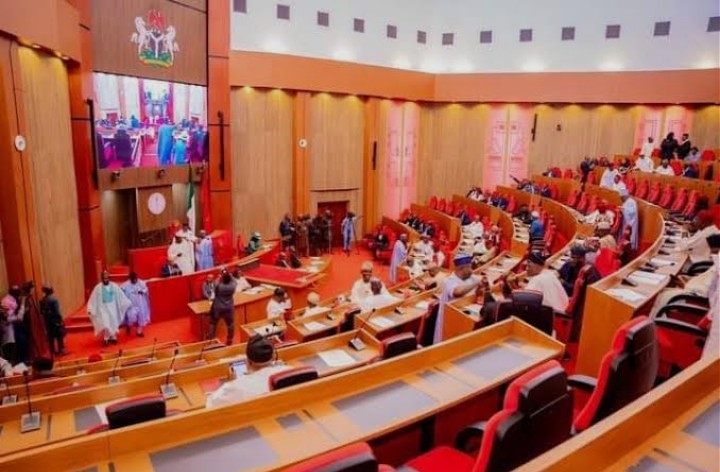
The Senate has rejected conflicting records of petrol imports presented by the Nigerian Midstream and Downstream Petroleum Regulatory Authority (NMDPRA) and the Nigerian National Petroleum Company Limited (NNPCL), demanding an explanation for discrepancies involving billions of litres of Premium Motor Spirit (PMS).
The Senate Committee on Public Accounts has resolved to summon the leadership of NMDPRA, NNPCL and the Nigeria Extractive Industries Transparency Initiative (NEITI) to reconcile the figures and determine whether the discrepancies resulted from reporting errors or possible wrongdoing.
The controversy emerged when NMDPRA appeared before the committee to respond to queries raised in the NEITI Oil and Gas Industry Audit Report covering 2021 to 2023.
Representing the authority’s Chief Executive, Mallam Rabiu Abdullahi Umar, Deputy Director Uzoamaka Ugwu-Ojobe defended NMDPRA’s records, insisting that its figures were credible despite significant differences from those submitted by NNPCL.
She told the committee that NMDPRA recorded 3.29 billion litres of petrol imports in 2022 and 6.02 billion litres in 2023.
However, NNPCL’s records put petrol imports at 6.27 billion litres in 2022 and 3.88 billion litres in 2023.
Ugwu-Ojobe reportedly described the discrepancies as slight, adding that the authority was examining the figures for possible reconciliation.
Her explanation, however, drew objections from lawmakers, who questioned how differences involving billions of litres of petrol could be dismissed as minor variations.
Senator Abdul Ningi, representing Bauchi Central, said the discrepancies were too significant to be treated casually, describing them as disturbing and suspicious.
He argued that the differences between the agencies’ figures were substantial and required a more detailed explanation.
“The disparities in records of PMS importation between NMDPRA and NNPCL in 2022 and 2023, as stated in the NEITI Oil and Gas Industry Audit Report of 2021 to 2023, are too wide to be described as slight or being looked into without the seriousness required,” Ningi said.
Senator Dayo Faduyile, representing Ondo South, also expressed concern, warning that the conflicting records raised serious questions about the accuracy and integrity of the reported import volumes.
He said the discrepancies created room for suspicion and called for a credible explanation from the agencies involved.
Similarly, Senator Anietan Bassey, representing Akwa Ibom North-East, demanded a thorough investigation, insisting that Nigerians must not continue to bear the consequences of possible irregularities in the petroleum sector.
He urged the committee to identify those responsible for any wrongdoing and ensure that the country was not shortchanged.
“Mr Chairman and very distinguished colleagues, these questionable records of volume of PMS importation by the two agencies must be thoroughly investigated to save Nigerians from being yearly shortchanged and expose those milking the country dry,” Bassey said.
Following the exchanges, the committee, chaired by Senator Hassan Dankwabo, representing Gombe North, rejected NMDPRA’s defence and resolved to convene a joint meeting involving the three agencies.
Dankwabo said the committee was not satisfied with the authority’s explanation of the discrepancies identified in the NEITI audit report, particularly the conflicting figures for petrol imports in 2022 and 2023.
The proposed meeting is expected to give NMDPRA, NNPCL and NEITI an opportunity to explain their respective records, reconcile the differences and establish a credible account of the volumes imported during the period under review.
The Senate’s intervention signals intensified legislative scrutiny of petroleum import records, with lawmakers insisting that discrepancies of such magnitude require clear answers and verifiable documentation.
However, the committee has yet to establish whether the conflicting figures arose from accounting errors, differences in reporting methods or deliberate wrongdoing.
The planned engagement is therefore expected to clarify the source of the discrepancies and determine whether further investigation or legislative action is necessary.


