


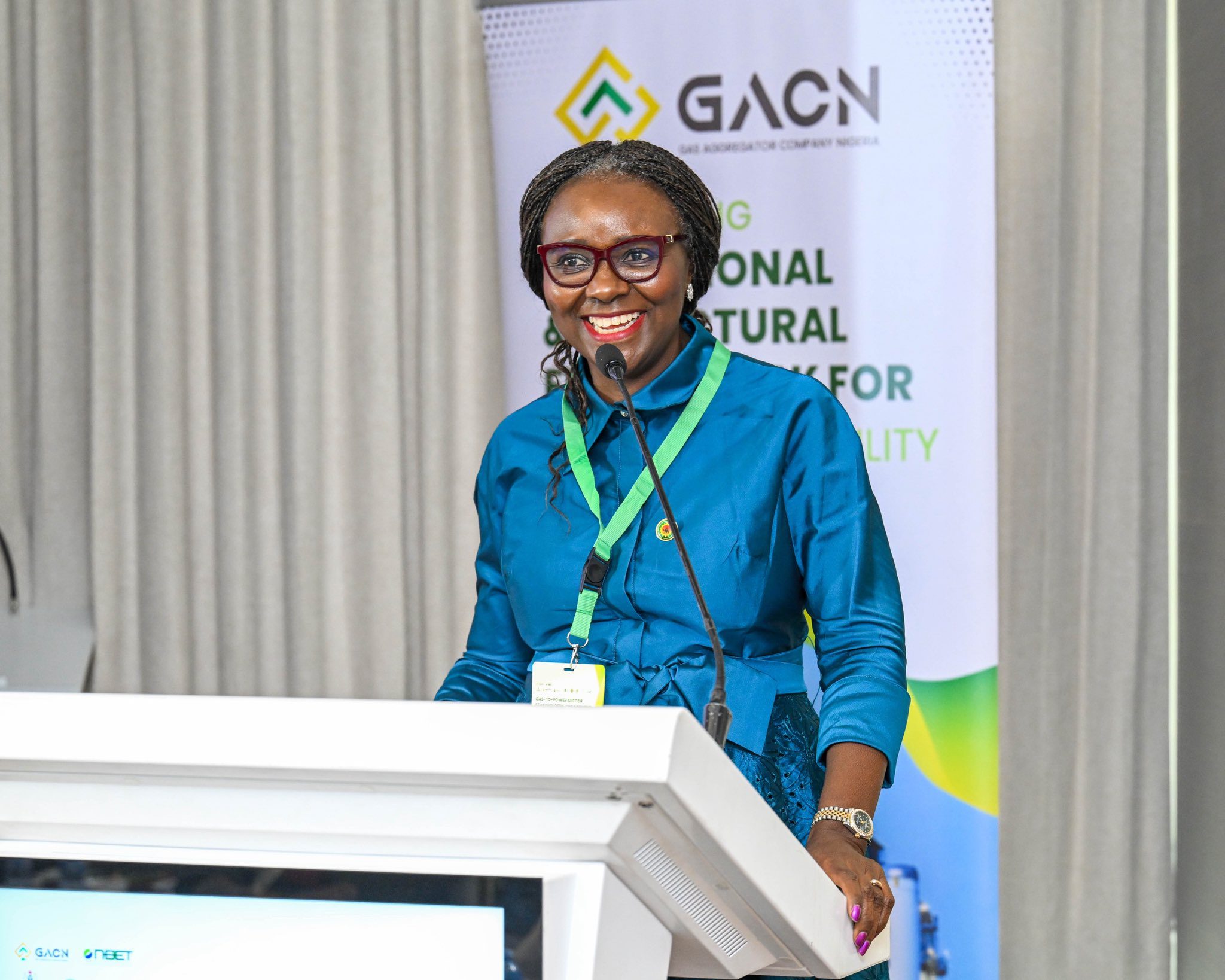
The Nigerian Upstream Petroleum Regulatory Commission (NUPRC) has called for urgent and coordinated action across the gas, power and financial sectors to resolve Nigeria’s persistent gas-to-power challenges.
Commission Chief Executive of NUPRC, Oritsemeyiwa Eyesan, issued the warning on Thursday at the 2026 Gas-to-Power Sector Stakeholders’ Engagement in Abuja, where she urged industry players to abandon fragmented approaches and embrace collaboration.
“We’ve been working in silos,” Eyesan said. “If we continue to grandstand, we won’t make progress. The country will suffer, the continent will suffer.”
Speaking at the event themed “Power Sector Sustainability: Framework Implementation Assurance,” the NUPRC boss expressed concern that despite Nigeria’s vast gas reserves and years of policy interventions, progress in the gas-to-power value chain has remained limited due to poor coordination among stakeholders.


She traced the origins of Nigeria’s domestic gas supply framework to discussions that began in 2008 and crystallised in 2009, noting that successive efforts have failed to deliver expected results.
“We segregated part of our budget for domestic gas, mainly focused on power. We did this for several years, yet the needle did not move,” she said.
Eyesan identified a major disconnect between upstream gas producers, infrastructure developers and electricity distribution companies as a key factor stalling progress.
“The upstream is working, infrastructure is not moving along with supply, and the distribution companies are not moving with anybody,” she added.
She stressed that Nigeria’s estimated 215 trillion cubic feet (TCF) of gas reserves should have positioned the country as a leading regional energy supplier rather than struggling to meet domestic demand.
“Today, we shouldn’t be talking about meeting domestic needs. We should be discussing how to meet regional energy demand,” she said.
The NUPRC chief also criticised what she described as institutional rigidity and excessive bureaucracy, warning that policy “grandstanding” continues to hinder practical solutions.
On the global energy transition, Eyesan noted that Africa initially faced declining investments in oil and gas, but the recognition of gas as a transition fuel has begun to reverse that trend.
She, however, emphasised that without deliberate collaboration and innovative thinking, Nigeria risks repeating the same challenges in the years ahead.
“If we don’t break those barriers and come up with creative solutions, ten years from now we will still be saying the same things, and it will be a big shame,” she warned.
Eyesan concluded by urging stakeholders to prioritise partnership-driven solutions capable of unlocking the country’s power sector potential for sustainable growth.