


Unveils infrastructure, investment blueprint, cites stronger reserves, trade, revenue growth
The All Progressives Congress (APC) has said the economic reforms and development policies of President Bola Ahmed Tinubu’s administration are laying the foundation for a $1 trillion Nigerian economy by 2030.
The ruling party said the target would be driven by sustained economic reforms, increased revenue mobilisation, infrastructure development, human capital investment and the expansion of Nigeria’s trade and logistics corridors.
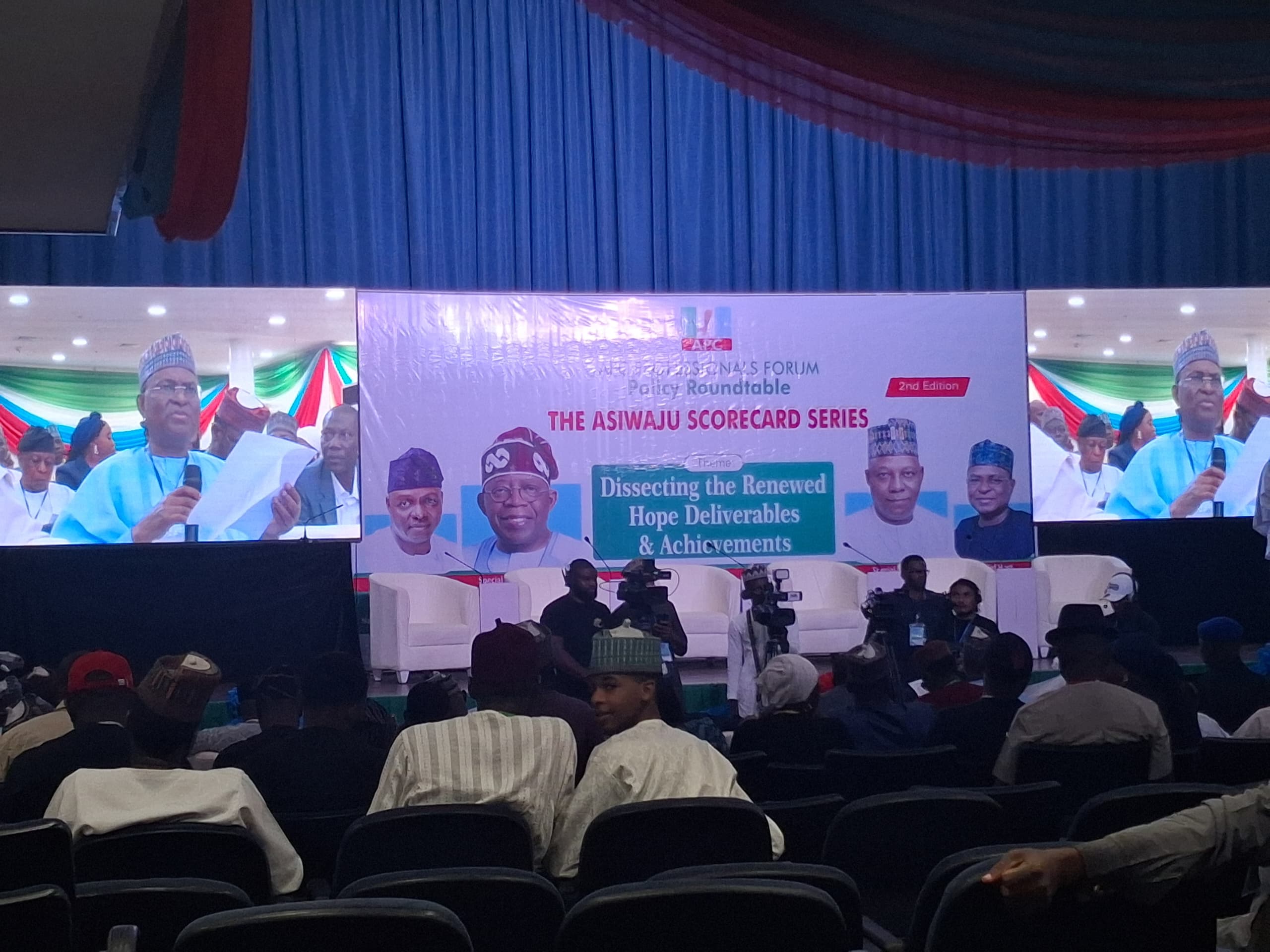
The National Chairman of the APC, Prof. Nentawe Goshwe Yilwatda, stated this on Tuesday in Abuja while representing President Tinubu at the second edition of the Asiwaju Scorecard Series and Asiwaju Policy Roundtable organised by the APC Professionals Forum.
Yilwatda said the Tinubu administration inherited an economy weighed down by fuel subsidy distortions, multiple foreign exchange windows, weak revenue mobilisation, foreign exchange shortages, rising debt-service pressures and inadequate investment in critical infrastructure.
According to him, the removal of fuel subsidy and reforms in the foreign exchange market, though difficult, were necessary to change the trajectory of the Nigerian economy.
He said the policies were beginning to yield positive results, citing an increase in Nigeria’s gross external reserves to about $52.7 billion as of August 2026.
Yilwatda also said consolidated non-oil revenue rose from about N13.63 trillion in 2023 to N16.4 trillion in the first two quarters of 2026.
He added that Nigeria’s merchandise trade position improved from a surplus of about N44.8 billion for the whole of 2023 to approximately N7.54 trillion in the first quarter of 2026.
The APC chairman further cited real Gross Domestic Product (GDP) growth of 4.43 per cent in the second quarter of 2026 and a decline in inflation to about 15.4 per cent.
However, he said macroeconomic stability was only the foundation for the administration’s broader economic objectives.
“The ultimate test is when stability translates into cheaper food, more jobs, affordable credit, reliable electricity and greater purchasing power for Nigerians,” he said.
Yilwatda explained that the $1 trillion economy target was not merely about attaining a particular figure but about transforming Nigeria into a country that produces and exports more, attracts greater investment and creates opportunities for its growing population.
To achieve this, he said the administration was prioritising strategic investments in highways, railways, ports, energy infrastructure and digital connectivity.
A major component of the infrastructure blueprint, according to him, is the development of an integrated five-port maritime and logistics corridor linking major deep-sea ports in Lagos, Ondo, Ibom, Port Harcourt and Calabar to the country’s interior through modern road and rail networks.
He said the proposed network would position Nigeria as a major maritime and logistics hub for West and Central Africa by linking the ports to major cities, production centres and markets across the region.
The APC chairman added that industrial parks, export-processing zones, logistics hubs, agro-processing clusters and manufacturing centres would be developed along the transport corridors to ensure that infrastructure investments translate into jobs, exports and industrial growth.
Yilwatda also identified the Ajaokuta-Kaduna-Kano (AKK) gas pipeline as a strategic component of Nigeria’s industrialisation agenda.
According to him, the project will connect Nigeria’s gas resources to major population and industrial centres in the North and support electricity generation, fertiliser production, manufacturing and transportation.
On human capital development, the APC chairman highlighted initiatives such as the Nigerian Education Loan Fund (NELFUND), technical and vocational skills programmes, digital training initiatives and the Consumer Credit Corporation (CREDICORP).
He said the programmes were designed to expand access to education, improve skills acquisition and provide productive credit while strengthening the capacity of young Nigerians to participate in the economy.
Also speaking at the event, Chairman of the Board of Trustees of the APC Professionals Forum, Dr Isa Yuguda, said the roundtable was designed to provide an evidence-based assessment of the Tinubu administration’s policies and achievements.
Yuguda, who chaired the Fuel Subsidy Task Force in 2009, defended the removal of petrol subsidy, saying the former subsidy regime was characterised by irregularities, fraud and financial leakages.
He said more than N15 trillion had reportedly been saved since the removal of the subsidy, arguing that the additional fiscal space had strengthened the capacity of governments to invest in education, security, agriculture, healthcare and infrastructure.
Yuguda also highlighted government interventions in education, security and agriculture, saying the administration had increased investment in the sectors while pursuing reforms in revenue generation, fiscal management, economic diversification and investment.
As the 2027 general election approaches, he urged Nigerians to scrutinise political promises, particularly proposals to restore fuel subsidy.
He questioned the sustainability of proposals by former Vice President Atiku Abubakar to restore the subsidy, arguing that the previous regime was associated with leakages and significant pressure on public finances.
Yuguda said alternative economic policies should be subjected to scrutiny based on facts, experience, sustainability and their long-term implications for the country.
He added that the policy roundtable was intended to provide a platform for political leaders, professionals, policymakers and citizens to constructively assess government policies, achievements and challenges.
According to him, the 2027 general election should focus on policies, achievements and realistic solutions rather than political rhetoric.
The event, themed “Dissecting the Renewed Hope Deliverables & Achievements,” brought together APC leaders, professionals, policymakers and other stakeholders to assess the Tinubu administration’s economic reforms and development agenda.