



…Experts say facility will end overseas training, boost surgical skills
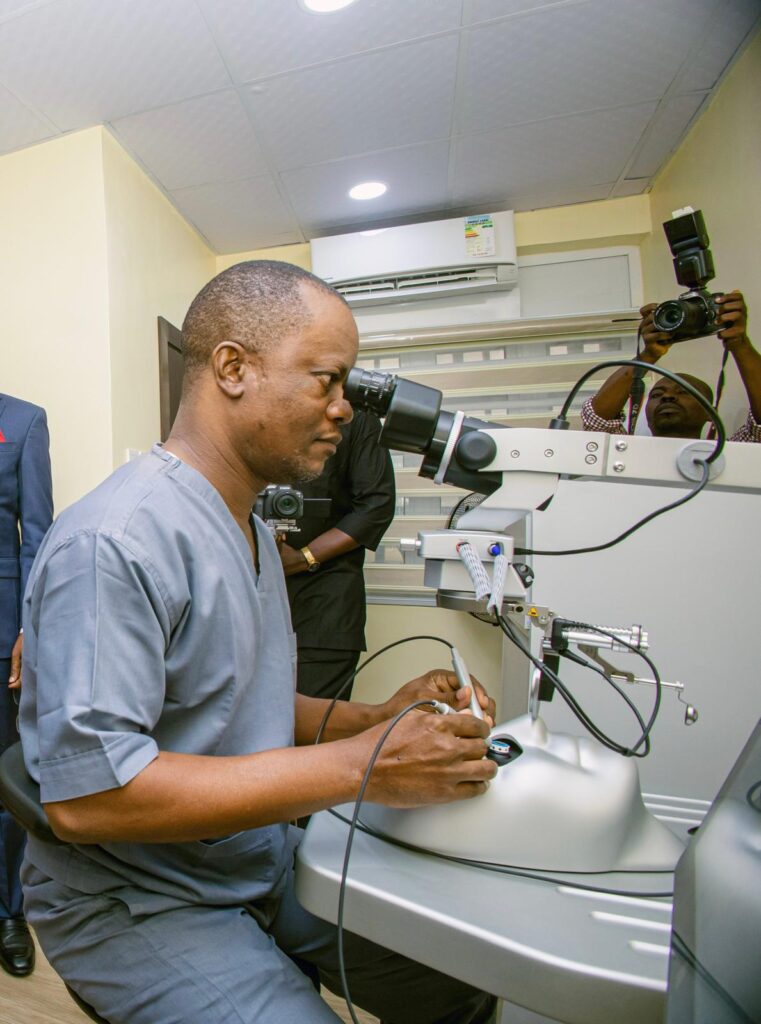
Nigeria has recorded another milestone in medical education with the unveiling of West Africa’s first EyeSi Virtual Reality Surgical Simulator at the Lagos University Teaching Hospital (LUTH), a development experts say will transform ophthalmic training, improve surgical outcomes and reduce dependence on foreign institutions for specialist education.
The state-of-the-art facility, officially named the Gbemisola Olowolafe Centre for Ophthalmic Surgical Simulation, was inaugurated on Friday at the Guinness Eye Centre, LUTH, amid widespread commendation from leading ophthalmologists and medical stakeholders.

Chairman of the Faculty of Ophthalmology at the National Postgraduate Medical College of Nigeria (NPMCN), Professor Charles Bekibele, described the project as a historic breakthrough that has positioned Nigeria as a leader in ophthalmic medical education in West Africa.
According to him, the inauguration marks the fulfilment of a vision pursued for more than three decades and will revolutionise specialist training in cataract and vitreoretinal surgery across the region.
“For many years, Nigerian ophthalmologists had to travel to countries such as India, Pakistan and Bangladesh for advanced training in phacoemulsification cataract and vitreoretinal surgery. Today, that narrative has changed,” Bekibele said.
The EyeSi Surgical Simulator, donated through the Tunji Olowolafe Foundation in partnership with the Faculty of Ophthalmology of the NPMCN and LUTH, provides immersive virtual reality training that allows surgeons to repeatedly practise delicate procedures in a risk-free environment before operating on patients.
The facility is expected to strengthen specialist training, improve patient safety and expand access to world-class ophthalmic education across Nigeria and neighbouring West African countries.
Speaking at the event, Chairman of the Tunji Olowolafe Foundation, Dr. Tunji Olowolafe, said the project was inspired by a presentation delivered by the Faculty of Ophthalmology during its 2025 Faculty Lecture, which highlighted the urgent need for modern surgical simulation equipment.
Olowolafe stressed that continuous professional development remains critical to maintaining global standards in healthcare.
“This machine gives surgeons—whether they qualified last year or thirty years ago—a place to practise delicate movements repeatedly, receive objective feedback and return the next day even better, all without putting patients at risk,” he said.
He lamented what he described as Nigeria’s poor culture of continuous learning, noting that many professionals mistakenly regard certification as the end rather than the beginning of learning.
“We don’t place enough value on continuous education. The most important training is not only learning something new but constantly refining what we already know,” he added.
According to him, the simulator will enable surgeons to master emerging surgical techniques while gradually replacing outdated methods of practice.
He also called for the establishment of similar simulation centres across medical institutions nationwide to institutionalise continuous professional training and enhance the quality of healthcare delivery.
Olowolafe expressed appreciation to the Faculty of Ophthalmology for naming the centre after his late wife, Gbemisola Olowolafe, describing the gesture as deeply meaningful to his family.
The centre has already commenced operations with its first batch of six trainee ophthalmologists drawn from different parts of the country, including Kaduna and Onitsha.
The pioneer trainees described the simulator’s virtual tissue-response technology as remarkably realistic, saying it provides practical experience that closely mirrors real-life surgery while improving hand coordination and surgical precision.
They expressed optimism that the facility would significantly reduce the need for Nigerian ophthalmologists to travel abroad for advanced cataract surgery training.
Medical experts believe the deployment of the EyeSi Surgical Simulator will produce a new generation of highly skilled eye surgeons, strengthen ophthalmic education and improve the quality of eye care services in Nigeria and across West Africa.