


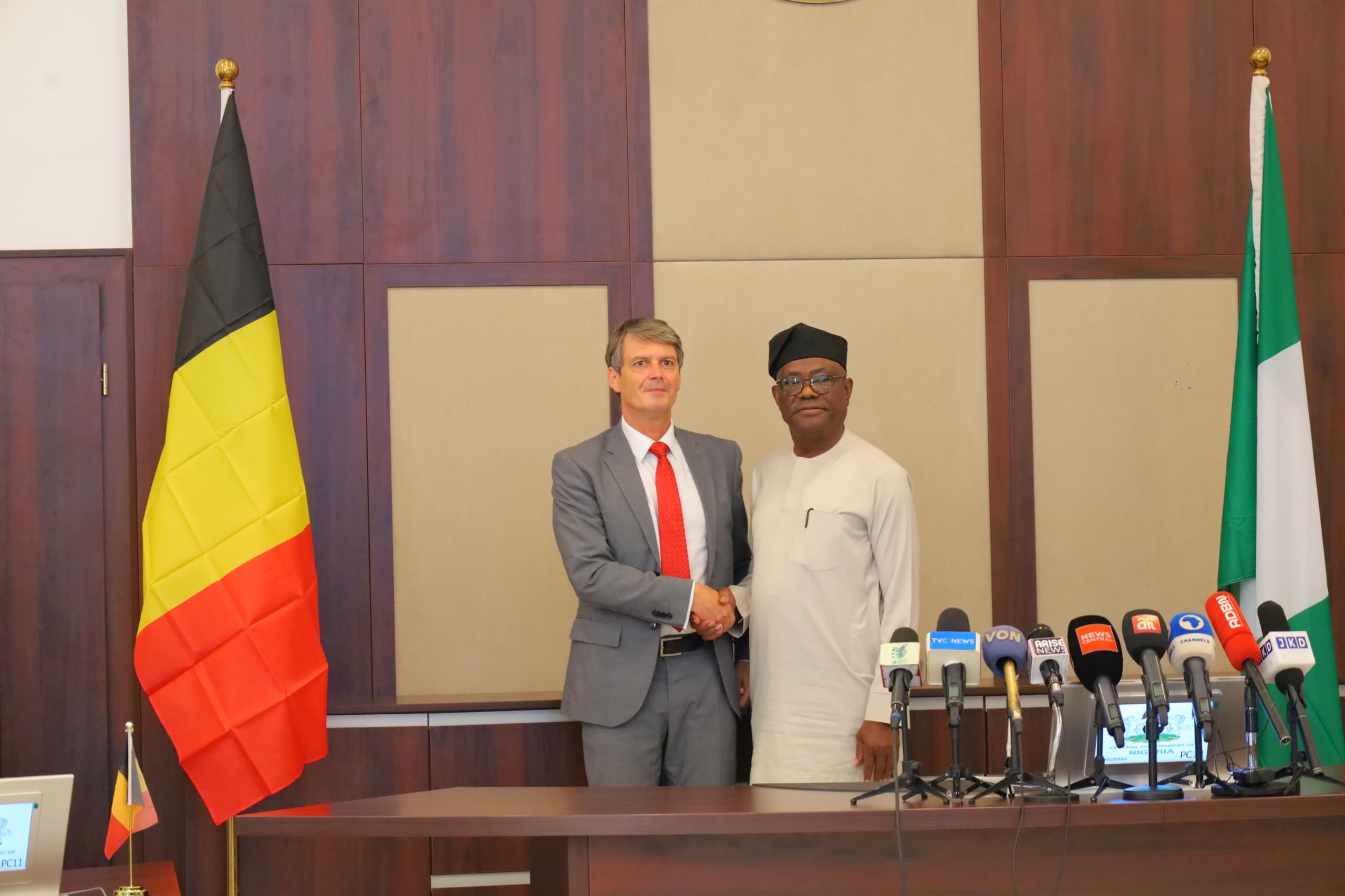
Minister of the Federal Capital Territory (FCT), Nyesom Wike, has wooed Germany to invest in Abuja’s agriculture, information and communications technology (ICT), and youth skills development programmes as part of efforts to transform the nation’s capital into a world-class city.
Wike made the appeal on Tuesday when the German Ambassador to Nigeria, Stefan Rössel, paid him a visit in Abuja, calling for stronger development partnerships between the FCT Administration and German cities.
The minister said collaboration with Germany would create opportunities to accelerate economic growth, improve skills acquisition among young people and strengthen Abuja’s capacity to compete with leading cities around the world.
He reaffirmed his administration’s commitment to developing Abuja into a modern capital comparable to Berlin, Munich and Washington, D.C., stressing that security and a conducive business environment were essential to attracting foreign investors and diplomatic missions.
Wike said his administration had made progress in addressing security challenges and improving road infrastructure, adding that the government was determined to change the narrative surrounding the nation’s capital.
“Our vision is to see Abuja become one of the best cities in the world. With the mandate to change the narrative, security and the environment have improved, and road infrastructure is being actively delivered,” he said.
The minister also defended the economic reforms introduced by President Bola Tinubu, including moves towards decentralisation and state policing to address insecurity.
Acknowledging the economic hardship facing Nigerians, Wike urged citizens to be patient, insisting that bold decisions were necessary to achieve long-term national development.
“Leadership is about taking bold decisions for long-term benefit. Things may be harsh now for a short while, but in the long run, the people will reap the benefits,” he said.
He expressed optimism that the ongoing reforms and government programmes would ultimately improve the living conditions of Nigerians.
Earlier, the German ambassador reaffirmed his country’s commitment to strengthening bilateral relations with Nigeria, noting that both countries had maintained diplomatic ties for 66 years.
Rössel commended the visible infrastructure development in Abuja and expressed support for the Federal Government’s economic and security reforms.
“As a new ambassador, it is immediately visible that this country is on the move,” he said.
He acknowledged that the reforms would require time to translate into jobs and improved welfare but assured Nigeria of Germany’s continued support.
The envoy also disclosed that the German Embassy and European Union member states were interested in collaborating with the FCT Administration on urban planning, infrastructure development and city governance.
He reiterated Germany’s readiness to support Nigeria’s economic and security policy initiatives, expressing optimism about deeper cooperation between both countries.