


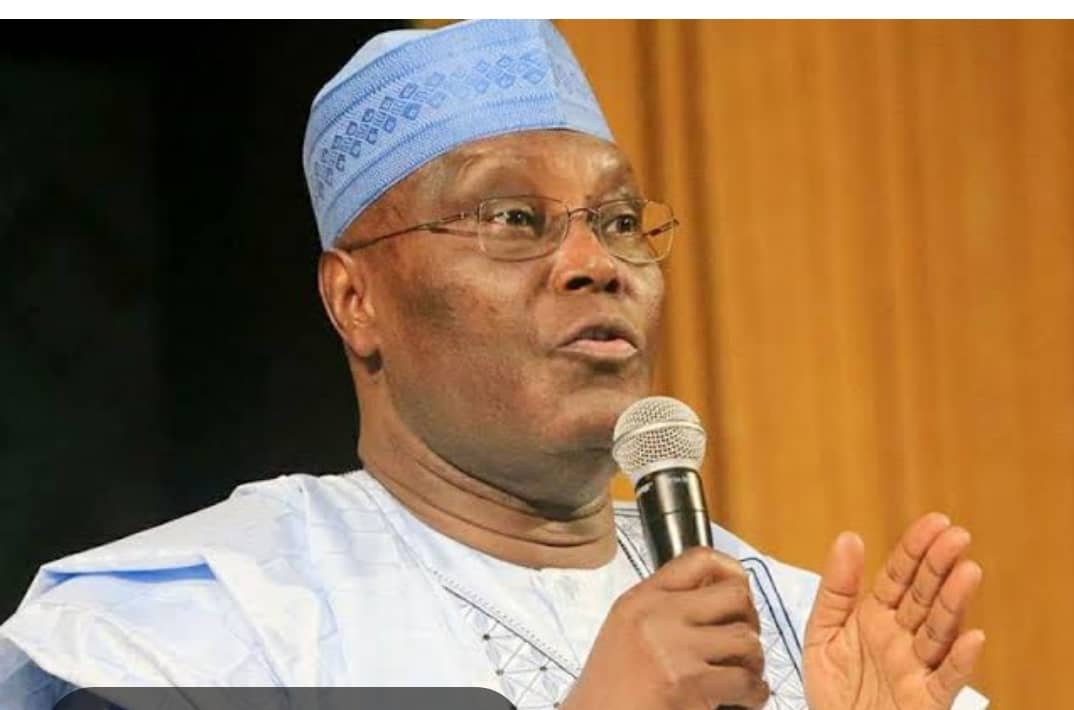
Former Vice President and African Democratic Congress (ADC) presidential candidate, Atiku Abubakar, has described the reported ₦266.07 billion net outflow of foreign portfolio investment from Nigeria’s equities market as a damning verdict on President Bola Ahmed Tinubu’s economic policies.
Atiku said the massive capital flight between January and July 2026 was a clear indication that foreign investors were losing confidence in the Nigerian economy.
The former Vice President made his position known in a statement issued on Tuesday in Abuja by his Senior Special Assistant on Public Communication, Phrank Shaibu.
According to the statement, foreign investors injected ₦513.36 billion into the Nigerian equities market during the seven-month period but repatriated ₦779.43 billion, leaving a net outflow of ₦266.07 billion.
Atiku said the figures were particularly disturbing because foreign outflows reportedly exceeded inflows in every month of the period.
He added that the 2026 net outflow was about 11.7 times higher than the ₦22.68 billion recorded during the corresponding period in 2023.
“This is not merely an investment statistic. It is a confidence verdict on the Tinubu economy,” Atiku said.
The ADC presidential candidate argued that investment flows were important indicators of how investors perceive the health and prospects of an economy.
Using an analogy, he said: “Imagine a market where the shop owners are broke, customers have no money, the landlord keeps borrowing from everybody, and the few outsiders who brought capital are quietly carrying their money away.”
Atiku said the reported capital flight was even more worrying when viewed alongside rising government borrowing and what he described as slower expansion of credit to the private sector.
He cited reports indicating that the Federal Government’s domestic borrowing increased by 90.5 per cent to ₦24.7 trillion within eight months.
According to him, the trend was putting additional pressure on businesses already struggling to access affordable credit.
The former Vice President said the situation suggested that the private sector was being “squeezed from both ends”, with government borrowing competing for available funds while foreign investors were taking their capital out of the country.
“Local businesses are suffocating. Foreign capital is fleeing. Government borrowing is exploding. Food prices have skyrocketed. Transportation costs are crushing families,” he said.
Atiku also questioned the Federal Government’s continued celebration of its economic reforms, arguing that the true test of recovery should be reflected in the daily realities of businesses, households and investors.
He said an economy could not genuinely be described as recovering when businesses struggled to obtain affordable credit, manufacturers faced high operating costs, households experienced declining purchasing power and investors remained hesitant to commit capital.
According to him, investors are more interested in fundamentals such as policy consistency, inflation, purchasing power, regulatory predictability and the prospects of sustainable returns than government assurances.
He called on the Federal Government to urgently review its economic policies and introduce measures capable of restoring investor confidence, reducing the cost of doing business and making energy and transportation more affordable.
Atiku also advocated greater reliance on private-sector investment and domestic production as engines of economic growth rather than increased government borrowing.
He said Nigeria needed policies that would strengthen local production, support businesses, create jobs and improve the purchasing power of households.
“You cannot borrow the private sector dry, impoverish consumers and then advertise yourself to the world as an investment destination,” he said.
Atiku maintained that the reported capital outflows should serve as a warning to the Tinubu administration, urging the government to take urgent steps to attract and retain both domestic and foreign investment.