


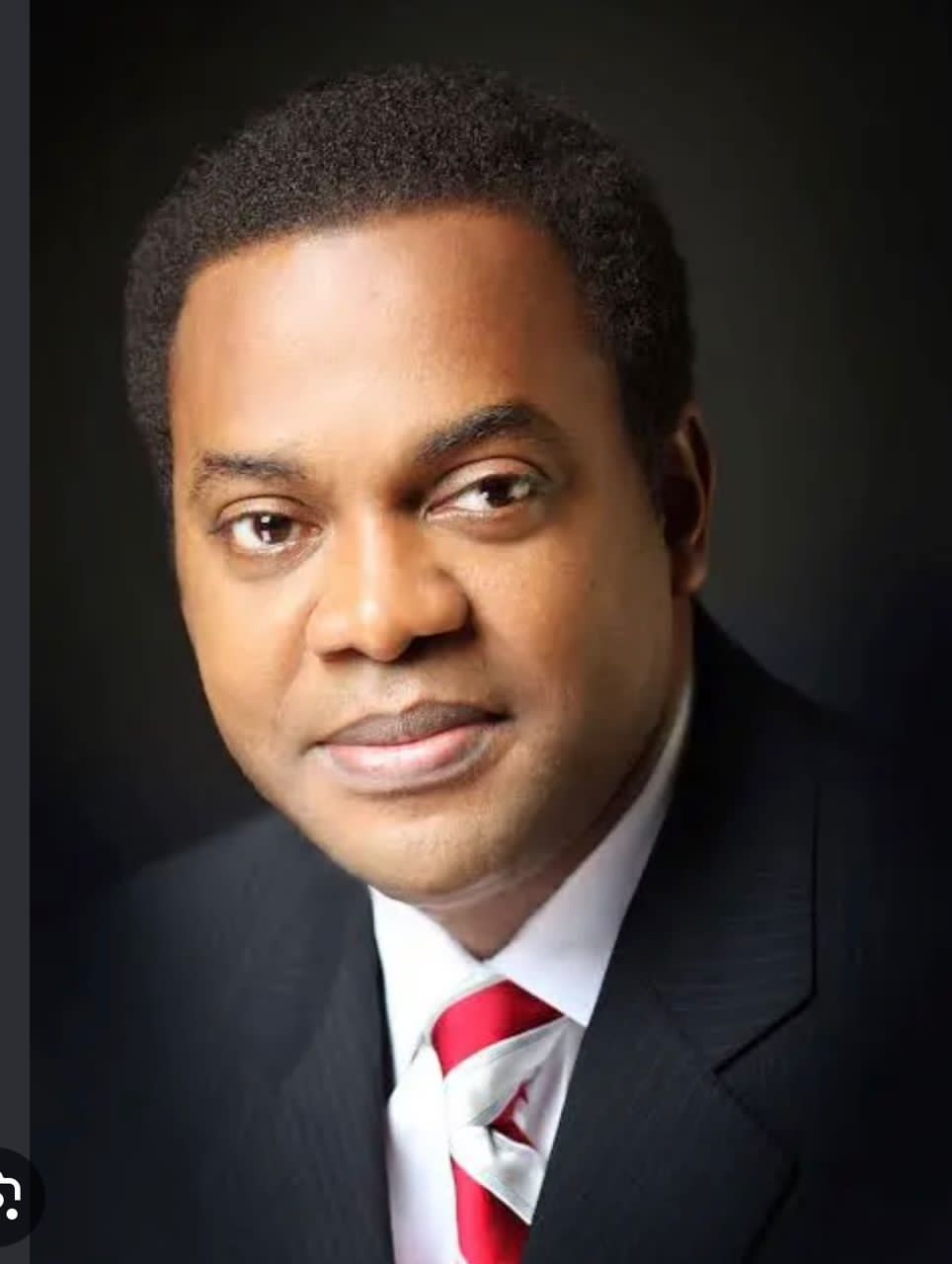
Former Cross River State Governor and Peoples Redemption Party (PRP) presidential candidate, Donald Duke, has called for the adoption of a two-party system in Nigeria, saying the proliferation of political parties has weakened the opposition and made it difficult to challenge the ruling establishment.
Duke spoke in Abuja when the Council of the Wise of the Savannah Centre for Democracy, Diplomacy and Development (SCDDD), led by former Chief Justice of Nigeria, Justice Olukayode Ariwoola, visited him as part of consultations with political stakeholders ahead of the 2027 general elections.
According to the former governor, a two-party arrangement would give Nigerians clearer political choices while encouraging opposition forces to unite behind a credible platform capable of mounting a stronger challenge to the ruling All Progressives Congress (APC).
He said the fragmentation of opposition parties remained one of the major challenges confronting Nigeria’s democratic development, particularly as political actors intensify efforts to build alliances ahead of the 2027 elections.
Duke also raised concerns over what he described as the growing desperation among politicians seeking power, warning that the high stakes surrounding the 2027 elections could fuel dangerous political behaviour.
He alleged that some politicians had resorted to disturbing practices in their quest for political power.
“Some do all sorts of things, even using human sacrifice and all that, because they’re seeking power. Let’s ask ourselves, how long are we going to go before we get it right?”
The former governor recalled an incident during his tenure in Cross River State when, according to him, human body parts were allegedly discovered at the residence of a local government chairman.
Duke warned that unless political actors exercised restraint, the intensity of the 2027 contest could have serious consequences for the country.
“It’s so desperate that if we are not careful by the 16th of January, this country will burn,” he said.
He argued that political office had increasingly become an end in itself rather than a means of serving the people, saying the excessive value attached to political power had contributed to the erosion of democratic values.
Also speaking during the engagement, Ariwoola recalled the violence that followed the 2011 general elections, saying more than 1,000 people were killed.
He urged politicians seeking elective positions in 2027 to shun hate speech, inflammatory rhetoric and actions capable of triggering violence.
The former CJN stressed the need for issue-based campaigns, respect for electoral laws and peaceful participation throughout the electoral process.
The Council of the Wise’s engagement with Duke forms part of its wider consultations aimed at promoting peaceful, transparent and credible elections ahead of the 2027 polls.
Established by the Savannah Centre in 2014, the Council of the Wise supports peaceful electoral processes and democratic institution-building.
The intervention comes amid renewed efforts by opposition parties and political actors to overcome their divisions and forge alliances capable of presenting a stronger challenge to the APC in 2027.
Meanwhile, concerns over the credibility of the electoral process have also intensified, particularly regarding the independence of the Independent National Electoral Commission (INEC), electoral technology and the growing threat of disinformation.
INEC Chairman, Prof. Joash Amupitan, SAN, recently warned that artificial intelligence-generated disinformation could pose a major threat to the credibility of the 2027 elections.
Amupitan, who spoke through National Commissioner Sani Adam, SAN, at the 13th Annual International Conference of the Association of Communication Scholars and Professionals of Nigeria (ACSPN) in Abuja, said technology and effective communication must complement each other in election management.
He disclosed that the commission was auditing its electoral technology infrastructure and considering a mock presidential election to test voter accreditation, result transmission and result viewing ahead of the 2027 polls.
For Duke, however, the challenge goes beyond electoral technology.
He maintained that Nigeria needs fundamental reforms to its political structure, including a system capable of producing a stronger, more coherent and competitive opposition.
His call for a two-party system has consequently added a fresh dimension to the debate on how to strengthen Nigeria’s democracy ahead of 2027, while his warning over the desperation surrounding the contest has renewed concerns about the need to prevent political competition from degenerating into violence.