


ABUJA — The Diplomatic Correspondents’ Association of Nigeria (DICAN) has urged Nigeria to adapt successful elements of China’s poverty reduction model to its own socioeconomic realities, saying lessons from China’s development experience could help address poverty, unemployment and inequality.
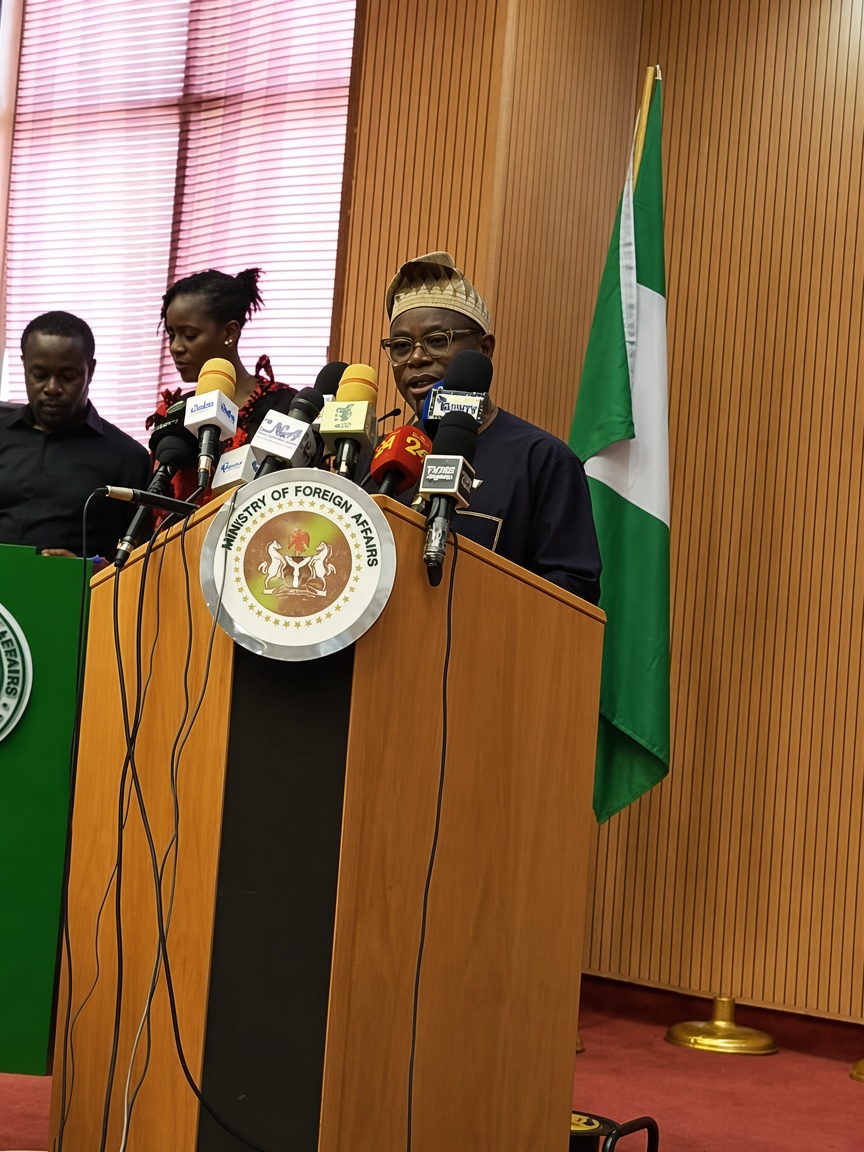
The Chairman of DICAN, Idehai Frederick, made the call in his welcome address at a high-level workshop on poverty alleviation organised by the association in Abuja.
Frederick said the workshop, themed “Nigeria’s Poverty Alleviation Efforts: Adopting China Modules and Its Relevance in a New Era — The Place of Policy Makers, Development Partners, Stakeholders and Diplomatic Reporters,” was aimed at examining Nigeria’s poverty reduction pathways through the Chinese experience.
He said the need to study alternative development approaches had become increasingly important as developing countries contend with economic adjustments, food security challenges and structural changes.
“Adaptation rather than direct replication is key to achieving meaningful impact within Nigeria’s unique socio-economic landscape,” Frederick said.
FG backs adaptation to Nigerian realities
The Permanent Secretary of the Ministry of Foreign Affairs, Ambassador Dunoma Umar Ahmed, also called for a careful assessment of China’s development experience to identify approaches that could be adapted to Nigeria.
Ahmed, represented at the workshop by the ministry’s spokesperson, Kimiebi Ebienfa, said Nigeria continued to face poverty, unemployment and inequality, requiring pragmatic and collaborative responses.
According to him, China’s experience offers useful lessons in long-term planning, infrastructure-led growth, targeted poverty reduction and domestic resource mobilisation.
He said Nigeria could adapt relevant aspects of the Chinese experience to improve agricultural productivity, strengthen social protection, promote public-private partnerships and increase investment in human capital.
The Permanent Secretary, however, stressed that development strategies must reflect Nigeria’s institutional, political and social realities while maintaining transparency, accountability and democratic governance.
DICAN says China experience offers lessons
Frederick said China’s reported achievement in lifting more than 800 million people out of extreme poverty provided important lessons for Nigeria, but warned against attempting to transplant the model wholesale.
He identified household- and community-level, data-driven interventions as one area Nigeria could examine, particularly as an alternative to broad-based subsidy approaches.
The DICAN chairman also highlighted infrastructure connectivity and mutually beneficial economic partnerships as important drivers of development.
Other areas he identified included alignment of development assistance with the United Nations Sustainable Development Goals, green growth, digital economy expansion and industrialisation.
He said DICAN’s initiative was also consistent with the China-Africa People-to-People Exchange Year and the strategic priorities of the Forum on China-Africa Cooperation (FOCAC).
Nigeria urged to strengthen China trade links
Frederick also drew attention to China’s zero-tariff policy for African exports, describing it as a potential opportunity for Nigeria to expand its non-oil exports.
He said Nigeria would need to strengthen local supply chains, improve product standardisation and expand production capacity to take greater advantage of access to the Chinese market.
According to him, Nigeria-China relations should extend beyond diplomatic engagement to include trade, industrial development, technology, media cooperation and people-to-people exchanges.
DICAN seeks more media cooperation
The DICAN chairman called on the Chinese government to expand fellowship opportunities, media exchange programmes and technical journalism training for members of the association.
He also urged the Chinese Embassy in Nigeria to facilitate stronger links between the Chinese business community and DICAN.
Frederick said such engagement could create a transparent platform for reporting on Chinese corporate social responsibility initiatives, bilateral trade achievements and investment opportunities.
He recalled leading African mainstream media executives on a study tour of China, describing firsthand exposure to rural revitalisation projects as an opportunity to gain insights into the country’s development and modernisation strategies.
Media critical to development debate
Frederick said journalists should not be regarded merely as observers of government policies but as critical partners in documenting development and informing citizens about policy choices.
He urged participants to use the workshop to develop practical recommendations capable of strengthening Nigeria’s poverty alleviation efforts.
Ahmed similarly underscored the role of the media in promoting public understanding, scrutinising policy choices and strengthening accountability through accurate and balanced reporting.
The Permanent Secretary reaffirmed the Ministry of Foreign Affairs’ commitment to international cooperation, knowledge exchange and partnerships that could attract responsible investment, technology transfer and capacity-building opportunities for Nigeria.
Frederick expressed appreciation to the Ministry of Foreign Affairs, the Chinese Embassy, DICAN members and other participants for supporting the workshop and called for the discussions to produce actionable outcomes.