


The Federal Government has urged Nigerian doctors to take stronger action against quackery and unethical practices within the medical profession, warning that professional solidarity must not be allowed to endanger patients.
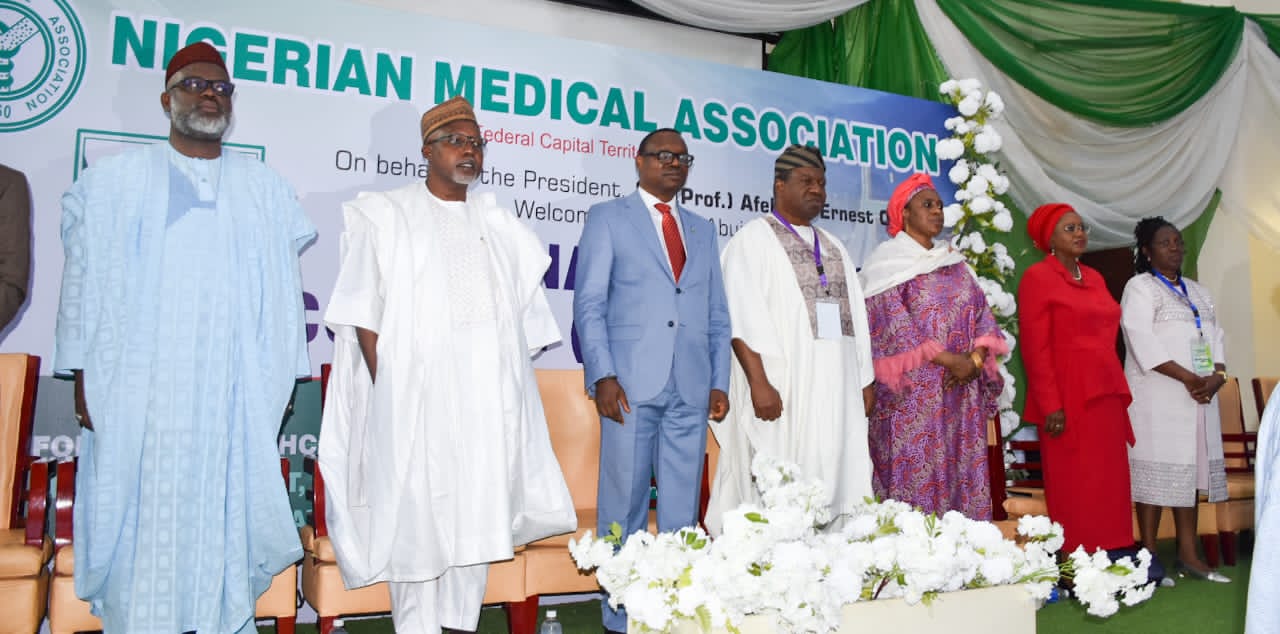
Minister of State for Health and Social Welfare, Dr Iziaq Adekunle Salako, gave the warning on Wednesday at the opening of the National Executive Council meeting of the Nigerian Medical Association (NMA) in Abuja.
Speaking on the theme, “Transforming Healthcare Practice in Nigeria: Building Trust, Accountability and Collaborative Excellence,” Salako said government regulation alone could not eliminate quackery without the active involvement of medical professionals.
He called on the NMA to establish a standing joint anti-quackery mechanism involving the Federal Ministry of Health and Social Welfare, Medical and Dental Council of Nigeria (MDCN), National Agency for Food and Drug Administration and Control (NAFDAC) and security agencies.
“Quackery is not a nuisance; it is homicide by instalment,” the minister declared.
Salako said doctors were often in the best position to identify quacks operating in their communities, urging the profession to complement government enforcement with strong internal disciplinary measures.
“The quack in the neighbourhood is usually known to the doctors in that neighbourhood. The unlicensed clinic often has a licensed name over its door,” he said.
He also warned against practices capable of damaging public confidence in the medical profession, including absenteeism, diverting public patients to private facilities, collecting unauthorised payments and protecting colleagues accused of professional misconduct.
“Government has a responsibility to always protect the health of the public and will never sacrifice this duty on the altar of professional solidarity,” Salako said.
The minister disclosed that NAFDAC had screened more than 7,000 shops and removed 87 truckloads of falsified, banned and expired medical products valued at about N1 trillion from open drug markets in Aba, Onitsha and Lagos.
He said the government was also strengthening professional regulatory bodies, including the MDCN, Nursing and Midwifery Council of Nigeria and Medical Laboratory Science Council, to ensure that practitioners and training institutions maintained required standards.
Salako urged hospitals to strengthen clinical accountability through effective mortality and morbidity reviews, maternal and perinatal death surveillance, monitoring of waiting times and consultant availability, as well as timely disciplinary procedures.
According to him, accountability in healthcare must go beyond government expenditure to include the quality of treatment patients receive.
“Trust is a two-way covenant,” he said, stressing that patients judge the healthcare system primarily by their experiences at health facilities.
The minister said the Federal Government had continued to invest in the health workforce, with more than 37,000 workers recruited into federal tertiary hospitals since 2024. About 75 per cent of the recruits, he said, were in clinical positions.
He added that annual medical school admission quotas had been doubled from about 5,000 to 10,000, while N110 billion had been committed through TETFund to rehabilitate 18 medical, dental, pharmacy and nursing training institutions.
On task-shifting and task-sharing, Salako said the policy was necessary to address health workforce shortages, particularly in underserved communities, but must not be used to replace doctors with inadequately trained personnel.
“Role optimisation is not role substitution,” he stressed, adding that task-sharing must be competency-based, properly regulated, supervised by physician-led teams and guided by clearly defined scopes of practice.
He urged the NMA to resolve disagreements over professional roles through established institutional and regulatory channels rather than through public confrontations or industrial action that could disrupt healthcare delivery.
Salako proposed a reciprocal commitment between government and the medical profession, saying the government would continue to honour collective bargaining agreements, sustain health-sector funding, expand training capacity and involve the NMA in decisions concerning the health workforce and scope of practice.
In return, he urged the NMA to strengthen professional discipline, make industrial action a last resort, ensure emergency services remain operational during disputes, lead the fight against quackery and promote ethical cooperation among health professionals.
The minister also disclosed that the Federal Ministry of Health and Social Welfare was examining a recent social media report alleging an organ-harvesting syndicate operating in parts of the Federal Capital Territory.
He said national standards and guidelines for organ and tissue transplantation had been developed, requiring informed consent and facility certification while prohibiting commercialisation.
Salako said relevant agencies had been directed to assist the police in investigating the allegation.
He maintained that rebuilding public confidence in Nigeria’s health system required government and medical professionals to work together.
“No health system in history has been transformed by a ministry acting alone, and none has been transformed against the wishes of its doctors,” he said.