


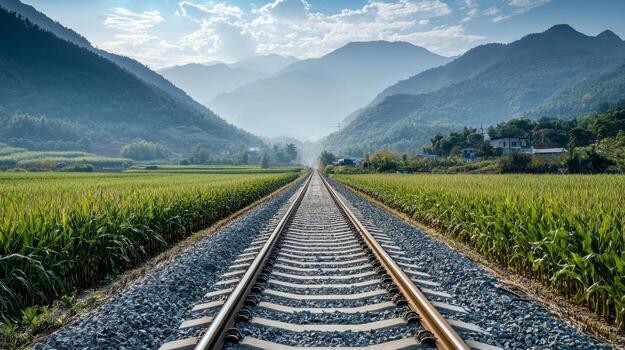
The Federal Government has said massive investment in rail freight services could take thousands of trucks off Nigerian roads, save highways from rapid deterioration and create thousands of jobs for youths.
Permanent Secretary, Federal Ministry of Transportation, Engr. Olufunso Adebiyi, disclosed this yesterday in Abuja at the opening of the 19th National Council on Transportation.
Adebiyi said expanding the capacity of the railway to transport passengers and heavy cargo would significantly reduce the number of articulated vehicles on major highways and extend the lifespan of road infrastructure.
He cited the movement of containers from Apapa Port to the Ibadan Dry Port as evidence of the impact rail freight could have on road congestion.
According to him, he recently witnessed the loading of a train with 33 containers, each measuring 40 feet, for onward transportation from Apapa to Ibadan.
“Technically, you have removed 33 trailers on the Lagos-Ibadan Road,” he said.
The Permanent Secretary said the government was also considering expanding freight services beyond Ibadan to other parts of the country, with dry ports serving as strategic points for moving cargo closer to their final destinations.
He explained that shifting more cargo from roads to rail would not only ease traffic congestion but also reduce the damage caused by heavy-duty trucks on highways.
Rail projects create over 9,000 jobs
Beyond transportation efficiency, Adebiyi said railway investments were already contributing to employment generation, particularly for young Nigerians.
He disclosed that about 4,000 workers were currently engaged on the Kano-Katsina railway project, while more than 5,000 workers were involved in the Kaduna-Kano rail project.
According to him, the two projects have therefore created employment opportunities for more than 9,000 youths.
Adebiyi also linked railway expansion to the Federal Government’s efforts to develop specialised manpower for the transportation industry through the establishment of the Federal University of Transportation.
He said the institution was established to produce graduates with the specialised knowledge and technical skills required to meet the growing manpower needs of Nigeria’s transportation sector.
The Permanent Secretary stressed that the government’s transportation policy was not focused on rail development alone but on building an integrated multimodal transportation system in which road, rail, air and waterways complement one another.
He said such integration would improve the movement of people and goods, strengthen economic activities and make Nigeria’s transportation system more efficient.
The 19th National Council on Transportation brought together stakeholders from the maritime, aviation, road and railway sectors across the country to deliberate on policies and challenges affecting the development and efficiency of Nigeria’s transportation system.