


The Minister of Solid Minerals Development, Dele Alake, has dismissed claims that Nigeria sold $700 billion worth of solid minerals to the United States, insisting that the bilateral agreement between both countries does not involve the sale or transfer of Nigeria’s mineral assets.
Alake said the partnership was designed to attract American investment, introduce advanced mining technology, promote local mineral processing and create jobs for Nigerians.
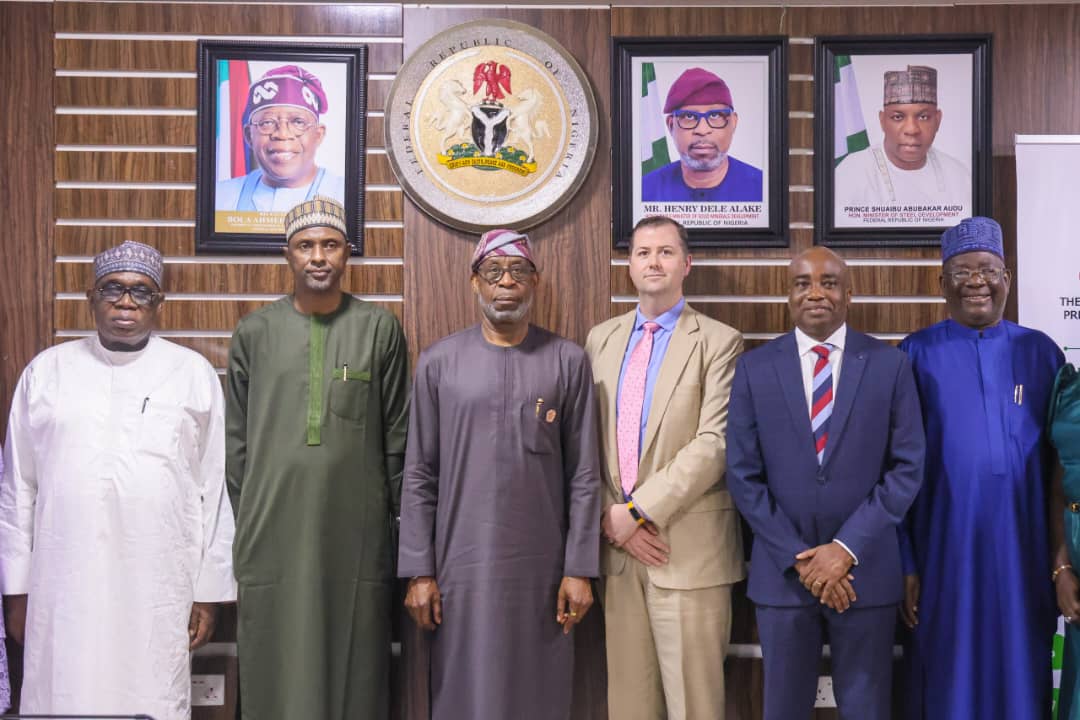
“There is no sale of any Nigerian asset. There’s nothing exchanging hands,” the minister declared on Tuesday in Abuja while inaugurating the Nigeria–United States Committee on Strategic Cooperation in the Solid Minerals Sector.
He described reports suggesting that the US was coming to take over Nigeria’s mineral resources and security architecture as false, insisting that the agreement was a platform for investment cooperation between both countries.
According to him, the memorandum of understanding signed by Nigeria and the US provides a government-to-government framework for connecting American investors with Nigerian mining companies and local operators.
“We created a platform to facilitate mingling of US investment ventures with Nigeria’s local operators. It is in the public domain. We signed it in public and published it in four or five national newspapers,” he said.
The inauguration followed the strategic cooperation framework established between both countries during the 81st United Nations General Assembly in New York.
Alake said the partnership was part of President Bola Tinubu’s economic diversification agenda aimed at reducing the country’s dependence on oil and unlocking the economic potential of its vast mineral resources.
He maintained that Nigeria must move away from exporting raw minerals without adding value locally, stressing that the country had lost significant economic opportunities through the practice.
“We have the resources, the critical elements the world needs to transit to clean energy. So we are creating a new paradigm — you bring your capital, expertise and technology, to match with our natural resources and create a win-win situation. The investor gains, Nigeria gains,” he said.
The minister disclosed that the Federal Government had made local processing a key condition for granting mineral titles, requiring investors to demonstrate plans for adding value to minerals within the country.
He said the policy had encouraged the establishment of processing facilities, including what he described as West Africa’s largest lithium processing plant, recently commissioned in Nasarawa State by Vice-President Kashim Shettima.
Alake added that Nigeria’s push for value addition had also contributed to the establishment of the African Minerals Strategy Group to promote cooperation among African countries in the development of their mineral resources.
He said economic reforms introduced by the Tinubu administration had helped improve investor confidence by providing greater certainty around investments, security of tenure and the repatriation of profits.
The minister charged members of the newly inaugurated committee to ensure that the Nigeria–US framework produced measurable results through investment mobilisation, technology transfer, industrial development and job creation.
He said the committee had a strategic role to play in supporting Tinubu’s ambition of building a $1 trillion economy.
In his remarks, the Permanent Secretary of the ministry, Faruk Yusuf Yabo, said the committee would translate the growing diplomatic relationship between Nigeria and the United States into practical cooperation and investment opportunities.
The Economic Officer at the US Embassy, Jonathan Baas, said President Donald Trump had prioritised energy, artificial intelligence and critical minerals as key areas of focus for American diplomatic missions.
Baas said the US was interested in working with international partners to secure critical mineral supply chains while ensuring that participating countries benefited economically.
He disclosed that a contract had been signed on Tuesday to explore the development of artificial intelligence data centres in Nigeria.
“We just signed a contract today on looking into building AI data centres in Nigeria at the Nigerian Economic Summit. That’s the direction Washington wants us to go,” he said.
The Managing Director and Chief Executive Officer of the Nigeria Solid Minerals Company said the committee would coordinate implementation, facilitate investment and monitor progress under the bilateral cooperation framework.
The Federal Government said the initiative was part of its broader effort to make solid minerals a major driver of economic diversification, industrialisation and national prosperity.


