


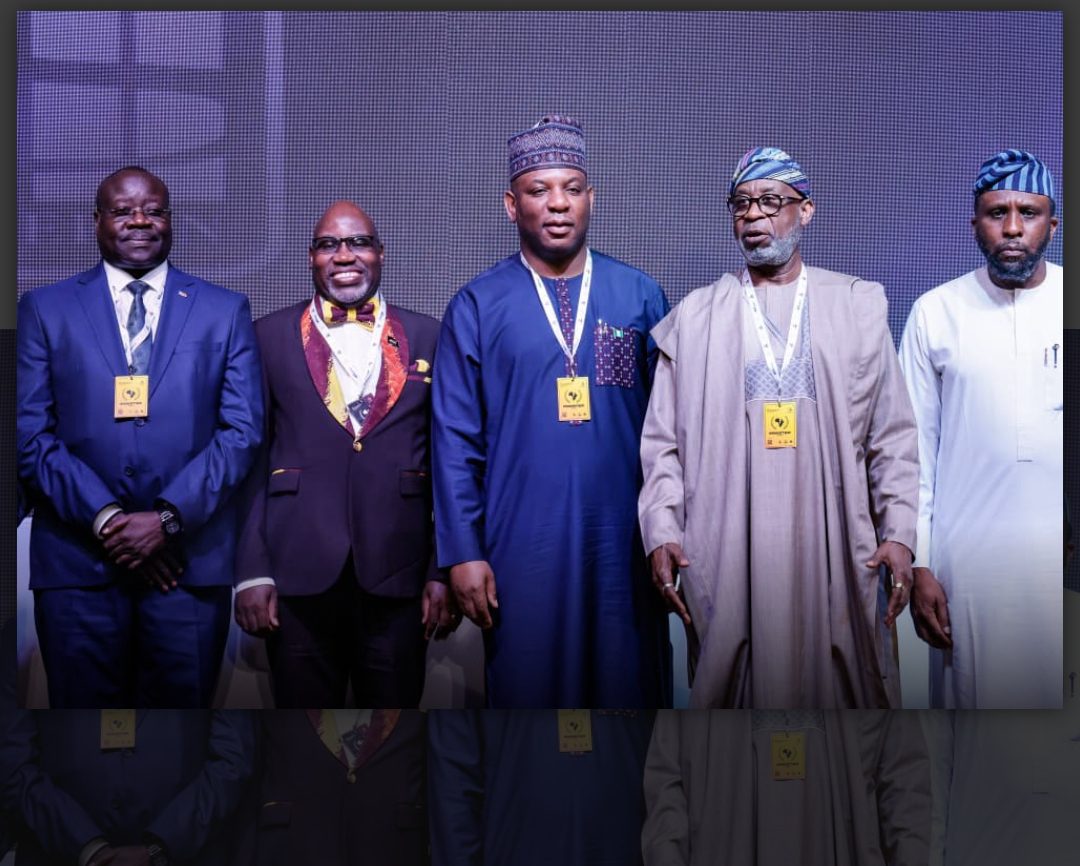
Minister of Solid Minerals Development, Dr. Dele Alake, on Wednesday called on African nations to abandon the long-standing practice of exporting raw minerals and embrace value addition, industrialisation and regional cooperation as pathways to sustainable economic growth and shared prosperity.
Speaking at the 5th African Natural Resources and Energy Investment Summit (AFNIS 2026) in Abuja, Alake said Africa had reached a critical turning point where resource ownership alone was no longer sufficient, insisting that the continent must strategically utilise its vast mineral wealth to drive industrial transformation.
“The more urgent question now is what Africa is prepared to do with what it possesses,” Alake said.
“The answer must be value addition, industrialisation, energy security, local content, responsible investment and shared prosperity.”
Addressing delegates under the theme, “One Africa, One Resource Vision,” the minister argued that Africa’s resource future could not be secured through fragmented national efforts, stressing the need for deeper continental integration in mining, energy, infrastructure and manufacturing.
According to him, mineral deposits, energy systems, transport corridors, processing facilities and markets across the continent must increasingly work together to create competitive regional value chains.
“Africa has reached a point where resource ownership must give way to resource strategy,” he said.
“The mine in one African country should be connected to processing capacity in another. The gas field in one region should support industrial growth across borders. The mineral corridor in one country should feed manufacturing and export opportunities for many.”
Alake noted that the global transition towards clean energy technologies, electric vehicles and advanced manufacturing had placed Africa at the centre of emerging supply chains due to its vast reserves of critical minerals, including lithium, cobalt, graphite, manganese, copper, bauxite and rare earth elements.
However, he warned that mineral abundance alone would not guarantee economic transformation.
“Countries are transformed when they combine geological potential with credible regulation, reliable data, infrastructure, finance, technology, local skills and investor confidence,” he said.
The minister said the administration of President Bola Ahmed Tinubu was repositioning Nigeria’s solid minerals sector as a strategic pillar of economic diversification through reforms aimed at improving transparency, strengthening regulation and encouraging value addition.
He disclosed that the Federal Government had revoked 924 dormant mineral titles as part of efforts to eliminate speculation, unlock idle assets and ensure that mining licences were held by investors with the capacity to develop them.
Alake added that the government had also introduced a policy requiring applicants for mining leases to submit comprehensive value-addition plans before approval.
“We have made it clear that Nigeria will no longer be satisfied with a pit-to-port model in which raw minerals leave the country with little domestic transformation,” he said.
“We want mining investments that lead to processing plants, refineries, industrial clusters, local jobs, technology transfer and stronger linkages with the wider economy.”
He said the new policy direction was already yielding results, citing growing investments in local mineral processing projects across the country.
According to him, recent investments include a $600 million lithium processing plant, a $200 million lithium refinery near Abuja, additional lithium processing facilities in Nasarawa State, a $50 million ASBA lithium plant in the Federal Capital Territory, a $600 million Avatar lithium processing project in Nasarawa and a $1 billion iron ore-to-steel project in Kogi State.
The minister also highlighted significant improvements in government revenue from the mining sector.
He said earnings from solid minerals increased from about ₦6 billion at the commencement of the current administration to over ₦38 billion in 2024 and rose further to approximately ₦68.1 billion in 2025.
While acknowledging that the figures remained below the sector’s full potential, Alake described the growth as evidence that reforms, enforcement and investor engagement were beginning to produce measurable results.
He also reiterated Nigeria’s commitment to strengthening continental cooperation through the Africa Minerals Strategy Group (AMSG), which he described as a key platform for promoting value addition, beneficiation, critical minerals development and mineral diplomacy across Africa.
The minister urged investors to see Africa as more than a source of raw materials, assuring them that Nigeria remained open to partnerships that support local processing, technology transfer, skills development and sustainable industrial growth.
“We welcome capital that builds. We welcome investors who are ready to process locally, employ locally, train locally, transfer technology, respect communities and create long-term value,” he said.
Alake further stressed the need for innovative financing mechanisms and improved infrastructure to unlock Africa’s vast mineral potential, noting that rail networks, roads, ports, power supply and logistics systems remained critical to the success of mining and mineral processing projects.
He concluded by urging African leaders, investors and development partners to translate summit discussions into concrete investments and industrial projects capable of creating jobs and strengthening the continent’s economic competitiveness.
“The minerals are here. The energy is here. The market is here. The talent is here. The leadership is here,” he said.
“Under the Renewed Hope Agenda, Nigeria is determined to use its mineral wealth intelligently, responsibly and boldly to build national strength and contribute to continental progress.”