


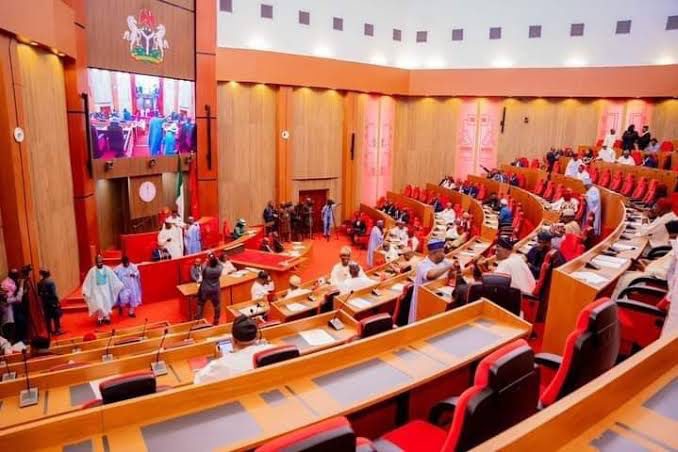
Abuja, Nigeria — In a historic move to tackle Nigeria’s worsening security challenges, the Senate on Wednesday passed a Constitution Alteration Bill seeking to establish state police forces across the country.
The bill, transmitted by President Bola Ahmed Tinubu, was adopted during an emergency plenary session, where lawmakers approved all 26 clauses through a clause-by-clause vote in the Committee of the Whole, securing the constitutionally required two-thirds majority without opposition at final passage.
The legislation introduces a major shift in Nigeria’s policing structure by moving policing powers to the Concurrent Legislative List, enabling both federal and state governments to operate police services.
Under the proposed framework, state governors will be empowered to appoint Commissioners of Police, subject to confirmation by State Houses of Assembly. State police are expected to focus on maintaining public order, enforcing local laws, and addressing community-specific security threats, while the federal police will retain control over counter-terrorism, border security, and inter-state crimes.
Speaking on the safeguards embedded in the bill, Senate President Godswill Akpabio stressed the importance of accountability to prevent misuse of power.
“We have put mechanisms in place to ensure that state police are not used for political oppression. Governors will not be in office forever, and there must be checks,” he said.
The Senate’s decision aligns with earlier action by the House of Representatives, which passed its version of the bill earlier in June, marking a significant step toward restructuring Nigeria’s security architecture.
The push for state policing has gained traction amid persistent insecurity, including banditry, kidnapping, and communal conflicts, with proponents arguing that decentralised policing will improve intelligence gathering and response times at the grassroots level.
However, concerns remain over potential abuse by state authorities, with critics warning that without strict oversight, state police could be used for political intimidation or ethnic bias.
For the amendment to take effect, it must be approved by at least 24 of the 36 State Houses of Assembly before being transmitted to the President for assent.
The Senate expressed optimism that the ratification process would be completed before the end of the year, paving the way for one of the most far-reaching constitutional reforms since Nigeria’s return to democracy in 1999.