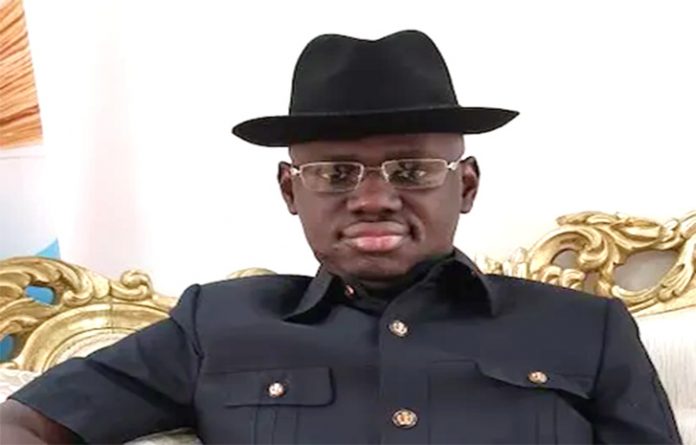
Comrade Timi Frank, the All Progressives Congress (APC ) former Deputy National Publicity Secretary has accused the Federal Government on Wednesday of showing great insensitivity to the plight of victims of the #EndSARS protests and the Lekki Tollgate atrocity a year ago.
Frank stated the Federal Government has failed to bring those responsible for the atrocious deeds to account in a statement commemorating the first anniversary of the youth revolt, which concluded with the harsh repression and grisly slaughter of scores of demonstrators by troops of the Nigerian Army.
He bemoaned the failure of governments at all levels to establish and implement policies and programs that would result in significant job creation, youth empowerment and involvement, and poverty reduction.
According to Frank: “No soldier has been sanctioned nor prosecuted. No living victim nor family of dead victims have been compensated. How long will victims of the wickedness of government await justice?
“Besides, it is both unimaginable and unacceptable that one year after the #EndSARS agitations, policemen involved in the inhuman and egregious acts like torture, extortions, extra-judicial killings and other abuses have not been held to account.
“The Nigerian Government at all levels have not only betrayed the people, they have continued to engage in anti-people rhetorics that show their unwillingness to learn from the issues that led to the #EndSARS protests.”
He lamented that the judicial panels set up to unravel the police atrocities and government sponsored crackdown on peaceful protesters have failed to conclude their sittings and make actionable recommendations.
“Why is it that the panel’s of enquiry set up by the Federal Government and various other state governments have failed to diligently carry out their assignments and ensure justice for victims?
“This is nothing but an unholy and ungodly collusion aimed at making Nigerians forget the incident, protect security agents who massacred peaceful protesters and to eternally deny victims of justice,” he said.
He called on Nigerian youths to remain resolute and steadfast in their quest to stamp out police brutality and other forms of victimization, corruption, harassment, intimidation and extra-judicial killings by security forces in the country.
He condemned the police for attempting to prevent the youths from marking the anniversary of the Lekki Tollgate atrocity with rallies and peaceful protests, adding that peaceful assembly and protest are inalienable rights of every citizen that no government can abridge.
He once again sympathised with survivours and families of those who lost loved ones during the orgy of violence perpetrated against defenseless youths by military personnel and agents of other security forces on October 20, 2020 at the Lekki Tollgate.
He insisted that notwithstanding the theatrics and shenanigans being demonstrated by security forces and government officials who are feeding fat on tax payers’ sweat, the fact remains that the power to change Nigeria for better lies with the youths.
He urged the young people of this country not to waver or give up despite the high level of harassment, intimidation and government sanctioned brutal crackdown against them by Nigerian security forces meant to cow them as there has never been an easy walk to freedom anywhere in history.
He thanked world leaders and members of the international community like President Joe Biden and Hilary Clinton for lending their voice in support of the demand of the #EndSARS protesters, which was to end police brutality, corruption and bad governance in Nigeria.
He thank both local and international celebrities who participated in and supported the protests as well as the local and international media for making the voice of the protesters heard one year ago and who have not allowed the October massacre to be forgotten.
He called on President Biden and the American government and other world leaders to make good their promise to hold the perpetrators of the injustice against the #EndSARS protesters accountable.
Despite signing a Memorandum of Action on state legislature and judiciary autonomy, the majority of the 36 governors have not pushed for legislation to back it up.
Only 12 states have passed legislation granting state legislatures and judiciaries autonomy.
Eight of the twelve states did so in the north, and four in the south.
Plateau, Sokoto, Bauchi, Bayelsa, Enugu, Lagos, Imo, Jigawa, Kwara, Taraba, Nassarawa, and Kaduna are the states involved.
Senator Ita Enang, the Secretary of the Implementation Committee on State Legislature and Judiciary Autonomy, made the revelations in a paper delivered at the National Judicial Institute in Abuja to the Chief Judges of 36 states, 19 Grand Khadis, and 17 Presidents of the Customary Court of Appeal.
Enang, who talked behind closed doors, stated that if the government has financial autonomy, any irresponsible leader will pay the price.
He said there were intense arguments with the governors during negotiations with the Parliamentary Staff Association of Nigeria (PASSAN) and the Judiciary Staff Union of Nigeria (JUSUN) over who would oversee contract awarding in the Legislature and the Judiciary.
Governors, he said, will lay land mines for the judiciary and court heads.
Enang urged the heads of the courts to exercise caution when implementing financial autonomy.
Following the PASSAN and JUSUN strikes, all parties, including the Nigeria Governors Forum, signed a Memorandum of Action on May 20, 2021. (NGF).
All of the states agreed to a 45-day implementation period.
However, as of September 2021, only 12 states had complied with the deal, according to Enang.
He explained what led to President Muhammadu Buhari issuing Executive Order 10 on legislative and judicial authority.
He said: “It is tempting, for time constraints, to skip the historical of the originating processes that led to the autonomy commencing from the Memo et al to the preparation and signing of Executive Order 10, which legally set out the template for the implementation in the different states with sanction for failure to so do.
“Upon Assent to the Constitution Amendment which reemphasized autonomy and funds to the Legislative and Judicial arms directly from the Consolidated Revenue Funds of these states upon appropriation, the governors failed to release the funds to the said arms.
“Upon this, the Chairman and Deputy Chairman of the Body of Chief Judges, Hon Justice Ajana (C. J Kogi), of blessed memories and Hon Justice Kate Abiri (C J Bayelsa) consulted with institutions of government as to possible aid to implementation
As Adviser to the President on National Assembly Matters, I prior consulted with higher authorities and upon green light originated a memo setting out the background and praying Mr. President for constitution of Presidential Implementation Committee on Autonomy of States Legislature and States Judiciary.
“The terms of the memo and prayers dated September 11, 2020 set out thus:
To assess and review the level of compliance by all the 36 states of the Federation with section 121(3) of the 1999 constitution (as amended) To monitor, ensure and cause the implementation of financial autonomy across the judiciary and legislature of the 36 states of the federation in accordance with the provisions of the 1999 constitution (as amended) and other applicable laws, instruments and conventions however providing for financial autonomy for the legislature and judiciary at the tier of government To consult and relate with the appropriate federal and state MDAs including but not limited to the Governors Forum, (NGF) Accountant-General of the Federation and those of states, the National Economic Council and other institutions of state to ensure and where necessary enforce the implementation of the constitutional provision. To come up with appropriate modality or enforce to be adopted by all the states of the Federation for implementation and/or compliance with section 121(3) of the 1991 constitution (as amended) To do such other things that are deemed necessary or incidental to the fulfilment of the aim of the committee to attain the full purpose this assignment. ”The Committee was constituted and inaugurated with terms of reference and constitution as proposed.”
He said it was not easy to convince the governors to concede to autonomy for the Legislature and the Judiciary.
He said there were heated arguments and disagreements with the governors as to award of contracts.
He said after the signing of Memorandum of Action, only 12 states have enacted autonomy legislation for the Legislature and the Judiciary.
He added: “The committee and its mandate were sternly opposed and fought by the governors but eventually arrived at recommendations which were further stoutly resisted by governors who are Heads of the Executive arm of Government and in illegal control of the State Treasury disbursing at discretion without respect to the entitlement of the other two arms of government
“The recommendations were reduced to Executive Order No. 10 signed and issued by Mr. President setting out the process of Implementation and option of getting the sum deducted directly from the account of that states government at the Federation Account and pay directly to the account of the offended arm of government where the state fails.
“The governments of the states failed and refused as expected and after all steps failed, we initiated steps at deducting the monies due the State Judiciary from the Federation account.
“Memo went upstairs and the governors intervened opting for more fruitless time buying dialogue and Mr. President obliged and directed the Chief of Staff to the President to handle
“At this forum, after all familiar antics it was agreed that as per the E O 10, each state should have enacted or made Funds management Laws for each state regulating budgeting and fund releases to the account of each arm of government. This on its own was not honored until strike by Judiciary Staff Union and Parliamentary Staff Association of Nigeria which now moved us from the Chief of Staff office to The Ministry of Labour
“Memorandum of action was signed on May 20, 2021 which you all have with 45 days window of implementation.
“As at September 2021 only 12 States have passed the Legislation, namely: Plateau ; Sokoto; Bauchi ; Bayelsa ; Enugu; Lagos; Imo; Jigawa; Kwara; Taraba; Nassarawa; and Kaduna.
Enang advised heads of the Legislature and the Judiciary to be cautious and place premium on due diligence.
He said with financial autonomy, any errant head of government will pay for it.
He added: “But under the autonomy regime you are, as the Heads of the Arm of Government personally responsible. And will answer for it. Thus the need for due diligence as physician will now heal himself.”
“The best and error proof process is as provided or will be provided in the Judiciary (funds management) Law or such Legislation by whatever name called passed by the State House of Assembly and Assented to by the Governor guiding the operation and application of Judiciary funds by the Judiciary for the Judiciary to be accounted for by the Judiciary.
“Again, in the Memorandum of Action signed in the course of the PASSAN and JUSUN strikes wherein we laid out irreducible minimum in the template as to the proposed content of the Laws, we did have heated arguments and disagreements with the governors as to award of contracts.
“The tone of that discussion and possible land mine evident thereat indicates that the Executive or the Governors will be laying land mines for the Judiciary or Heads of courts to fall into and be doomed.
“Be wise and go for precedence when Statutes leaves loopholes or presents a banana peel.”
Enang asked Chief Judges to be careful in implementing financial autonomy in order not to land in the net of any anti-corruption agency.
He said: “I have had the privilege of examining Funds Management Laws of States’ Legislatures and Judiciary and they, in the main provides for due process institutions and procedure within the Laws and insulates the Heads of the Legislative and Judicial Arms of Governments from direct and hands on participation in financial matters except general direction as given to the Governor in the Executive.
“A governor is not personally involved in processes but such are handled in Ministerial form with permanent Secretaries as accounting officers, not even the commissioners. This is the process as now is, and is to be entrenched statutorily in the Judiciary Funds’ management template.
“This can be said to be the Convention as the political office holders as transient transitory political figures are not allowed by extant practice in any of the three Arms of Government to be a signatory other than ‘approving’ authority in the funds management process.
“Where there appears a lacuna not covered by the Funds Management Laws, or the convention in other arms of Governments in any matter arising in Course of implementation of Financial autonomy please fall back to the practice adopted by the National Judicial Council (NJC) inn fund management process from budget conception, bilateral with Budget office, inclusion in the Annual Budget as will be laid before the National Assembly, defence before the mandate committees, passage, Assent, release to the account of the Judiciary, syndication to the different Heads of courts by the National Judicial Council headed by the Chief Justice of Nigeria, advert for procurement.
“Same are the Chief Judges of states expected to do to other subject courts and Judicial bodies for thus will you escape from answering questions from Anti-corruption institutions.”
Following the assassination of two kings in Imo state, the traditional institution has been thrown into sorrow.
When hoodlums attacked, traditional rulers were said to be holding a stakeholders meeting in Nnenasa, the seat of the state’s Njaba Local Government Area.
Obi 1 of Okwudor independent community, Eze E. Anayochukwu Durueburuo, and Eze Sampson Osunwa of Ihebineowerre autonomous community were among the monarchs reported dead.
Other traditional rulers who attended the gathering were said to have been injured.
Two monarchs were confirmed dead on the spot, according to state police spokesperson Mike Abattam, who confirmed the incident. The wounded were taken to a hospital for treatment.
Concerned about the high incidence of COVID-19-related mortality among children, the United Nations Children’s Fund (UNICEF), in collaboration with the Federal Government, will begin immunizing Nigerian children soon.
Dr. Olusoji Akinleye, UNICEF Health Specialist and Officer in Charge of the Enugu Field Office, hinted at this at a recent One Day Media Executive Meeting on Child Rights Influenced Reporting on the Covid-19 Pandemic in Enugu, organized in collaboration with the Broadcasting Corporation of Abia State.
“In the next few months, Nigeria will begin providing the vaccination to children under the age of 12,” Akinleye stated, lamenting the deaths of so many youngsters due to the COVID-19 virus.
He explained that the vaccines for children are being delayed because many processes must be completed before any drug can be administered to children. However, he urged parents to ensure that their children are safe and protected by following the safety protocols.
Though the federal government, UNICEF, and other development agencies have made significant progress in bringing the pandemic under control through the importation and accessibility of vaccines, the health specialist said they are still facing serious challenges in the areas of public skepticism, unwillingness, and conspiracies against the COVID-19 vaccines.
Akinyele said, “we recognize the partnership in promoting and highlighting the right of every child to life , the very first right that every human being is supposed to have is the right to life, we recognized the fact that the media has always supported the effort of government and partners including UNICEF in promoting right to health.
“UNICEF looks forward to more robust collaboration with media and an expected upward trend in the promotion of health and hygiene practices by media in Nigeria by daily communication to the public of protocols enforced by the government to prevent spread of COVID-19.”
Also speaking Dr. Obasi Chikezie of the Community Medicine Department, Enugu State University of Science and Technology (ESUT) in his papers titled :“COVID-19: Vaccination as a lifesaver. The Role of Mass Media in Accurately Reporting Child Rights Influenced Information, to Curtail the Spread of COVID-19”, equally expressed concern over the low coverage of the vaccines in Nigeria, saying “about 80 percent of people died of not knowing that they had COVID-19, while 20 percent that survived had severe cases”.
Chikezie said the role of the media in COVID-19 vaccine is to remind everyone of the benefits by researching and investigating information that are against the use of the vaccine.
On her part, UNICEF Communication Officer, Dr. Ijeoma Onuoha-Igwe also urged media practitioners to debunk rumours against the COVID-19 vaccines but rather use their medium to speak positively on it.
She said, “use your outlets to emphasise on the need to take the vaccine and also the need to speak well about the vaccines, try to debunk rumours based on the knowledge you will gather”.
Earlier, the Director General, Broadcasting Corporation of Abia State, Umuahia, Sir Anyaso Anyaso, commended UNICEF for the role in championing the cause for women and children in the society saying, the gathering was to harness both the media and UNICEF collective roles in championing the welfare of women and children especially in the COVID-19 pandemic era
The Peoples Democratic Party (PDP) drew the line and stopped accepting nominations for elective seats on Tuesday, ahead of the party’s national convention on October 30 and 31.
As a result, several applicants were spotted rushing to meet the October 19, 2021 deadline for submitting their applications.
Hon Debo Ologunagba, a two-term member of the House of Representatives and a lawyer, was one of those who expressed interest and filed nomination papers for the position of PDP National Publicity Secretary.
Mrs Inna Ciroma, a former Minister and former National Woman Leader, also submitted her own forms to run for the office of Deputy National Chairman (North).
Hajia Ciroma will be pitted against two other women, one of which is a former Ambassador, Alhaji Umar Damagum.
Prof. Stella Effah-Attoe, a former professor at the University of Calabar in Cross River State, also applied for the role of National Woman Leader, presenting herself as a “politician with academic background.”
Ambassador Usman Sani Elkudan, who is also running for the position of PDP National Youth Leader, filed his declaration of interest and nomination forms to the party’s National Secretariat.
Addressing newsmen shortly after submitting her form, Prof Effah-Attoe said, “I have filled the forms adequately and I have submitted few minutes ago. I have very deep interest in women affairs. People have asked, Why are you going for National Woman Leader, why not any other position?
“I said well, in as much as National Woman Leader is zoned to my zone, I normally would have gone for it because of my passion for women. I am very passionate about women.
“Over the years I’ve been involved deeply in women issues. Like I said earlier, apart from being a female politician, I have done a lot of work in the academic field concerning women and gender issues.
“So I’m deeply rooted in gender women, issues, not only practically but theoretically, I have a lot of publications on women. I am much involved in women issues.”
Ologunagba on his part said: “Like I always say, the superpower is in PDP, where the hope resides. So, two things are going to be key in this communication mantra, it will be retrieved and restore.
“We want to restore the country back to the PDP days when it was easy for you to go to bed, at 10pm and take your car and drive down to Lokoja and come back.
“We want a situation where kids will go to school, and they won’t be kidnapped. We want to restore fundamental freedoms that are guaranteed for instance, the freedom to worship.”
Promising to work with other national officers to provide the best qualities of leadership for the party, if elected, Hajia Ciroma said, “as the Deputy National Chairman for the North, I will particularly work with our leaders to mobilize the support that is required to see that the states lost by PDP in 2015 are all reclaimed.
“If offered this position, I will maintain an open-door policy and I will keep my promise to serve within the best possible standards conscious of the need to be impartial, objective and an open facilitator.
“The 2023 election is a task that must be done, and we need a winning formula, knowing the difficulties Nigerians are now faced with.”
The aspirant for the National Youth Leader, Usman Elkudan, promised that PDP youth will be taught how to become tech savvy, to farm and trade, iaf given the mandate.
“Therefore, with the support and acceptance that this declaration of interest to contest has garnered, it is obvious that Usman Elkudan is friendly with the youths, and the youths are as well pleased with him”, his National Campaign Co-ordinator, Hon Aderemi Olusegun declared.
He said: “In terms of Capacity and Competence Amb. Elkudan is the right Choice. Therefore, on behalf of the PDP Youth Wing of our party, we present to you Amb Usman Sani El-kudan to contest for the office of The PDP National Youth Leader as our Consensus Candidate.”
Nigerian youths have numerous reasons to want a better life and future, according to Lagos State Governor Babajide Sanwo-Olu, who added that their incapacity to live and flourish is exacerbated by the country’s current socio-economic and political realities, among other issues.
Sanwo-Olu, who spoke on Tuesday at a Lagos youth symposium organized by the Ministry of Youth and Social Development with the theme “Rebuilding For Greatness, Peaceful Conflict Resolution,” noted that the symposium would bring together over 1,500 youths from various voluntary organizations, uniformed organizations, non-governmental organizations, the National Youth Council of Nigeria, and the Lagos Youth Council.
The governor stated that the goal is to use the opportunity to network and learn new methods to contribute to the reconstruction of Lagos and the realization of the Greater Lagos plan.
The governor recalled that around this time last year, the state, and indeed the entire country, saw mass protests against police brutality, dubbed #EndSars, with the majority of Nigeria’s youth population participating in one of the largest movements since the country’s democratic transition in 1993.
He said, ‘’The protest culminated into wanton destruction of government’s facilities and individual properties across the nation after the riot on October 20th forever known as the Black Tuesday.
This incident sparked global outrage and hoodlums took advantage of the situation and went on rampage, looting and burning down destroying government properties and facilities. In what seemed like a calculated attack, the hoodlums ravaged the city of Lagos, leaving many parts of the state with burnt buildings, looted shops and destroyed properties worth billions of Naira. The economy of the country that was already in decline due to some many factors suffered a huge setback.
‘’Nigerian youths have many reasons to demand for a better life and future, especially in a country where their ability to live and prosper is challenged by existing socioeconomic and political conditions amongst other factors. The proportion of people living in poverty continues to grow especially as COVD 19 rampage continues.
‘’Nigeria’s Youth make up the majority of the country’s population which means that the youths are mostly affected by these statistics of poor people.
‘’The Lagos State government being the most hit state in the nation by the effects of the End SARS protest and the devastating effects of COVID 19 pandemics on its economic and social status, swung into decisive and impactful actions immediately so as to mitigate the effects on its populace.’’
Sanwo-Olu explained that despite the massive destruction of properties as a result of the protests and economic downturn occasioned by the COVD 19 pandemics, the state was able to cope with the challenges.
‘’We embarked on rebuilding the city of Lagos gradually, not only the physical structures but the residents hope was also rekindled with various palliative measures. ‘’Of utmost importance to us as a government are the youth population of the state who formed the bulk of the population and its working force. We had embarked on the implementation of series of Youth engagement and empowerment activities and programmes through its various MDAs notably of which are Ministries of Wealth Creation and Employment; Arts, Tourism and Culture; Science and Technology; Agriculture; Commerce, Industry & Cooperatives and other agencies.
‘’Some of these programmes, which were initiated as part of our efforts to address issues bothering on youth development and empowerment include the remodelling, development and equipping of four Youth Centres across the state namely – Abesan, Lafiaji, Ikorodu and Omituntun Youth Centres. We are also working on the renovation of Ikeja; Popo Oba, Epe; Isheri; Badagry; Sam Shonibare and Obele Oniwala Youth Centres. These facilities offer both recreational and sporting engagement as well as opportunities for skill acquisition / vocational training for youths. ‘’We have in partnership with USAID created two Youth Hubs at Lafiaji and Araromi Gbagada Youth Centers. These hubs offer leadership, livelihood and life skills to Out school youth aged between 15 – 24 years. With this partnership, we hope to reach 25,000 young people during its 5-year tenure with soft skills, leadership competence, social capital and resources using an approach that enables them reach their full potentials in a safe and youth friendly environment.’’
Governor Sanwo-Olu said his government has also implemented mind set changing and reorientation programmes to build the capacity of young people in the state to think positively and take up their role in nation building.
‘’ Some of these programmes include the Lagos State Youth Leadership Initiatives – Ibile Youth Academy which produced Youth Ambassadors that are already making waves as change makers in their communities implementing various live touching and empowering pet projects leveraging on local collaboration and resources. Notable among these programmes also is the Transformational Leadership Training for Young leaders which was designed to upscale the leadership capacity of over 2000 (Two Thousand) participating young leaders physically and virtually in the three senatorial districts of the state.
‘’In a few days, Wednesday 27th October, 2021 to be precise we will be organizing the first of its kind Lagos Police Youth Dialogue session which will have in attendance over 1000 Police Officers and Youths in the State coming together to deliberate on how to strengthen the relationship between them and create a synergy that will improve both their interaction and security situation in the state.’’
Governor Sanwo-Olu added, ‘’Education and healthcare services are two principal things that top our budget expenditure. Year on year we have continued to increase our budget for the education and health sectors. We have built the finest school in Lagos, it is in Elemoro, Ibeju Lekki. It will be commissioned next month. You will happy when you see that school, it is a brand new school, we are building brand new school with all the infrastructure provided in the schools.’’
He said his government has operated an open door policy and maintained a robust engagement serviced by effective feedback mechanism to ensure that the resident’s yearnings and aspirations are met.
Also speaking, the deputy vice chancellor of the Lagos State University (LASU), Professor Wahab Elias, who was the guest speaker noted that conflicts are inevitable in any society , saying it is how the conflict is managed that matters. Elias urged the youths to always negotiate their demands with the authority, saying engaging in conflicts that are not progressive could destroy any society.
A new and disastrous oil spill has been reported at a facility operated by the Nigerian Agip Oil Company (NAOC) near Ogboinbiri in Bayelsa State’s Southern Ijaw Local Government Area.
According to reports, the oil leak at the NAOC Wellhead 9 on October 17 was caused by technical failure.
A field report released on Tuesday in Yenagoa by the Environmental Rights Action/Friends of the Earth Nigeria (ERA/FoEN) hinted that the incident “sprayed crude oil into the environment in gaseous form,” according to
A similar occurrence occurred around several of the oil firm’s wellheads in the area about a year ago, according to the report signed by Project Officer/Head of ERA Niger Delta Resource Centre, Yenagoa, Alagoa Morris.
“The (latest) incident took place on a Nigerian Agip Oil Company (NAOC) wellhead in a marine setting, very visible from the community and commuters on the Apoi Creek; a short distance from the community.”
“ERA/FoEN had reported a similar incident on these wellheads (three) about a year ago. And these spills, which are due to equipment failure, impact the one-way flowing Apoi Creek, affecting Ogboinbiri community and downstream communities like Keme-ebiama and others, all in the Southern Ijaw Local Government Area of Bayelsa State,” it stated.
The youth president of Ogboinbiri, Clinton Oseke, confirmed the recent oil spill, saying that officials of Agip mobilised to the facility one and half hours after the incident took place.
He said, “It (the oil spill) occurred as a result of equipment failure, no argument about that. The company officials finally put it off, but the water of the creek and air we breathe were affected.
“While crude oil spread downstream, the fumes in the air lasted for several hours in the community environment causing discomfort to residents.”
The environmental rights organisation called on the National Oil Spill Detection Agency (NOSDRA) to take steps to ensure that “these reoccurring equipment failure incidents from Agip facilities within Ogboinbiri community environment do not continue without serious penalties against the company.”
“Besides proper investigation and related actions to forestall further occurrence, the incidents should attract compensation, medical attention for victims and environmental audit.
“This is most needful as the community depends on their natural bodies of water in the environment for their water needs since their is no provision of potable water by government or Agip,” ERA/FoEN said.
Jelani Aliyu, Director General of the National Automotive Design and Development Council (NADDC) said Nigeria has the ability to build approximately 400,000 vehicles per year.
Aliyu, who stated this at the Commerce and Industry Correspondents Association of Nigeria (CICAN) Annual Conference in Abuja, Nigeria has the combined potential to build over 400,000 vehicles each year due to the amount of car manufacturing enterprises in the country.
He stated that Innoson manufactures vehicles for the Nigerian market, and that the company is already exporting vehicles to Mali, providing value to Africa.
While adding that the National Automotive Design and Development Council’s (NADDC) innovation has permitted and supported vehicle assembly and manufacture in the country.
He stated that the first electric vehicle was released in Nigeria earlier this year, and that the Council has gone a step further in leveraging electric powered automobiles.
He also claimed that several automobile manufacturers have begun to create gas-powered automobiles as part of the Federal Government’s National Gas Expansion Programme.
In response to the country’s epileptic power supply, which might be a stumbling block to progress, Aliyu stated, “Nigeria should not be defined by its issues.”
According to him, “We are bigger than our problems. We must be defined by our dreams and aspirations and by what we can achieve.”
The Director General of NADDC said the Usmanu Danfodiyo University, Sokoto, University of Lagos have developed solar-powered vehicles, adding that the University of Nigeria, Nsukka, has begun production of environment-friendly, solar- powered automobile.
He noted that the AfCFTA presents the automotive industry with an even wider market of over one billion people.
The communiqué issued at the end of the CICAN Annual Conference, with the theme, “The Role of Nigeria’s MSMEs, Export, Commodities, Trade and Investment in Stabilising the Post-Covid-19 Economy : Issues and Challenges, ” with the sub themes as :”The Place of AfCFTA in Nigeria’s Economic Diversification Plan: Pros & Cons” and the “FG’s MSMEs Survival Fund: Successes, Lessons and Pitfalls,” focused on key issues impacting the trade, investment and industrial sub-sectors of the economy.
The Communiqué which was signed by CICAN Chairman, Frederick Idehai, expressed concern on Nigeria’s continued dependence on oil revenues, which has been a major challenge in the country’s foreign exchange market.
“The conference was of the consensus that though the AfCFTA has its challenges, the pan-African trade pact would deepen economic integration of the continent, improve and expand intra-Africa trade, enable rule-based engagement facilitating dispute resolution and addressing injurious trade practices and would serve as foundation for establishment of a continental Customs Union.
“While the Federal and sub-national governments work to solve the challenges associated with the AfCFTA such as infrastructure dearth, intense competition from cheaper imports and weak regulation, it is pertinent that the private sector ramp up production, improve their packaging and expand distribution to beat the looming competition.
“It was recommended that Nigeria should be mindful not to turn into a dumping ground as the country explores the opportunities in the AfCFTA.
“At the centre of discussions at the conference was the Micro, Small and Medium Enterprises Fund established by the Federal Government to cushion the effect of COVID-19 on small businesses in Nigeria.
“The speed with which Nigeria exited recession has been attributed to the success of the Fund and other initiatives of the government.
“Participants x-rayed the major impact of the MSME Fund and pitfalls in order to chart a better path in the future.
“The conference reviewed and noted key achievements of the MSME Survival Fund. Data from the Industry Ministry shows that N75billion survival fund has been carried out in four segments even as a total of 174,574 persons successfully registered for the N75 billion National MSME Survival Fund and the Guaranteed Off-take Stimulus Scheme under the Nigeria Economic Sustainability Plan.
“The Scheme, designed to save jobs and sustain local production amidst COVID-19, has impacted small businesses positively. The Fund was adjudged successful and recommended for extension.
“The conference welcomed the Federal Government’s assurance that it has created access to finance to boost production and foster innovation geared towards sustaining small businesses,” according to the Communiqué.
Nigerian and Brazilian governments would develop 117 agricultural mechanisation facilities around the country.
Minister of State, Federal Ministry of Agriculture and Rural Development Mustapha Baba Shehuri made this known at a virtual high level panel discussion to commemorate 2021 World Food Day.
Shehuri added that once these centres are operating, Nigerian farmers will be able to receive agricultural mechanisation services for a charge without having to acquire expensive farm equipment.
So he asked for more financial backing to increase big agricultural investment.
The minister stated that agriculture, as the government’s economic diversification priority, requires stronger agro financing to support value chain activities.
He said the ministry was committed to addressing domestic food needs, promoting quality exports, and fostering an agro-business-friendly environment.
According to him, ‘’There is a deliberate strategic approach towards job creation, conservation of foreign exchange and attainment of food security.
Shehuri pointed out that the seed sub- sector is being repositioned to ensure that farmers have access to quality seeds to improve yields.
“The National Agricultural Seeds Council (NASC) under my watch has been directed to interface with key seed industry stakeholders to ensure that Early Generation Seeds (EGS) are structured to ensure uninterrupted supply of certified seeds,” he said.
He disclosed that, ‘’there is also on-going awareness campaign by NASC on the importance of using improved seeds to boost production’’, adding that the administrative bottlenecks that had previously hindered farmers from having easy access to fertilizer had been addressed.
The Minister further maintained Nigeria’s agriculture has done well in the areas such as Nigeria”being the world leading producer of yam( which is about 18.3 million metric tonnes), world leader in the production of cassava that has steadily risen to 70 million metric tonnes, ranks second as world producer of sorghum just after the United States of America, ranks fifth in the production of palm oil and cocoa and the share of Gross Domestic Product(GDP) contributed by agricultural sector in Nigeria has consistently been impressive year in year out.”
Commenting on Nigeria’s agricultural exports, Shehuri said: “Nigeria is a global player in agricultural export; in the year 2019, they are as follows: Sesame Seeds oil: N77.04 billion, Cocoa: N66.73 billion, Cashew Nuts: N45.6 billion, Frozen Shrimps and Prawns: N7.46 billion, Ginger: N3.34 billion, Processed & Semi Processed Agro Food: N1.84 billion and Cotton: N609.33 million.”
He emphasised that ‘’the potential in this strategic sector is enormous and there is enthusiasm and political will to return the agricultural sector as the highest contributor to the National Gross Domestic Product by the year 2025’’.
Other panelists at the virtual meeting include the Senior Special Advisor to the President on Sustainable Development Goals (SDGs), Princess Adejoke Orelope Adefulire represented by her Assistant, Rose Keffas, Senior Special Advisor to the President on Agriculture, Dr. Andrew Kwasari, Food and Agriculture Organization of the United Nations (FAO) Representative in Nigeria and to ECOWAS, Fred Kafeero, International Fund for Agricultural Development (IFAD) Country Programme Manager, Patrick Habamenshi, National President of All Farmers Association of Nigeria (AFAN), Arc. Kabir Ibrahim, World Food Programme (WFP) Country Director, Ronald Sibanda among others
Malam Muhammad Musa Bello, Minister of the Federal Capital Territory (FCT), has urged citizens of the nation’s capital to adopt the values of sacrifice, patience, and tolerance as political activities intensify.
He made this known in his Eid-el-Maulud message to FCT residents, while enjoining all Muslim faithful and other residents of the FCT to join Nigerians from across the country to reflect deeply on the role they can play individually and collectively to build a nation of which they can be proud.
According to him, “We must recognize that the resort to violence or promotion of anarchy has never, and will never resolve our social or political variances.
“Therefore, there is the need for us to imbibe the true meaning and virtues of sacrifice, patience, tolerance and fellowship in our relationships and dealings with fellow residents and all Nigerians.
“Always embrace dialogue in settling differences and reject attempts by unpatriotic individuals or groups to incite unrest which he said is always counter-productive”, the Minister added.
Bello also used the opportunity to restate the commitment of the FCT Administration to the provision of adequate security during the Maulud celebrations, and also appealed to residents to always cooperate with the security agencies at all time by providing useful information that will assist them in the discharge of their responsibilities.
Speaking on COVID-19, Bello called on residents to be mindful of the disease which he said is still very much in the FCT, and urged them to continue to observe all non-pharmaceutical interventions to prevent its spread.
He, however, felicitated with Muslims in the FCT on the occasion of the Eid- el- Maulud celebrations, urging them to adhere to the cardinal principle of peace upon which the religion of Islam is built.