UNICEF has condemned the deaths of three children in Borno, Nigeria’s north-east, who were believed to have been killed by unexploded bombs.
According to the UN agency and the avoidable deaths of the children as young as 12 years who were playing on Mblu Bridge in Ngala, is yet another sad reminder that children remain direct and indirect targets of the protracted conflict wracking north-east Nigeria. While three children have sadly lost their lives, three others are in critical conditions while two other children sustained mild injuries.
Peter Hawkins, UNICEF Nigeria Representative said, in 12 years of protracted conflict in the north-east, thousands of children in the region have been killed, maimed, abducted, displaced, and experienced multiple violations of their human rights. UNICEF is deeply worried that conflict-affected children continue to be casualties of war.
He further stated that, “First of all, we extend our deepest and heartfelt sympathy to the families of the children killed. No family should have to go through this – and no child should fall victim to unexploded remnants of war while playing.”
Children are at particular risk from unexploded ordnance, which are small enough to pick up or kick around, and which children can mistake for toys or objects of value. Such weapons account for over half of those killed or injured by landmines and other explosive remnants of war globally.
“These deaths are unacceptable. All sides to the ongoing conflict must protect children and prioritise their wellbeing at all times. Playing fields, schoolyards and communities must be safe and habitable for children,’’ said Peter Hawkins.
“Children’s lives should not be at stake in a conflict they didn’t start. We must address the shrinking safe spaces for children and ensure that children – especially those already affected by conflict – are protected and have a chance to survive and fulfill their potential.”
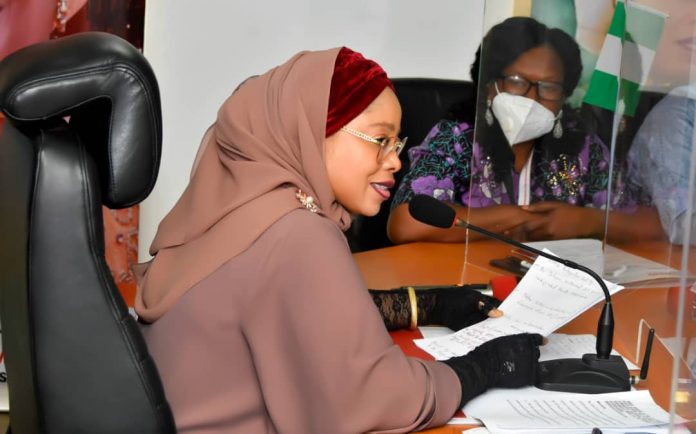
The Federal Capital Territory (FCT) Minister of State, Dr. Ramatu Tijjani Aliyu on Friday inaugurated the FCTA/USAID Steering Committee as part of measures towards the revitalization of the FCT healthcare systems to deliver quality, affordable and sustainable preventive healthcare services to residents of the territory,
The minister,at the inauguration, stated that the steering committee was a follow up to the Memorandum of Understanding (MoU) signed between the United States Agency for International Development (USAID) and the Federal Capital Territory Administration (FCTA) on December 17, 2020, to support the revitalization of FCT healthcare systems.
Aliyu noted that the MoU seeks to address weak healthcare system especially the Primary Health Care (PHC) performances and the root causes of poorly functioning health systems in the Federal Capital Territory.
She stressed that through this partnership, the FCT Administration would improve the capacity of the FCTA to plan, allocate and manage resources as demonstrated by increased budgetary allocation for PHC, and increased expenditure for Primary Health Care.
Other milestones that could be achieved through this partnership include increase the coverage of FCT’s minimum benefit package for PHC to 20 percent of the residents of the FCT in 2020, 30 percent in 2021, 40 percent in 2022, 50 percent in 2023, 60 percent in 2024.
To drive the operationalization of the signed MoU, the minister charged the committee to serve as an avenue to promote transparency, the use of data for decision-making and problem solving, adding that the committee would engage other stakeholders such as members of the Senate and House of Representatives as required.
Also , the Mission Director USAID, Anne Peterson, who joined the inauguration virtually identified the primary healthcare services as the foundation of strengthening universal health coverage.
She noted that USAID recognized the important roles healthcare system play in guaranteeing universal access to health services and improving the health outcome, while expressing the hope that this new steering committee would provide a road map in guiding primary healthcare partnership.
“USAID is committed to partner with FCT Administration to improve primary healthcare services by creating and strengthening systems that will improve and assist our primary healthcare in equitable distribution of resources”, she stated.
Members of the committee include, the FCT Minister of State, as chairman, Mission Director, USAID, co-chairperson, FCTA Permanent Secretary, Secretary Health and Human Services Secretariat, Executive Secretary, FCT PHCB, Director, HPRS, Director, FCT Health Insurance, Director, Treasury, and Deputy Director Health Financing Equity and Investment as Secretary of the Committee.
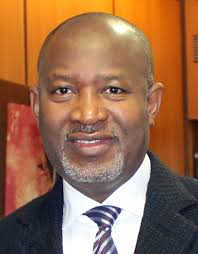
The Minister of Aviation, Hadi Sirika, has harped on the need for Public- Private Partnership (PPP) in managing Nigerian international airports.
The Minister said that the strategy will help to modernise and standardise the operation and management of the Nigerian airports.
Sirika made the plea during his presentation in a zoom meeting on the theme “Nigerian Airport Concession Strategy.
He further stated that the Federal Government had earlier proposed a 20 to 30-year concession tenure for four major airports billed for private ownership.
He said the plan would enable private investors to own, operate and recoup investments made on Lagos, Abuja, Port Harcourt and Kano airports.
Sirika also said that the airports in Nigeria are currently operating in a suboptimal environment. All airports require investments in runway maintenance, navigation aids as well as terminal facilities; relatively low asset utilisation due to the limited opening hours of other smaller Nigerian airports.
Lack of terminal capacity as the Airports fall short of gates, stands and check-in desks; the airports have not been designed as international hubs but operate separate international and domestic terminals, “ he said.
Sirika maintained that a private operator of the four main airports in the country would be able to operate the airports with an international standard and expand the facilities in accordance with traffic demand at each airport.
The minister said the authority had set minimum service levels for the concessionaire to comply with on the airport PPP Projects.He further said that the move would provide the authority with a tool to set service standards for the operation of the terminals and secure a reliable high-level product.
A strong aviation industry provides the country with a high connectivity, both on a domestic and international scale. This has several economic and social benefits for the country as identified in this OBC.
These include time and cost savings for companies, efficiency gains for the economy, increased connectivity for remote regions, and improved access to health care, “he said.
He said the airport concession strategy supported the Nigerian Airport Concessions to be a Terminal Concession, adding that the majority of the revenue would be derived from Non Aeronautical sources.
According to him, all other facilities at the airports and existing concessions outside the Airport Terminals will still be managed by Federal Airports Authority of Nigeria (FAAN).
Srika said that the concessionaire would provide the investment required to upgrade the existing terminals, take over the new terminals and maintain them over a period of time to be determined based on financial assessment of each transaction.
“Passenger Service Charge and Security Charge will be shared by FAAN and the Concessionaire and FAAN’s share of the charges shall be paid directly to FAAN by International Air Transport Association (IATA).
The concessionaire will sign service level agreements with FAAN and NAMA to ensure that airport operates efficiently, the service level agreement will cover the Runway, Taxiway, Security and Air Traffic Management.
FAAN will be required to provide manpower through AVSEC for security of both Airside and Landside, however concessionaire will provide and maintain landside equipment but FAAN will continue to provide maintain Airside security equipment, “ he said.
Nigeria on Thursday took delivery of the first shipment of 177,600 Johnson and Johnson vaccine doses from African Union (AU) under the African Vaccine Acquisition Trust (AVA).
The National Primary Health Care Development Agency (NPHCDA) in Abuja inspected the vaccine.
NPHCDA Executive Director Dr. Faisal Shuaib said Nigeria was among the first 10 African countries to receive vaccines through the cooperation to received the vaccines at the National Strategic Cold Store in Abuja.
Also, Nigeria is one of the first countries to benefit from a supply agreement signed in March 2021 to acquire 220 million doses for the continent, with the option to order an additional 180 million.
Shuaib , ”the 177, 600 doses would step up efforts to battle a third wave of infections across the country, noting that the single-shot Covid-19 vaccine, was the first of its monthly supplies under an arrangement with AU nations.”
“Nigeria took delivery of 177,600 doses of Johnson & Johnson vaccines, being part of the 29,850,000 doses that the Federal Government of Nigeria procured through the AVAT of the AU Commission through the facility provided by African Export-Import Bank (AFREXIMBANK)
“The balance of the vaccine will subsequently be delivered in monthly tranches.”
“This batch of Johnson and Johnson vaccines will be focused on those who are in the hard-to-reach areas (riverine areas, desert areas and security-compromised areas), the elderly and frail individuals.
“This is because the Johnson & Johnson vaccine is administered as a single dose vaccine unlike the AstraZeneca and Moderna that require two doses for complete vaccination,” Dr Shuaib said.
Milestone for Africa The Regional Chief Operating officer, African Export-Import Bank (Afreximbank), Mr Abdoulaye Kone , said that the vaccine acquisition by AVAT was a unique milestone for the African continent.
He further stated that, ”the delivery marks the first time that the AU Member States have collectively purchased vaccines to safeguard the health of the African population.”
Mr Kone disclosed that the first monthly shipment of vaccines acquired by AVAT commenced on Aug. 5, to several Member States,and the shipments would continue for a total of 6.4m doses shipped in August.
The World Health Organization (WHO), Country Representative, Dr Walter Kazadi Mulombo, commended the first phase of the Covid-19 vaccine roll-out in Nigeria with the vaccination of the front-line workers and other priority groups who were at high risk of Covid-19.
He added that Nigeria’s preparation for the second phase of the Covid-19 vaccination, involving more resources and logistics, was highly commendable.
Molumbo commended the multi-sectoral approach embraced by Nigeria towards making vaccines available.
According to him ; “If any. As I always mentioned at different fora, vaccines are a critical tool in the battle against COVID-19. These vaccines are safe and effective and will be the game- changer: but for the foreseeable future, we must continue wearing masks, physically distance and avoid crowds.
“The J&J vaccine we have today, was listed for emergency use by WHO on the March 12, 2021. The vaccine has been authorized for use in Europe, the United States and other countries.”
“As the only single dose Covid-19 vaccine approved for use to date, the vaccine may be an important tool for accessing hard-to-reach populations, thus playing a key role in preventing infections and reducing deaths across Nigeria.
“Let me seize this opportunity to say that this pandemic still has a long way to run: Nigeria is experiencing a 3rd wave and we need to work together to ensure that all preventive measures put in place are maximized to reduce the impact of COVID-19 on our lives,” he advised.
Also, the Africa Center for Disease Control(CDC), Representative, Dr Amadou Cheick Tidiane CISSÉ, said it was a sign of hope that the continent would finally be able to close the vaccination gap other parts of the world.
Tidiane CISSÉ, hinted that these vaccines would help to save African lives and livelihoods and to resume their ways towards the continental development agenda.
He further stated that , since the beginning of this pandemic, which continues to devastate lives and livelihoods in Africa and globally, it has been clear that safe and efficacious vaccines are our only way out.
Similarly , the Representative of UNICEF in Nigeria, Dr Peter Hawkins, said that ”Covid-19 vaccines were the most important tool the world have against Covid-19.”
Hawkins urged Nigerians that vaccination was also providing better protection than natural immunity for adults previously infected with Covid-19, from getting re-infection.
He noted that the country is expected to received another shipment of Oxford AstraZeneca Vaccine doses by next week.
AVAT was established by the African Covid-19 Vaccine Acquisition Task Team, set up in November 2020 under the African Union chairmanship of President Cyril Ramaphosa, President of the Republic of South Africa.
It is part of the African Union’s Covid-19 Vaccine Development and Access Strategy, and its goal of vaccinating at least 60 per cent of the African population with safe and efficacious vaccines against COVID-19.
The agreement with Johnson & Johnson was made possible through a USD 2 billion facility provided by Afreximbank, who are also the Financial and Transaction Advisers, Guaranion for Africa (UNECA) who coordinated the alignment of the AU Ministers of Finance on the financing arrators, Instalment Payment Advisers and Payment Agents, and the support of the United Nations Economic Commissions.
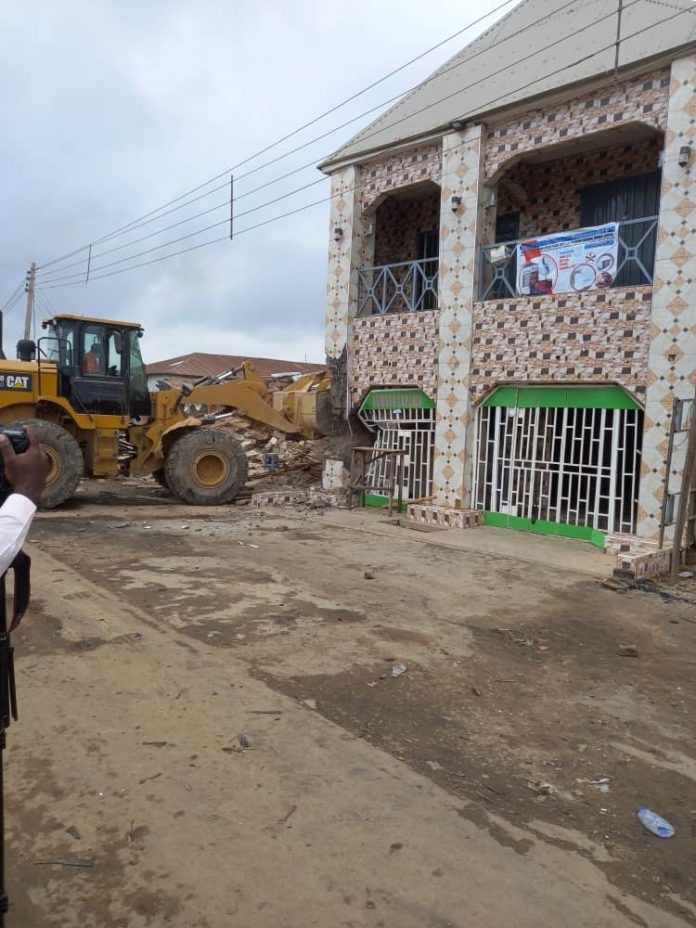
The Federal Capital Territory Administration (FCTA) on Thursday demolished worship centres, business stores, shanties, and other unlawful constructions built on traffic corridors in Abuja’s densely populated Mpape Community .
This, according to Comrade Ikharo Attah, Chairman, FCT Ministerial Taskforce on City Sanitation, said is in continuation of the on going clean up exercise aimed to halt the distortion of the Abuja Master plan, saying, the operation will persist for the next three weeks.
Most of the affected worship centers, he claimed, had extended their structures and fences to the road shoulders.
Attah said the activities was part of the FCT Administration’s attempts to free the nation’s capital of environmental nuisances as well as a strategy to reduce criminality in the territory.
He promised that during the process, the administration would leave no stone untouched.
According to him ; ” The major illegalities identified here are worship centres, business shops, shanties, and other illegal structures build on road corridors which makes Mpape Community looks very offensive due to nuisance.
” The demolition of such environmental nuisance started on Wednesday which we are able to clear a number of shanties and containers on roadside and across and deep inside the Mpape Market.
” Similarly, today we carried out major operation and cleared illegal structures and others that were extended to the road shoulders and we shifted them back.
” We also shifted part of the market back and we are able to do what we did here today, knowing that the exercise will last for three weeks,” Attah said.
Attah stated that all the plots that would be reclaim at the end of the exercise would be handle by the relavant departments of the administration.
” The ones that are concern by actually road expansion, the department will be doing their job and one concern with the greening will be carried out by relavant departments.
” Ours as enforcement officers is to clear the road, remove all the incumbrances, illegalities and once our job is done we are satisfy that we have done our part.”
Similarly , Mr Peter Olumuji, Secretary, FCTA, Command and Control Centre noted that, ” in crime triangle there is one of the portion that talks about opportunities.
” And here the opportunities that we noticed is the people started developing unplanned settlement and shanties which breed criminality.
” So removing all this shanties is removing the opportunity for criminals to hibernate and commit crime,” he said.
Meanwhile , Mr Vincent Victor, a landlord and shop owner at Mpape, opined that none of the occupants of the demolition illegal structures have approved from FCTA to erect buildings or shanties.
Victor, however, appealed to the FCTA to provide them with alternative location to enable them continue their business.
The Federal Capital Territory Administration (FCTA) began work on the Kagini Light Rail station’s access road and parking lot on Thursday in Abuja, the
The project, which has a budget of N1,830,392,695.00 and is being funded by the Ministry of Environment’s Green Bond fund, was granted to an indigenous contractor and is expected to be completed in twelve months.
President Muhammadu Buhari approved the project early this year, according to FCT Minister Malam Muhammad Bello, as part of attempts to speed up infrastructural development in the nation’s capital.
The Kagini train station, according to Bello, was designed to give citizens in the area and nearby Districts with the advantages of a modern rail transit system while also reducing harmful carbon emissions.
According to the Minister of Environment, Dr. Mohmood Abubakar, who was also the principal guest who performed the ceremony, the project was funded through the earnings of the Federal government’s second sale of the Sovereign Green Bond.
He also stated that his ministry would work with the FCT through the Green Bond initiative to address the long-standing issue of insufficient traffic signal management.
The government, according to Abubakar, is using the Green Bond project to address the country’s climate change issue.
The project, according to Dr. Ramatu Aliyu, Minister of State for the Federal Capital Territory, is in accordance with the administration’s commitment to developing and providing services that benefit individuals directly.
Aliyu went on to remark that the administration was soliciting the assistance and resources of private sector stakeholders to sponsor more people-centered projects that would improve people’s lives.
“We are convinced of the need of creating an environment that allows firms to thrive while simultaneously cutting the cost of doing business,” she said.
“We’ve put in place mechanisms to help build and aggregate stakeholder competencies and commitments,” says the president, “in order to mobilize public and private resources for increasing the nation’s capital and enriching the lives of all residents.”
…Ona Of Abaji Supports Medical Laboratory Directors
The Guild of Medical Laboratory Directors said Nigeria has no business importing Covid-19 vaccines.
Saying, we can produce any human vaccine in the country, we have the capacity, manpower and human resources to do so. Laboratory Scientists in Nigeria have done it in the past and can still do it today”.
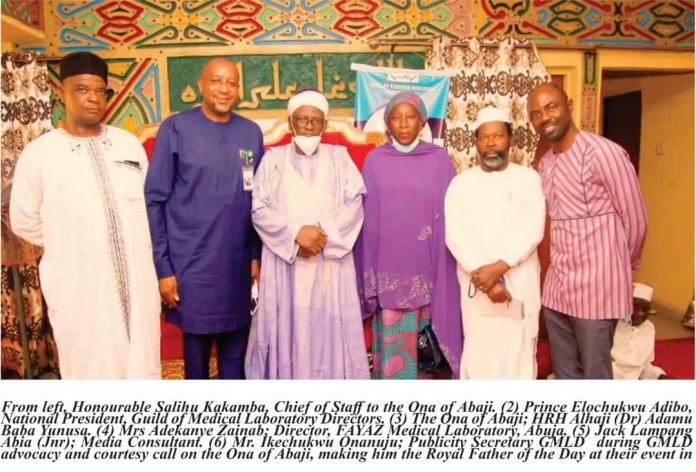
This was made known when the leadership of the Guild of Medical Laboratory Directors, led by its President, Prince Elochukwu Adibo paid courtesy visit on Ona of Abaji, His Royal Higness, Alhaji (Dr) Adamu baba Yunusa, Chairman, FCT Council of Traditional Rulers at his palace.
The association who spoke through it’s President, Prince Elochukwu Adibo said, “The production, availability and accessibility of the current produced Covid-19 vaccines to developing nations have become a source of worry to the Guild of Medical Laboratory Directors.
“Nigeria has no business importing vaccines, we can produce any human vaccine in the country, we have the capacity, manpower and human resources to do so. Laboratory Scientists in Nigeria have done it in the past and can still do it today”.
Adibo informed the Ona of Abaji that Nigerian Medical Laboratory Scientists produced Small Pox Vaccine in Nigeria at the Yaba Vaccine Centre, supervised by World Health Organisation (WHO), not only for Nigerians but for the entire West African citizens in the fight against Small Pox in the sixties up to the early nineties. He wonders what went wrong with the Yaba human vaccine centre.
He added that, “like every other institution of government in Nigeria, the vaccine centre was mismanaged, your Royal Highness sir, every striving government institution in Nigeria then, be it Nigerian airways, railways, refinery, shipping lines, Nigerian Mining Corporation, Hotels owned by government, transportation, etc were mismanaged and they all collapsed. Therefore, the vaccine centre in Yaba also went down”.
He further stated, “baring the present circumstances that we find ourselves with the corona virus pandemic, the federal government as a matter of urgency should resurrect the vaccine centre in Yaba – Lagos, because any nation that depends on foreign vaccines, is toying with the health of its citizens, as global politics on vaccine production, availability and accessibility is not favourable to under-developed nations, as developed nations that produce the vaccines have discriminatory and protective tendencies against less privileged countries who cannot afford to produce human vaccines, because they want to make the vaccines available to their citizens before considering other nations”. Prince Adibo further said, “that is why the Guild of Medical Laboratory Directors has planned their National Scientific Conference for Abuja at the International Conference Centre, with the theme: “Harnessing Awareness of Public Private Mix for the Production of Human Vaccine and in In—Vitro Diagnostics”, to find a final solution to producing local human vaccines in Nigeria”.
Adibo further reiterated that, “if Nigeria begins the work of producing human vaccine today, it will take three years to actualise the vaccine production dream in the country”. Therefore he invited the Ona of Abaji, His Royal Higness, Alhaji (Dr) Adamu baba Yunusa, as Royal Father of the Day to the Guild’s National Scientific Conference, holding at the Abuja International Conference centre, on the August 17 – 20, 2021.
In his response, the Ona of Abaji thanked the leadership of the Guild of Medical Laboratory Directors for their courtesy visit to his palace, he also praised Laboratory Scientists for saving lives silently in their medical laboratories through their empirical laboratory diagnosis.
He described the Laboratory Scientists as the cornerstone of health providers and the doctors’ doctor. He encouraged them to do more in the areas of research and development to find cures to the numerous diseases and infections afflicting mankind today. The Ona of Abaji however said he was very worried over the prevalence of fake and hard drugs in the country.
“I am very happy with your visit to my palace, medical laboratory scientists all over the world play vital roles in saving lives. The current Covid-19 pandemic has brought your profession to prominence, limelight and importance in the health sector, but I am extremely worried about a lot of fake drugs that are being produced in Nigeria and imported into the country, they are responsible for the death some of the sick and the wounded across Nigeria”.
The Ona of Abaji further reiterated that the use of hard drugs by our youths is responsible for over 80 per cent of the crime committed today”. He condemned the kidnapping and violent crimes in the country and called on all citizens to join hands with the government of President Muhammadu Buhari to fight against crime and criminality in the country.
The Ona concluded by saying, “whether we are Hausa, Igbo, Yoruba, or any other tribe, we are one, and must learn to live together for the betterment and the future of our Nigeria. Therefore we must work hard to safeguard and protect this country”.
He promised to do everything within his power to enlighten his subjects to adhere to the Covid-19 protocols and maintain the peace in his domain.
Shell Petroleum Development Company of Nigeria (SPDCN) agreed on Wednesday to pay N45.9 billion in compensation to some Ogoni communities whose livelihoods were destroyed by oil spills a few years ago.
The monetary compensation, which was ordered by a Federal High Court in Lagos about 10 years ago, is to be paid to the affected communities through their lawyer, Lucius Nwosu (SAN).
On Wednesday, SPDCN’s lawyer, Aham Ejelamo (SAN), told a Federal High Court in Abuja that his client has decided to pay the money.
Ejelamo had previously asked the court to order that the money be paid into a bank account set up for the purpose by the court’s Chief Registrar.
The money was eventually agreed to be paid to the affected communities through their lawyer, Nwosu.
Justice Ahmed Mohammed, the judge, then issued an order approving SDPCN’s payment.
On June 14, 2010, Justice Ibrahim Buba (then of the Federal High Court in Lagos) awarded the money as damages against SPDCN in favor of the Ogoni communities in a suit brought by community representatives led by Chief Isaac Osaro Agbara and nine others.
The plaintiffs were said to have agreed to waive interest on the principal judgment sum as a concession reached during the final reconciliatory agreement talks.
The World Health Organization (WHO) has announced that the Solidarity PLUS trial for promising medications will be conducted in 52 countries, marking an unprecedented global partnership for COVID-19 R&D.
The WHO Director-General, Dr. Tedros Adhanom Ghebreyesus, announced the second phase of the Solidarity study, Solidarity PLUS, which will enroll hospitalized patients to evaluate three novel medications in hospitalized COVID-19 patients.
The medicines artesunate, imatinib, and infliximab were chosen by an independent expert panel for their ability to reduce the risk of death in COVID-19 patients who were hospitalized.
Artesunate is used to treat severe malaria, imatinib is used to treat some cancers, and infliximab is used to treat immune system illnesses like Crohn’s disease and rheumatoid arthritis.
The manufacturers of these medications generously contributed them for the trial.
According to him, “Finding more effective and accessible therapeutics for COVID-19 patients remains a critical need, and WHO is proud to lead this global effort.”
“I would like to thank the participating governments, pharmaceutical companies, hospitals, clinicians and patients, who have come together to do this in true global solidarity.”
“The Solidarity PLUS trial is a platform trial that represents the largest global collaboration among WHO Member States. It involves thousands of researchers in over 600 hospitals in 52 countries, 16 more countries than the first phase of trials.
“This allows the trial to assess multiple treatments at the same time using a single protocol, recruiting thousands of patients to generate robust estimates on the effect a drug may have on mortality even moderate effects.
It also allows new treatments to be added and ineffective treatments to be dropped throughout the course of the trial.
Previously, four drugs were evaluated by the trial. The results showed that remdesivir, hydroxychloroquine, lopinavir and interferon had little or no effect on hospitalized patients with COVID-19.
Through the Solidarity PLUS trial, researchers across the world have an opportunity to use their expertise and resources to contribute to global COVID-19 research.
While speaking on Artesunate, he said; “Produced by Ipca, is used to treat malaria. In the trial, it will be administered intravenously for 7 days, using the standard dose recommended for the treatment of severe malaria.
“Artesunate is a derivative of artemisinin, an antimalarial drug extracted from the herb Artemisia annua. Artemisinin and its derivatives have been extensively used in the treatment of malaria and other parasitic diseases for over 30 years, and are regarded as being very safe. The WHO COVID-19 Therapeutics Advisory Group recommended evaluating the anti-inflammatory properties of artesunate”.
Also talking on, Imatinib,he said, “Produced by Novartis, is used to treat certain cancers. In the trial, it will be administered orally, once daily, for 14 days. The dose used is the standard maintenance dose, which is at the lower end of the dose patients with haematological malignancies are given over extended periods.
“Imatinib is a small molecule tyrosine kinase inhibitor, formulated as an oral chemotherapy drug used to treat certain types of cancer. Experimental and early clinical data suggest that imatinib reverses pulmonary capillary leak. A randomized clinical trial performed in the Netherlands reported that imatinib might confer clinical benefit in hospitalized COVID-19 patients, in the absence of safety issues”.
More so on Infliximab , he said, “Produced by Johnson and Johnson, is used to treat diseases of the immune system. In the trial, it will be administered intravenously as a single dose. The dose used is the standard dose that patients with Crohn’s Disease are given over extended periods.
“Infliximab is a TNF alpha inhibitor, a chimeric monoclonal antibody that recognizes human TNF alpha. Anti-TNF biologics have been approved for treatment of certain autoimmune inflammatory conditions for more than 20 years, demonstrating favourable efficacy and safety in restricting broad spectrum inflammation, including in elderly populations who are most clinically vulnerable to COVID-19”.
The Federal Capital Territory (FCT) Health Insurance Scheme (FHIS) management has been urged to come up with a way to include terminal diseases and other life-threatening illnesses in the agency’s health services.
The FCT Permanent Secretary, Mr Olusade Adesola made the recommendation at the Public Presentation of FHIS Working Documents yesterday in Abuja, also advised that the initiative’s beneficiaries include the elderly.
He opined that diseases like cancer, liver disorders, and sickle cell anemia are extremely costly to treat, emphasized the importance of enlisting the help of donors and other stakeholders.
He said that, “In order to adequately cover these broad spectrum of expansions, there will be need for managers of the Scheme to devise strategies that can woo in more Local and International Partners and Donor Agencies to identify with the Scheme.”
Adesola stated that the Administration has already begun the process of providing legal underpinning to the scheme in order to make it more inclusive in its coverage to a broader spectrum of the FCT, particularly the poor, disadvantaged, and crippled.
“Given the importance of affordable and accessible healthcare, it will come as no surprise to learn that His Excellency, President Muhammadu Buhari has directed the FCT Administration to ensure that the health insurance scheme’s coverage is expanded to include all residents of the territory, both formal and informal sectors.”
“In order to carry out Mr. President’s mission, we, as an Administration, have started a process that will provide the Scheme a legal framework, allowing it to be more comprehensive in its coverage and operations, including the poor, vulnerable, and disabled.”
The Basic Health Care Provision Fund will also benefit these groups of people (BHCPF).
This Fund offers them with free insurance coverage.
“It is crucial to note that the BHCPF is a Federal Government Health Initiative that the FCT Administration has participated in and completed all of the grant release requirements.
“This initiative has already registered over 9,000 impoverished and vulnerable people in the FCT,” he continued.
As a result, the permanent secretary directed stakeholders to develop measures that will ensure improved service delivery to Scheme beneficiaries, stressing that any type of misuse of funds will not be tolerated by the administration.
“Furthermore, the Administration will not allow any type of financial sleaze or misappropriation of money, thus all individuals directly involved in the management of the Agency’s Funds must ensure wise and optimal usage of allocations made available to the Agency.”
The Director of the FHIS, Dr. Ahmed Danfulani, stated in his welcome remarks that the working documents, which include Standard Treatment Guidelines, Operational Guidelines, Benefit Packages, and three other documents, are expected to improve the effectiveness of the FCT Health Insurance Scheme for the benefit of FCT residents.
He stated that the documents, which were drafted more than three years ago, will be reviewed every two years to reflect current conditions in keeping with universal health care.
Acting Secretary of State for Health and Human Services in the Federal Capital Territory, Dr. Mohammed Kawu, expressed optimism that the strategic papers will ensure a seamless interface between health insurance service providers and enrollees.
Dr Ndaeyo Iwot, Director, FCT Primary Healthcare Board, informed Kawu that the FCT Health and Human Services Secretariat will continue to provide the necessary leadership and ensure that the documents receive all of the legal frameworks required for execution.