
Home Blog Page 5

FG Targets Food Industrialisation, MSME Growth Through Nutrition 774

The Federal Government is positioning the Nutrition 774 Initiative as a driver of food industrialisation, Micro, Small and Medium Enterprises (MSMEs) growth, private investment and job creation across Nigeria.

Under the plan, the Federal Ministry of Industry, Trade and Investment (FMITI) will develop a unified Trade Sector Nutrition Strategic Plan and conduct a national mapping of private-sector capabilities to identify bottlenecks across the food and nutrition value chain.

The Minister of State for Industry, Senator John Owan Enoh, disclosed this on Wednesday, September 16, 2026, at a high-level private-sector roundtable on nutrition in Abuja, according to a statement issued by the Head of Press and Public Relations, FMITI, Obilor-Duru Augustina Okechi.

Enoh said the government was shifting nutrition from being viewed mainly as a health or humanitarian issue to treating it as an industrial and economic priority with implications for productivity, enterprise development, domestic manufacturing and wealth creation.

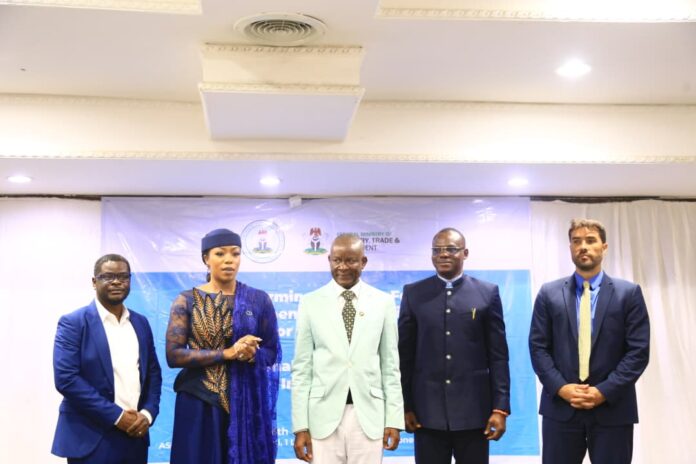
The Hon. Minister of State (Industry) FMITI, Sen. John Owan Enoh, (middle) the Perm. Sec. FMITI, Dr. Chris Osa Isokpunwu, the SSA to the Vice President on Public Health, Mrs Uju Vanstasia Anwukah, the Executive Director, ATNi, Mr Greg Garrett, the CEO Improved Nutrition Advocacy Foundation, Dr. Adedotun Owolabi , and other Stakeholders, in a group photograph during the Private Sector High Level Roundtable Engagement on Nutrition 774 Initiative, held in Abuja on Wednesday 16th Sept. 2026.

He said the proposed strategic plan would align with the National Policy on Food and Nutrition 2026–2035, the Nigeria Industrial Policy and the Vice President’s Nutrition 774 Initiative, while improving coordination among relevant government ministries, departments and agencies.

“Nigeria’s vast agricultural resources provide the raw materials needed to build competitive domestic food industries and produce nutritious, affordable and high-value products,” Enoh said, citing commodities including cassava, legumes, cocoa, oil palm, cashew and biofortified crops.

The minister called for targeted technical assistance, modern processing equipment and accessible financing to help food-processing MSMEs expand. He also identified Cluster Facility Centres as platforms for improving capacity in food processing, hygienic handling, packaging and quality standards.

Enoh urged food manufacturers to increase the use of locally sourced and biofortified raw materials, improve product formulations and expand affordable fortified food production.

He also called on financial institutions to develop affordable, long-term financing instruments tailored to food-processing MSMEs, while urging development partners and regulators to strengthen technical assistance, quality assurance, accountability and local procurement.

According to the minister, converting Nigeria’s agricultural resources into industrial value could create stronger markets for farmers, expand opportunities for women and young people, generate jobs and strengthen domestic manufacturing.

He said achieving nutrition security required an “all-of-government and all-of-society” approach to turning Nigeria’s agricultural potential into commercially viable and nutrition-sensitive industries.

The Permanent Secretary of FMITI, Dr. Chris Osa Isokpunwu, described nutrition as an economic and industrial priority with implications for enterprise development, investment, trade, productivity and national wellbeing.

Isokpunwu said meaningful progress would require private-sector participation because of its investment capacity, innovation, production networks and market reach.

He said the Abuja roundtable was intended to identify opportunities and bottlenecks across the nutrition value chain, map private-sector capabilities and develop practical pathways towards a broader national platform under the MarketFit Nutrition 2035 framework.

The Senior Special Assistant to the Vice President on Nutrition, Mrs. Uju Vanstasia Anwukah, said the Nutrition 774 Initiative provides a governance and accountability framework for tackling malnutrition across Nigeria’s 774 Local Government Areas.

Anwukah said the framework brings together federal, state and local governments, the private sector, development partners and communities, adding that malnutrition affects not only health but also education, workforce productivity, economic growth and national competitiveness.

She urged businesses to move beyond corporate social responsibility and philanthropy by participating as investors, innovators and strategic partners in developing sustainable nutrition solutions.

The Executive Director of the Access to Nutrition Initiative (ATNi), Greg Garrett, also called for nutrition to be placed at the centre of Nigeria’s industrial and economic development agenda.

Garrett said addressing malnutrition required coordinated action across the food system, from farming and processing to manufacturing, distribution and consumption.

He said Nigeria’s agricultural resources and large consumer market create opportunities for expanding local food processing and value addition while strengthening links between farmers and manufacturers.

Garrett also advocated stronger compliance with national and international standards in food production, fortification and quality assurance, stressing that nutritious food must be commercially viable and accessible to consumers.

The roundtable brought together government officials, manufacturers, private-sector leaders, financial institutions, regulators, development partners and technical experts to examine ways of integrating nutrition into Nigeria’s industrial and commercial ecosystem.

The engagement also reaffirmed the government’s objective of using Nigeria’s agricultural resources to strengthen domestic food production, expand MSME opportunities, attract investment, create jobs and improve nutrition.

WHO Raises Alarm Over Unsafe Care As NCD Deaths Surge In Africa


—Janabi urges governments to protect patients from avoidable harm


The World Health Organisation (WHO) has called on African governments to strengthen patient safety measures for people living with non-communicable diseases (NCDs), warning that gaps in diagnosis, medication, referrals and follow-up can expose patients to avoidable harm.

The WHO Regional Director for Africa, Dr Mohamed Janabi, made the call in his message to mark World Patient Safety Day 2026, themed “Safe care for noncommunicable diseases”, with the slogan “Safe care for life!”

Janabi said people living with diabetes, cancer, heart disease and chronic respiratory conditions often require long-term and complex care involving multiple consultations, tests, medicines, referrals and treatment.

He warned that every interaction with the health system could present risks if adequate safety measures were not in place.

According to him, NCDs caused at least 43 million deaths globally in 2021, while they accounted for 37 per cent of all deaths in the WHO African Region in 2019, compared with 24 per cent in 2000.

He added that nearly two-thirds of NCD deaths in the African Region were premature, compared with 41.7 per cent globally.

Janabi identified unhealthy diets, physical inactivity, hypertension, obesity and air pollution among factors contributing to the growing NCD burden.

He said patients could suffer avoidable harm through delayed or missed diagnoses, medication errors, adverse drug interactions, weak follow-up and poor communication when they move between healthcare providers and facilities.

The WHO official stressed that patient-safety risks could occur throughout the healthcare journey, including during diagnosis, treatment, rehabilitation, palliative care and self-management.

He also noted that stigma, discrimination and barriers to essential medicines and health technologies could further increase the risks faced by people living with NCDs.

Janabi therefore urged countries to ensure that efforts to expand access to NCD services were matched with improvements in quality and patient safety.

He said stronger primary healthcare systems could provide continuity of care, detect health problems earlier and coordinate treatment across different levels of the health system.

“Health workers also need practical guidance, reliable supplies and workplaces where errors can be reported and used to improve care, without fear of blame,” he said.

Janabi noted that countries in the African Region were expanding integrated NCD services through initiatives such as WHO PEN at primary healthcare level and PEN-Plus at first-level referral facilities.

He said such approaches bring diagnosis, treatment and long-term care closer to communities while supporting safer care through evidence-based treatment protocols, clear referral pathways and regular monitoring.

The WHO Regional Director also called for greater involvement of patients and families in decisions about their care.

“People living with NCDs must also be partners in making care safer. They understand where services break down and where risks arise in daily life,” he said.

He urged patients and families to ask questions, speak up and raise concerns whenever they are unclear about any aspect of their treatment.

Janabi called on member states to embed patient safety into NCD policies and programmes, strengthen systems for reporting and learning from harm, and invest in health worker training, supportive supervision and the safe use of medicines and technologies.

He further urged health professionals to follow evidence-based protocols and communicate openly with patients and colleagues.

Janabi assured that WHO would continue supporting member states to strengthen primary healthcare and improve the quality and safety of NCD services across the continent.

“Every person should be protected from avoidable harm throughout their health journey,” he said.


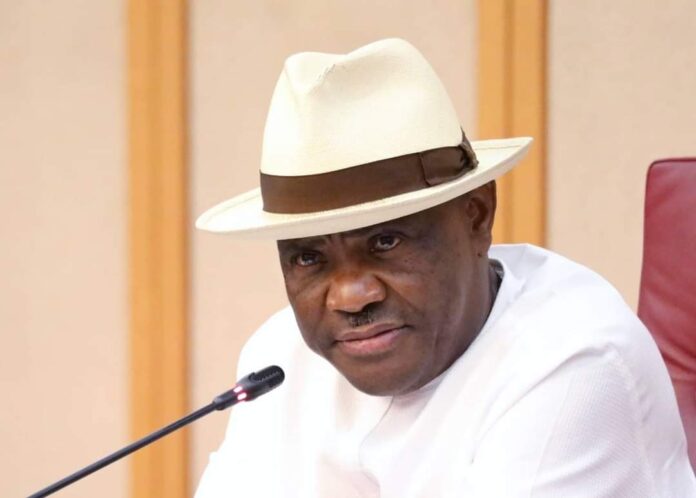
Wike, APC Governors Clash Over Rainbow Coalition Ahead of 2027


—FCT Minister insists support for Tinubu doesn’t mean backing APC candidates

Fresh political tension has emerged ahead of the 2027 general elections as Minister of the Federal Capital Territory, Nyesom Wike, and governors elected on the platform of the All Progressives Congress (APC) traded positions over the proposed Rainbow Coalition.

The dispute centres on Wike’s mobilisation of support for President Bola Tinubu’s re-election while maintaining that the Peoples Democratic Party (PDP) can still field candidates against APC candidates in governorship, National Assembly and state Assembly elections.

The APC Governors’ Forum, led by Imo State Governor and its chairman, Hope Uzodimma, said on Monday that its members would not support any political alliance capable of undermining the President’s re-election bid, weakening the APC or affecting the party’s candidates.

Uzodimma said the governors’ campaign commitment remained focused on APC candidates at all levels.

“The APC Governors Forum unanimously resolved that its members will not participate in, support or endorse any alliance or political arrangement capable of undermining the re-election of Mr President, weakening the APC or adversely affecting any candidate of the party at all levels,” he said.

He added that the governors had no intention of supporting candidates outside the APC structure in the 2027 elections.

Wike fires back

Reacting through his Senior Special Assistant on Public Communications and Social Media, Lere Olayinka, Wike reaffirmed his support for Tinubu but said he had never promised that the PDP would withdraw from other electoral contests.

The minister maintained that the Rainbow Coalition was not an APC structure but a platform for political parties and individuals supporting Tinubu’s re-election.

He argued that supporting a presidential candidate did not prevent political parties from presenting candidates for other elective positions.

“What I said and stand for is that I will mobilise support for the re-election of the President. I never promised anyone that PDP will not field candidates to contest governorship, National Assembly and state Houses of Assembly elections,” Wike said.

He also urged political actors to separate the presidential contest from their individual state political battles.

“Politics is local and those having problems in their states should resolve them instead of using the re-election of the President to whip up sentiments,” he said.

Wike further cited the 2023 elections in states including Imo, Abia, Enugu and Ebonyi, where voters supported different parties in presidential and National Assembly contests, arguing that voters could make separate choices at different levels.

‘I’m not answerable to APC governors’

Speaking on Arise TV’s Prime Time, Wike dismissed the concerns raised by the APC governors and said his support for Tinubu was separate from his activities within the PDP.

“I have said I will support the President and I am still supporting him. What has that got to do with my party?” he asked.

He also said President Tinubu was aware of his political activities and the Rainbow Coalition, while stressing that he was not answerable to APC governors.

Wike described the governors as “politically lazy” over their interpretation of his activities and argued that their state-level political challenges should not be attributed to the President.

PDP backs Wike

The Wike-backed faction of the PDP also defended the minister, with its Publicity Secretary, Jungudo Mohammed, saying Wike’s support for Tinubu should not be interpreted as support for the APC.

Mohammed maintained that Wike remained a PDP member with the right to support any presidential candidate of his choice.

He also insisted that the PDP would participate in the 2027 elections and field candidates against APC candidates where applicable.

A separate PDP faction led by Tanimu Turaki also criticised the arrangement involving Wike and the APC-led Federal Government.

Rival political interests

The growing disagreement has also generated speculation among political actors about the broader interests of key figures ahead of 2027 and beyond.

Some APC leaders, speaking anonymously, attributed the dispute to competition for political influence and positioning ahead of future elections, including the 2031 presidential contest. Those claims remain the views of the unnamed sources and were not independently established.

The sources also pointed to disagreements in states where politicians aligned with Wike’s PDP faction could challenge sitting APC governors or their preferred candidates.

For now, the central disagreement remains clear: APC governors say their loyalty in the 2027 elections is to the party’s candidates, while Wike maintains that he can support Tinubu for president while the PDP and other parties contest other positions.

The development adds another layer to the evolving political alignments ahead of the 2027 elections.


2027: Our Fight With INEC Is for Democracy, Not SDP — Adebayo

The presidential candidate of the Social Democratic Party (SDP), Prince Adewole Adebayo, has said the party’s legal battle with the Independent National Electoral Commission (INEC) over the 2027 election timetable is aimed at protecting Nigeria’s democracy, rather than securing an advantage for the SDP.

Adebayo spoke on Wednesday shortly after court proceedings in Abuja, where he accused INEC of allegedly exceeding its powers by shortening the statutory periods available to political parties to nominate and substitute candidates and conduct their primaries.

According to him, the SDP went to court because it wanted the electoral commission to operate strictly within the law.

“The reason we brought the case to court is not because we particularly, the SDP, are not able to cope with the timetable. It is to limit the abuse of the electoral process by INEC,” Adebayo said.

He maintained that INEC’s responsibility was to serve democracy and comply with the law, rather than impose additional restrictions on political parties.

“INEC’s job is to be a servant of democracy and to follow the law as stated, not to be influenced either by error or by government in power, to continue to impose additional inhibitions on political parties,” he said.

Adebayo alleged that INEC’s handling of candidate nominations and substitutions had resulted in numerous legal disputes.

“There are over 5,000 cases that are coming up as a result of INEC rejecting lawful nominations on the basis that those nominations were submitted outside their own unilaterally imposed timelines,” he claimed.

The SDP candidate argued that the statutory framework provides 120 days before an election for political parties to nominate candidates, 90 days for substitution and 60 days for INEC to publish the final list of candidates.

He said the commission should not unilaterally alter the periods prescribed by law, arguing that adherence to the statutory provisions would help strengthen fairness in the electoral process.

Adebayo stressed that the SDP’s legal action was not solely about the party, but about the broader democratic system.

“The role SDP is playing is not just to talk about things that affect the SDP alone, but to be a guardian of the democratic process,” he said.

He further argued that INEC’s compliance with the law would reduce the possibility of the electoral body being influenced by the government in power.

“So that INEC itself will be a lawful body and when INEC works within the law, the possibility of INEC being used by the government in power to manipulate the system will be reduced because all of us now will be equal before the law,” Adebayo said.

He disclosed that the SDP had two other matters before the Supreme Court relating to INEC’s election timetable, saying the party was seeking judicial clarification on the commission’s powers.

Also speaking after the proceedings, SDP National Chairman, Prof. Sadiq Umar Abubakar Gombe, backed the party’s legal action, saying it was aimed at defending the rule of law.

Gombe said the court proceedings had implications beyond the SDP, describing the outcome as a victory for democracy.

“What it means for the party is that it has upheld the rule of law; it has reinstated the rule of law in our democracy,” he said.

The SDP chairman said the party had consistently approached the courts to challenge issues it considered detrimental to democratic principles.

“This is a victory not only for the SDP, as said by the presidential candidate, but a victory for democracy,” Gombe said.

He expressed hope that the development would encourage political parties, INEC and other stakeholders to adhere strictly to the provisions of the law in the conduct of elections.


FCTA Moves to Tackle Land Disputes, Reconstitutes ADR Committee


The Federal Capital Territory Administration (FCTA) has reconstituted its Alternative Dispute Resolution (ADR) Committee to tackle land-related disputes and ensure faster, transparent and efficient resolution of grievances in the nation’s capital.

The initiative, spearheaded by the Department of Land Administration, is also aimed at strengthening land governance and improving service delivery to residents of the Federal Capital Territory.

Inaugurating the committee in his office, the Director, FCT Land Administration, Esv. Chijioke Nwankwoeze, said the body would provide an alternative avenue for resolving land disputes without necessarily resorting to litigation.

He said the committee would mediate and conciliate land-related disputes, review complaints and petitions, examine relevant land records and advise management on appropriate resolutions after an impartial interface with parties involved.

According to Nwankwoeze, the committee would promote amicable settlements and ensure that parties comply with mutually agreed terms.

He explained that the reconstitution formed part of efforts to sanitise land administration and improve the quality and efficiency of services provided to FCT residents.

The director said the initiative was also in line with the reform agenda of the FCT Minister, Barr. Nyesom Wike, aimed at improving land administration in the territory.

“The selection of Committee members was based on experience, competence, and the confidence reposed in their ability to contribute meaningfully to the effective discharge of the Committee’s mandate, particularly in the amicable resolution of disputes arising from land administration matters within the Federal Capital Territory,” he said.

Nwankwoeze added that the initiative reinforced the department’s commitment to transparency, fairness and the rule of law in handling land matters.

He said the committee’s activities were also consistent with the Renewed Hope Agenda of President Bola Ahmed Tinubu’s administration.

Responding on behalf of the committee members, its Chairman, Esv. Samuel Agbana, expressed appreciation to the director for the confidence reposed in them.

Agbana assured that the members would carry out their responsibilities with professionalism, transparency and fairness.

He pledged that the committee would operate without fear or favour while working to achieve speedy and amicable resolution of disputes in accordance with its terms of reference.

The reconstituted committee is expected to provide residents and other stakeholders with a more accessible mechanism for resolving land-related grievances while promoting confidence in the FCT’s land administration system.


ASUU-LASU Shuts Down Varsity, Begins Indefinite Strike Over 2025 Agreement


Academic activities at Lagos State University (LASU) may be disrupted indefinitely as the Lagos State University branch of the Academic Staff Union of Universities (ASUU-LASU) has declared a total and indefinite strike.

The union announced the industrial action on Tuesday, September 15, following a congress where members resolved to withdraw their services over the alleged failure of the government to implement the 2025 ASUU/FGN Agreement.

In a statement signed by the Secretary of the ASUU-LASU Steering Committee, Comrade Thanny Nooem, and the Coordinator, Comrade Oluwaseun Babalola, the union said the decision followed months of what it described as “patient and constructive engagement” with the government.

According to the union, those efforts failed to resolve the issues surrounding implementation of the agreement.

“This unfortunate and avoidable action has become necessary due to the continued failure of the Government to address the Union’s longstanding agitation over the implementation of the 2025 ASUU/FGN Agreement,” the statement said.

ASUU-LASU said its major demand was the full domestication and implementation of the 2025 ASUU/FGN Agreement, adding that the strike would continue until the matter was satisfactorily resolved.

“The strike shall be total and comprehensive until there is a satisfactory resolution of the issues in dispute,” the union declared.

The union expressed regret over the development, maintaining that it had exhausted previous avenues of engagement with the government without achieving a resolution.

The strike is expected to affect teaching and other academic activities at LASU, including the Ojo campus and other campuses, pending further developments.

ASUU-LASU concluded its statement with its familiar solidarity slogan: “Aluta continua, victoria ascerta.”


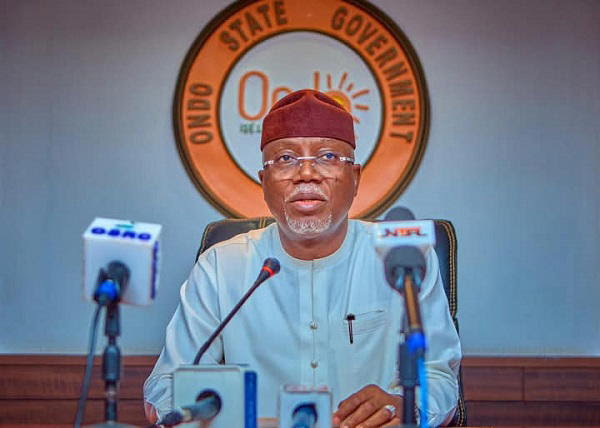
Ondo Kidnappers Get 14-Day Ultimatum To Quit Forests


Ondo Kidnappers Get 14-Day Ultimatum To Quit Forests

—Aiyedatiwa mobilises security agencies, hunters to raid hideouts


Ondo State Governor, Lucky Aiyedatiwa, has issued a 14-day ultimatum to kidnappers and other criminal elements operating from forest reserves across the state to vacate their hideouts or face security action.

The governor also mobilised security agencies and hunters as part of efforts to flush out criminals from the forests and create a safer environment for farmers, investors, timber contractors and other legitimate businesses.

The Senior Special Assistant to the Governor on Forestry, Hon. Bidemi Joshua Obayangban, disclosed this while speaking with journalists in Akure, the state capital.

Obayangban said security was a major requirement for the state government’s plan to transform and develop its forestry sector.

He said the government could not attract investors or encourage legitimate economic activities in the forest reserves without first guaranteeing the safety of those operating there.

“A vision without maximum security to ensure the safety of investors, farmers, timber contractors and those conducting legitimate business across Ondo State’s forest reserves is effectively meaningless,” he said.

“Consequently, the primary focus of the Aiyedatiwa administration is to flush out criminal elements from our forests. We are taking the battle directly to them.”

According to him, the state government has concluded plans aimed at tackling kidnapping and other illegal activities in the forests.

He said security agencies and hunters across Ondo had agreed to work with the government in the operation.

“It is important to note that all security agencies and hunters across Ondo State are in complete accord and are working in close collaboration with the government to achieve this,” Obayangban said.

He added that although Governor Aiyedatiwa preferred a discreet and action-oriented approach to security matters, the government was determined to confront the criminals.

“While the Governor prefers a discreet, action-oriented approach to security, I am authorised to state that the time for these criminals is up,” he said.

Reiterating the government’s ultimatum, Obayangban said the criminals had 14 days to leave the state’s forests.

“I am using this opportunity to announce that the state government is giving these individuals 14 days to vacate Ondo State forests.

“Failure to comply will result in them meeting their Waterloo,” he warned.

The governor’s aide said the planned security operation represented the first phase of a broader strategy to revitalise Ondo’s forestry sector.

He maintained that the government’s economic development plans could not succeed in an environment where insecurity threatens legitimate businesses and livelihoods.

The administration is therefore combining security measures with its plans to unlock the economic potential of the state’s forest reserves.


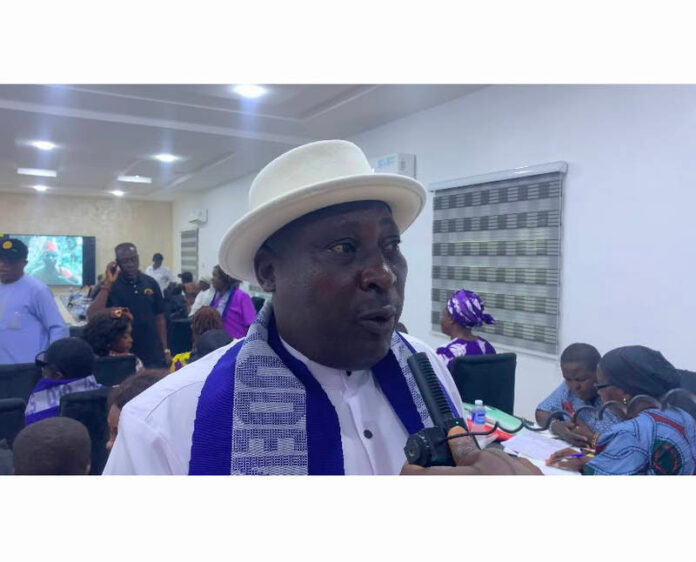
Essi College Cries Out For Help As ECOSA Seeks Urgent Infrastructure Upgrade


The President of Essi College Old Students’ Association (ECOSA) Worldwide, Olorogun Sylvester Bighoro (JP), has appealed to governments, corporate organisations and well-meaning Nigerians to support efforts to revive infrastructure and improve learning facilities at Essi College, Warri.

Bighoro made the appeal while speaking with journalists during an old students’ meeting held at Otor-Udu on September 13.

The ECOSA president, who disclosed that he had led the association for the past 27 years, said the group had remained committed to the development of its alma mater through regular meetings and interventions aimed at addressing challenges confronting the institution.

He noted that Essi College had produced professionals, industrialists, politicians and business leaders who had made significant contributions to society.

According to him, the strong work ethic instilled in students during their years at the institution contributed to the achievements of many of its former students.

He explained that the school’s motto, “I Di Labor,” means there is no success without labour.

Bighoro said old students considered themselves privileged to have passed through the institution and were determined to preserve its legacy while setting good examples for present students.

He stressed that ECOSA would continue to push for the provision of modern equipment, technology and infrastructure needed to improve teaching and learning.

However, he expressed concern over the continued non-use of a building donated to the school by Chevron, which he said had remained inaccessible for about four years due to a dispute between the company and the contractors.

He appealed to relevant government authorities, organisations and individuals to intervene and help resolve the dispute so the facility could be put to use.

Bighoro also identified the absence of an examination hall and laboratory as some of the major infrastructure gaps facing the institution.

He said the facilities were essential for effective teaching and learning and urged stakeholders to intervene urgently to protect the status and legacy of Essi College as a citadel of learning.

The ECOSA president also called on parents to pay closer attention to the welfare, upbringing and activities of their children as schools resume.

He urged parents to guide and monitor their children to prevent them from falling into cultism, drug abuse and other social vices capable of destroying their future.

Bighoro, who traditionally celebrates his birthday with his alma mater, used this year’s gathering to bring members of the old students’ association together and reaffirm their commitment to the development of the college.

Also speaking at the event, Chief Collins Okubokeyhe Osilemor commended Bighoro for his dedication and sustained support for ECOSA and Essi College.

Osilemor described his contributions to the association as “superlative” and appreciated the elders and other stakeholders who attended the gathering.

He assured the association that he would contact relevant organisations over the concerns raised, expressing optimism that the necessary support would be secured to improve facilities at Essi College.


Awoniyi Bags Postgraduate Diploma In Global Football Sport Directorship


Super Eagles striker Taiwo Awoniyi has added an academic achievement to his football career after graduating from the PFA Business School with a Postgraduate Diploma in Global Football Sport Directorship with Merit.

The 28-year-old Nigerian forward, who plays for Coventry City, announced the achievement on Instagram, describing it as “another proud moment” away from the football pitch.

“Another proud moment for me off the pitch.

“Graduating from the PFA Business School with a Postgraduate Diploma in Global Football Sport Directorship with Merit,” Awoniyi wrote.

The striker said his decision to pursue further education was driven by his belief that footballers should continue learning and preparing for life beyond their playing careers.

“I have always believed that being a footballer shouldn’t stop you from being a student of the game and education has become an important part of that journey for me,” he said.

Awoniyi expressed appreciation to the PFA Business School, its lecturers and fellow students who shared the academic journey with him.

“Thank you to everyone at the PFA Business School, the lecturers and my colleagues I had the opportunity to learn alongside.

“And a special thank you to my family and friends for their encouragement and support throughout,” he added.

The Nigerian international concluded his message with a declaration that his football career and academic journey would continue side by side.

“Still playing. Still learning. The journey continues,” he said.

The PFA Business School offers education and development programmes for football professionals, with courses covering areas such as leadership, management and the business side of the sport.

Awoniyi’s latest qualification marks another step in his preparation for life beyond the pitch, even as he continues his professional football career.


Lagos 2027: Rhodes-Vivour Reopens Hamzat’s US Allegiance Controversy

The African Democratic Congress governorship candidate in Lagos State, Gbadebo Rhodes-Vivour, has revived questions over the eligibility of Lagos Deputy Governor, Obafemi Hamzat, to contest the 2027 governorship election, alleging that he previously swore an oath of allegiance to the United States.

Rhodes-Vivour raised the issue on Tuesday during an appearance on Channels Television’s Sunrise Daily, recalling that the same matter formed part of his challenge to Hamzat’s eligibility during the 2023 Lagos governorship election petition.

According to him, his legal team had relied on the alleged US oath in arguing that a Nigerian public office holder should not simultaneously owe allegiance to another country.

“We focused on the fact that this current person that wants to contest for governor, deputy governor, swore an oath of allegiance to another country,” Rhodes-Vivour said.

“Constitutionally, that is one of the number one reasons to dismiss a candidate or dismiss somebody that emerges as the governor.”

The controversy dates back to the 2023 election petition proceedings, when US-based immigration lawyer Olubusayo Fasidi testified before the Lagos State Governorship Election Petition Tribunal that Hamzat had applied for US naturalisation and taken an oath of allegiance.

Fasidi, however, told the tribunal that her role was to explain US immigration law and that she was not familiar with Nigeria’s constitutional provisions on dual citizenship.

Rhodes-Vivour had challenged Hamzat’s qualification during the 2023 election litigation on the grounds that he allegedly renounced his Nigerian citizenship and swore allegiance to the United States.

The Court of Appeal subsequently held that the allegation had not been established with sufficient evidence, stating that no evidence of an oath of allegiance to the US or renunciation of Nigerian citizenship had been placed before the tribunal to prove the claim.

The Lagos State Governorship Election Tribunal had earlier upheld the eligibility of Governor Babajide Sanwo-Olu and Hamzat to contest the 2023 election, dismissing the petitions challenging their return.

Despite the previous court findings, Rhodes-Vivour has returned to the issue ahead of the 2027 election.

He also criticised the conduct of the 2023 election, alleging incidents of violence and intimidation across Lagos.

The ADC candidate argued that Nigerians should elect public officials whose loyalty is exclusively to the country.

Rhodes-Vivour further contended that Hamzat could have publicly renounced any alleged US allegiance before seeking elective office, citing former British Prime Minister Boris Johnson as an example.

Hamzat, meanwhile, has emerged as the All Progressives Congress candidate for the 2027 Lagos governorship election after winning the party’s governorship primary in May.

The APC declared him the winner after the primary, with the party reporting 657,917 votes out of 657,974 accredited votes.

President Bola Tinubu and other APC stakeholders in Lagos have previously endorsed Hamzat’s candidacy ahead of the 2027 poll.

The renewed controversy is therefore likely to keep the question of Hamzat’s eligibility in public discussion as political activities gather momentum ahead of the 2027 Lagos governorship election.


Niger Detainees’ Deaths: Alake Sends Probe Team to Minna

ABUJA — Minister of Solid Minerals Development, Dele Alake, has ordered the deployment of a high-powered ministerial team to Niger State to investigate the...