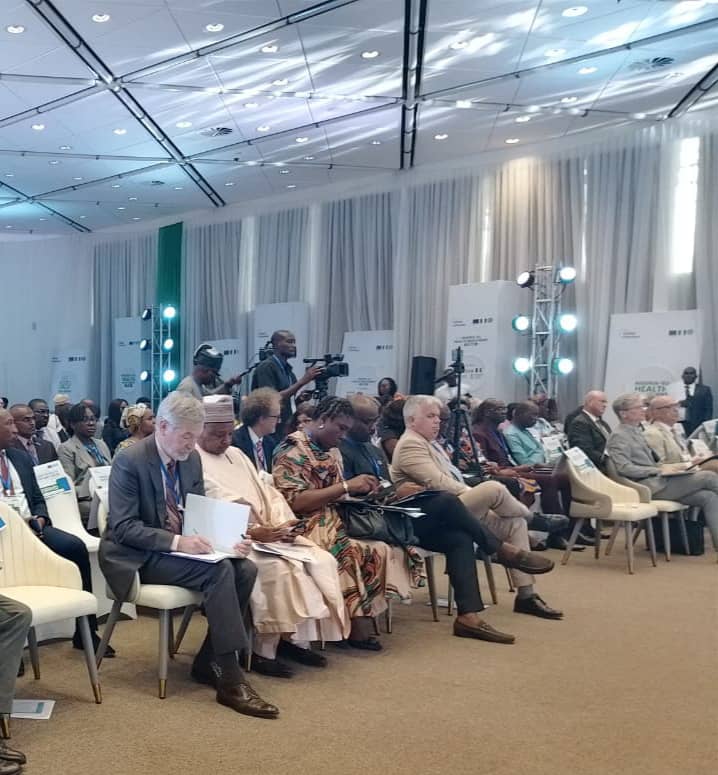

The Honourable Minister of Defence H.E. Mohammed Badaru Abubakar , reaffirmed Nigeria’s unwavering commitment to the United Nations (UN) and the global community in promoting peace and security during the second day of the Plenary High-Level Pledging Session of the United Nations Peacekeeping Ministerial 2025.
This was contained in a media release signed by PATIENCE ITUKE For : Director Information and Public RelationsMinistry of Defence.
The Minister highlighted Nigeria’s active participation in international peacekeeping efforts, noting the country’s rotation of the Base Protection Force deployed with the United Nations Interim Security Force in Abyei, as well as the Formed Police Unit at the United Nations Transition Mission in Somalia.
In his address, Badaru emphasized Nigeria’s leadership role in sub-regional peace initiatives under the auspices of the Economic Community of West African States (ECOWAS) and the African Union (AU). He cited Nigeria’s significant contributions to peacekeeping missions in Sierra Leone and Liberia, and more recently engagements in The Gambia and Guinea Bissau.
Furthermore, Minister Badaru announced Nigeria’s renewed pledges to the Peacekeeping Capability Readiness System, adding five additional commitments aimed at enhancing Nigeria’s readiness to support global peacekeeping efforts.
The Minister concluded his address by reiterating Nigeria’s dedication to fostering stability and security, both regionally and globally.
The Honourable Minister of Defence H.E. Mohammed Badaru Abubakar CON, embarked on an operational visit to Birnin Kebbi, Kebbi State, where he engaged with troops stationed at Dukku Barracks.
This was contained in a media release signed by Mati Ali, PA Media & Publicity to the Honourable Minister
The purpose of the visit was to assess the progress of ongoing military operations in the region and to uplift the morale of the dedicated soldiers actively working to combat insecurity, particularly in the North West of Nigeria.
During his address to the troops, Minister Badaru conveyed the deep appreciation of President Bola Ahmed Tinubu for their relentless efforts and achievements in promoting peace across the nation. He commended the soldiers for their professional competence, courage, and sacrifices made in the fight against banditry and other forms of crime. “The President and the nation are profoundly grateful for your unwavering commitment,” he stated.
The Minister encouraged the troops to intensify their efforts in eradicating all forms of insecurity in the country, emphasizing that “it is time to finish all aspects of insecurity.” He posed the question, “Are you ready to end it?” to which the troops responded with a resounding, “Yes! Sir!” This unified response reinforced the Minister’s confidence in the troops’ ability to restore peace and security, allowing citizens to conduct their daily lives without fear.
Minister Badaru reiterated the government’s commitment to supporting the armed forces, prioritizing their welfare and resources to ensure they are well-equipped to carry out their duties.
Mahmoud Inaugurates FCT 2025 Hajj Committee, Urges Members to Prioritise Transparency , Pilgrims’ Welfare
As preparations gather momentum for the 2025 Hajj pilgrimage, the Minister of State for the Federal Capital Territory (FCT), Dr. Mariya Mahmoud, has inaugurated a seven-member Ministerial Committee with a clear charge: deliver a smooth, safe, and spiritually fulfilling experience for all intending pilgrims from the FCT.
Inaugurating the committee in her office, Dr. Mahmoud stressed the critical role of transparency, professionalism, and safety in the successful execution of the annual religious exercise.
“This year, we are guided by three key pillars: efficiency, transparency, and safety,” the Minister said. “Every committee member has a duty to ensure that our pilgrims receive the highest standards of care and coordination throughout their spiritual journey.”
The newly inaugurated committee is chaired by Dr. Abdullahi Kauranmata, the Senior Special Assistant to the Minister on Administration and Strategy. Other members are drawn from various sectors including government, traditional institutions, the Ulama, and the wider community.
Dr. Mahmoud reminded the members that the Hajj pilgrimage is a deeply spiritual obligation for Muslims, and the FCTA bears the responsibility of making the process seamless for its citizens. She urged the committee to learn from past operations and provide innovative solutions to emerging challenges.
The committee’s Terms of Reference include: Overall coordination and supervision of FCT pilgrims from Nigeria to Saudi Arabia and back; Ensuring compliance with Saudi Arabia’s new Hajj policies and procedures; Prioritising pilgrims’ welfare, safety, and security throughout the operation; Providing strategic advice and timely interventions during the exercise; and
Submitting a detailed report to the Minister of State, complete with actionable recommendations
In his response, Dr. Kauranmata described the task before the committee as a sacred one.
“This is not just logistics planning; it is a facilitation of a once-in-a-lifetime spiritual experience for many. We take that responsibility seriously,” he said. “We pledge to make the FCT contingent a national model for excellence in Hajj operations.”
He also called for synergy with the FCT Muslim Pilgrims Welfare Board, emphasizing collaboration and mutual support in achieving the committee’s goals.
The full list of committee members includes:
Muhammad Haruna Aris – Director of Funds, FCTA
Danlami Ibrahim – Deputy Director, Audit
HRH Awwal Musa Ijkoro – Representative of the Traditional Institution
Mal. Mudan Umar Bebeji – Representative of the Ulamas
Hajiya Jamila Aliko Maishanu – Representative of the Community
The committee is expected to commence work immediately as the FCTA ramps up preparations to ensure a hitch-free and impactful Hajj for the 2025 season.
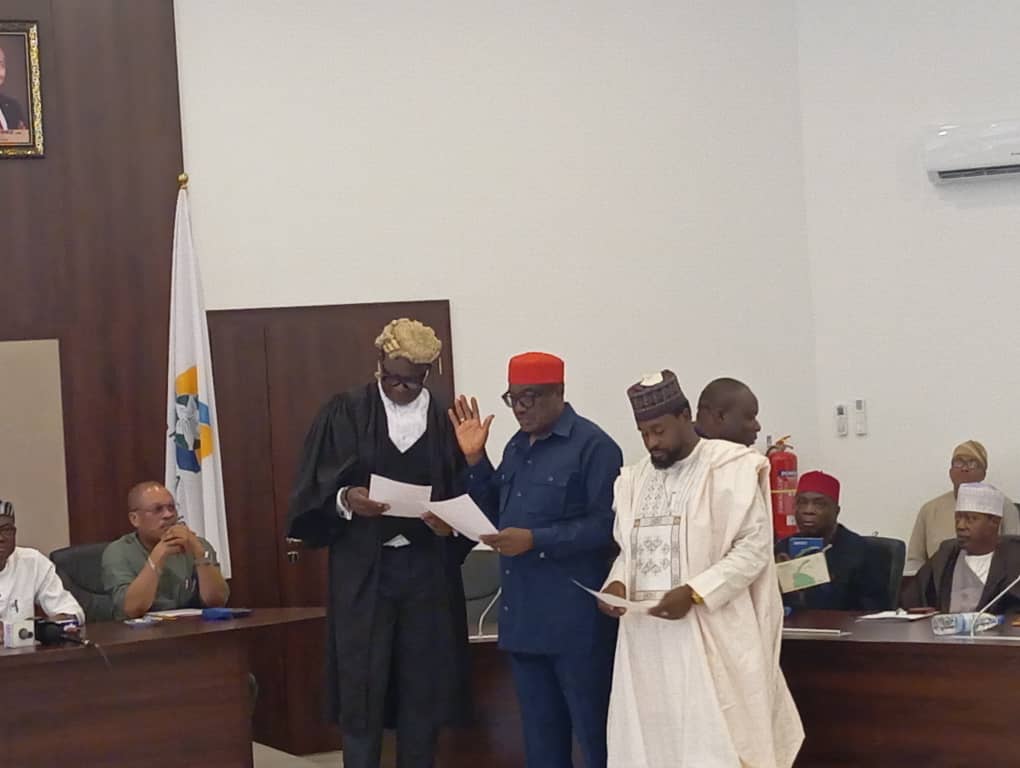
The leadership of the Nigerian Senate has refuted claims of coercion surrounding the recent wave of defections from the opposition Peoples Democratic Party (PDP) to the ruling All Progressives Congress (APC), describing the political realignment as a normal feature of democratic evolution.
Speaking on Tuesday during plenary after the formal announcement of the defection of all three senators from Kebbi State, Deputy Senate President Jibrin Barau and Senate Leader Opeyemi Bamidele insisted that the decision to switch parties was voluntary and in the national interest.
Senator Bamidele emphasized that the defectors—Senators Adamu Aliero (Kebbi Central), Yahaya Abdullahi (Kebbi North), and Garba Musa Maidoki (Kebbi South)—were seasoned individuals with independent minds.
“No one is being coerced. Certainly not Senator Adamu Aliero, not Professor Yahaya Abdullahi, and not Senator Maidoki, who has made notable contributions in the private sector before entering politics. These are individuals driven by patriotism, not personal gain. They understand this is not the time for political grandstanding but a time for unity to move Nigeria forward,” Bamidele said.
He added, “To those who label this parliament a rubber stamp, they must understand we are at a critical point in our national development. What matters now is the public interest, not partisan lines.”
Also speaking, Deputy Senate President Barau congratulated President Bola Ahmed Tinubu and APC National Chairman Abdullahi Ganduje, who were present to receive the new entrants.
“This is a significant win for the APC and a clear signal that the government is on the right track. The increasing number of defections shows growing confidence in the leadership of both the President and the party,” he stated.
The defections officially leave the PDP without Senate representation from Kebbi State. The letters announcing their move were read on the floor by Barau, citing irreconcilable internal issues within the PDP and a perceived disconnection from the hopes of Nigerians.
In his letter, Senator Adamu Aliero explained his decision:
“After deep reflection and consultations, I have resolved to resign from the PDP and return to the APC, a party I helped to found. This is not a move made lightly, but one borne out of my unwavering commitment to the people I serve. The PDP has increasingly become disconnected from the aspirations of Nigerians, with internal divisions and lack of direction impeding its relevance.”
He added that the APC, under its new leadership, had shown “encouraging signs of transformation,” prioritizing national interest, economic reforms, and infrastructural development.
“I’m not defecting for personal gain,” Aliero said. “This move is guided by my desire to effectively serve my constituents and pursue progressive governance. I assure my supporters that my loyalty remains unchanged—I am only changing platforms, not my mission.”
The plenary was marked by a high-profile presence including Kebbi State Governor Nasir Idris, former Governor Usman Sa’idu Nasamu, Minister of State for Humanitarian Affairs Dr. Yusuf Tanko Sununu, APC National Chairman Abdullahi Umar Ganduje, and former Senator Uche Ekwunife.
Following the announcements, the defected senators were formally seated with their APC colleagues, receiving a warm welcome from the ruling party’s caucus.
…Unity, Peace Must Be Collective Responsibility – Abdulsalami
…Tinubu Laying Foundation for Real Growth – Minister
…We All Worked Against Jonathan – Amaechi
The public presentation of “Being True to Myself,” the autobiography of former Jigawa State Governor, Alhaji Sule Lamido, held Tuesday in Abuja, became a convergence of political reflections, revelations, and renewed calls for national unity and development.
Former President Olusegun Obasanjo, delivering the keynote address, stated candidly that Nigeria has yet to become the nation of its citizens’ dreams. “Nigeria that we are working for, we haven’t gotten there. And I believe it is the responsibility of each of us to ensure that we get there. Our job is not finished until we are finished,” he declared.
Obasanjo also shared personal insights into how he appointed Lamido as Foreign Affairs Minister during his administration, recounting how a previous nominee for the position had declined, leading to Lamido’s emergence due to his close association with the original candidate. Commending Lamido’s legacy, Obasanjo added, “You performed creditably as a governor. You are in your own right now a statesman. The young shall grow—and you have grown.”
The Chairman of the occasion, former Head of State General Abdulsalami Abubakar, represented by former INEC Chairman Professor Attahiru Jega, emphasized the importance of collective responsibility in nation-building.
“We all have a role to play to forge unity and engender peaceful coexistence, and contribute to the progress and development of Nigeria,” he said.
He lauded Lamido’s courage in writing the book, noting its value in offering a deeper understanding of Nigeria’s political landscape and encouraging others to document their experiences.
President Bola Ahmed Tinubu, represented by the Minister of Information and National Orientation, Mohammed Idris, praised Lamido for preserving political memory and contributing significantly to Nigeria’s democratic discourse.
“The book aptly reflects the man Sule Lamido—principled, consistent, and bold. I recommend it to students, scholars, journalists, and politicians alike,” the Minister stated.
Highlighting the Tinubu administration’s reform agenda, he added, “We are not where we need to be yet, but President Tinubu has shown uncommon audacity and vision to put Nigeria on the path of true growth and development. After a rocky start due to tough but necessary reforms, we are now seeing signs of macroeconomic stability and beneficial outcomes.”
The event also featured a moment of political candour from former Rivers State Governor, Rotimi Amaechi, who disclosed that he and others had worked together to oppose former President Goodluck Jonathan during the 2015 elections.
“All of us agreed to go against President Jonathan. We agreed to leave PDP, but Lamido disagreed—that was our point of divergence,” Amaechi revealed. “He was also the instrument behind my second term as Chairman of the Governors’ Forum. I’ve not seen any governor in Jigawa that surpassed Lamido in infrastructure.”
In his vote of thanks, Lamido expressed profound appreciation to those who attended, especially former President Obasanjo.
“I can never find enough words to express my profound gratitude to my boss, my guide, my leader, my inspiration—President Olusegun Obasanjo—for all he has done and continues to do for me since 1999. His love, trust, and confidence in me are clearly shown in the inspiring foreword he wrote and his presence here today. Baba, I sincerely and profoundly thank you,” he said.
The event attracted dignitaries, scholars, political stakeholders, and members of the public who celebrated Lamido’s contribution to Nigeria’s political journey through his memoir.
…Recover firearms, ammunition, and vehicles linked to criminal activities
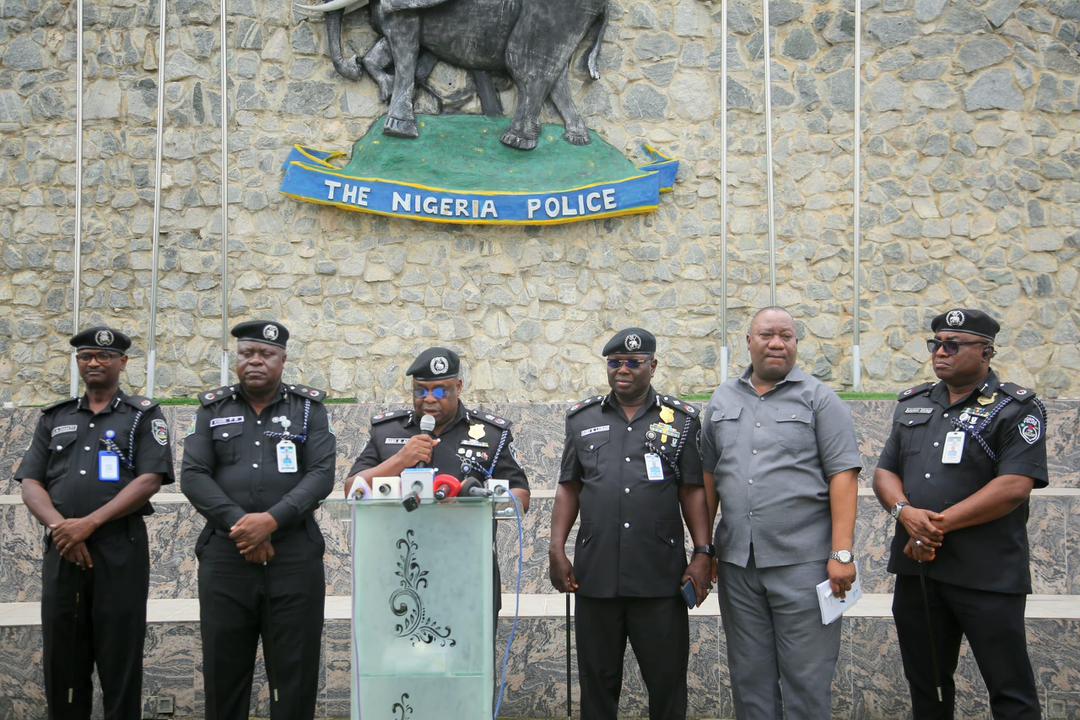
The Kogi State Police Command has arrested a total of 239 suspects—including 75 kidnappers, 66 armed robbers, and 93 others—for various criminal offences across the state within the last three months.
The Commissioner of Police, CP Miller Dantawaye, disclosed this during his maiden press briefing on Tuesday in Lokoja, shortly after assuming office in the state. He reaffirmed the Command’s commitment to safeguarding lives and property while calling on stakeholders to actively collaborate with the police to ensure a safer Kogi State.
CP Dantawaye explained that the command has adopted a comprehensive crime prevention and control strategy. These include intensive highway patrols, coordinated raids on criminal hideouts and flashpoints, aggressive stop-and-search operations, and the deployment of well-trained, well-equipped, and highly motivated personnel.
“In the face of ongoing security challenges, the Nigeria Police Force plays a pivotal role in ensuring internal security. However, no police organization in the world, regardless of its training or resources, can succeed without public support,” Dantawaye said.
He appealed to traditional rulers, religious leaders, youth groups, market associations, transport unions, farmers, herders, vigilantes, hunters, and other community stakeholders to join hands with the police in tackling insecurity.
The Commissioner pledged to implement community policing strategies as outlined by the Inspector General of Police (IGP), aimed at boosting public confidence and enhancing service delivery. He noted that a platform for intelligence-sharing with stakeholders has been created to ensure more effective crime control and management.
Highlighting the Command’s recent achievements, CP Dantawaye revealed that the arrest of 239 suspects followed a sustained crackdown on kidnapping, armed banditry, and other violent crimes. Weapons recovered from the suspects include:
5 AK-47 rifles
2 AK-49 rifles
9 magazines
344 rounds of 7.62mm ammunition
62 rounds of 5.56mm ammunition
2 rounds of 7.62/59mm ammunition
1 locally made revolver barrel gun
2 pump action guns
2 locally made pistols
1 black pump action magazine
9 expended AK-47 ammunition
7 expended cartridges
A Green Sharon vehicle abandoned by suspected gun runners at a checkpoint
CP Dantawaye also announced that the recently deployed Course 7 officers are undergoing rigorous training to align them with the operational ethics and standards of the Kogi State Police Command.
He reiterated the importance of credible and actionable intelligence from the public, assuring residents of the Command’s unwavering commitment to a safer and more secure state.
…Calls for redeployment of troops, modern equipment to frontline states
The Senate on Tuesday called on the Nigerian military to swiftly address the resurgence of Boko Haram attacks in Borno and Yobe States, urging an immediate redeployment of troops and the deployment of modern warfare technology to counter the renewed threats.
This followed the adoption of a motion sponsored by Senators representing Borno and Yobe States and presented by Senator Mohammed Tahir Monguno, who raised concerns over recent deadly attacks by insurgents in the North-East.
Senator Monguno recounted that, until a few years ago, two-thirds of the Local Government Areas in Borno State were under the control of Boko Haram. However, a combination of military operations and support from the Civilian Joint Task Force successfully reclaimed those territories, restoring a measure of peace and allowing displaced communities to return.
He noted that following that progress, the military’s tactical command was relocated to the North-West to address growing concerns of banditry and kidnapping in that region.
However, the lawmaker raised alarm over fresh Boko Haram attacks, including the killing of over 12 soldiers in Marte town, Monguno Local Government Area, on Monday, May 12, 2025. He added that insurgents also launched an early morning assault on Gajiram, the headquarters of Nganzai Local Government Area.
Monguno expressed grave concern that the insurgents appear to have regrouped and are now using more advanced tactics and technology. “They have deployed drones for surveillance and attacks, planted Improvised Explosive Devices (IEDs) at strategic locations, and targeted newly resettled communities—resulting in high casualties and restricted movement,” he said.
He stressed the urgent need to restore full-scale military operations in Borno and Yobe States, emphasizing that a reinforced and well-equipped military presence is critical to containing the renewed threat.
“The return of a strong military presence will not only counter the insurgency but also reassure citizens in the affected communities,” he added.
The Senate, in its resolution, urged the military high command to redeploy adequate personnel to the North-East and equip them with modern technology, including counter-drone capabilities and IED detection tools.
It also mandated the Senate Committees on Army and Air Force to monitor and ensure compliance with the resolution.
…House to reconsider five failed constitution amendments Wednesday
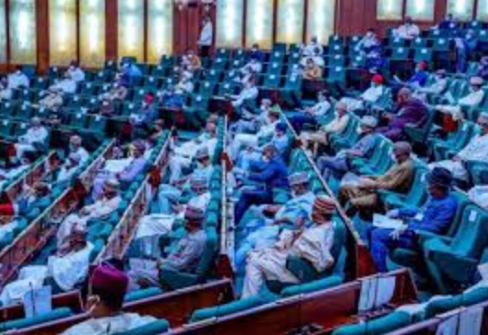
The House of Representatives on Tuesday voted against key constitutional amendment bills, including a proposal to rotate the offices of the President and Vice President among Nigeria’s six geopolitical zones, as well as a bill seeking to strip the Independent National Electoral Commission (INEC) of its power to register and oversee political parties.
These were among seven constitution alteration bills slated for consideration during the plenary. Out of the total, five failed to scale through. However, following a point of order raised by Deputy Minority Leader, Rep. Ali Jesse, citing Order 9, Rule 6 of the House Standing Orders, Speaker Tajudeen Abbas directed that the rejected bills be re-listed for reconsideration on Wednesday, May 14, 2025.
The rule invoked requires that any decision of the House can only be rescinded through a substantive motion on notice. Consequently, the Committee on Rules and Business was tasked with ensuring the motion for rescission appears on the next Order Paper.
To expedite proceedings, the House had earlier suspended its rules to allow for concurrent debate on all seven bills.
The bill proposing a rotational presidency generated the most intense debate. Opponents argued that enshrining zoning in the constitution could deepen ethnic divisions and disrupt the merit-based political process. Deputy Minority Leader, Hon. Aliyu Sani Madaki, noted that the existing Federal Character principle already supports inclusive governance and said political zoning should remain an internal party matter, not a constitutional mandate.
Supporting this view, Hon. Sada Soli warned that legislating zoning may sacrifice competence for regional representation. Hon. Shina Peller raised concerns about potential intra-zonal disputes, asking: “If it’s the South West’s turn, who decides between Oyo or Ogun?”
Hon. Bello El-Rufai questioned the rigidity of such a system, citing a scenario where a President dies in office and the Vice President is from another zone. “Would he be expected to resign? That could destabilize the country,” he warned.
Hon. Olumide Osoba described the proposal as a political innovation that should not be legislated, arguing that parties should retain the flexibility to choose their candidates.
Despite the opposition, a few lawmakers backed the bill. Minority Whip, Rep. Ali Isa, strongly advocated for rotational presidency and urged its extension to governorships. He proposed that the North East should produce the next president in 2027 to promote fairness and inclusion.
Also supporting the bill, Hon. Clement Jimbo said it would address the historical marginalization of certain regions. He suggested inserting a sunset clause to phase out the zoning arrangement after each geopolitical zone has had a turn at the presidency.
Other constitution amendment proposals debated included a bill to enhance the autonomy of State Auditors-General for Local Governments and FCT Area Councils, aiming to improve transparency at the grassroots level.
Another bill sought to create Ughelli East Local Government Area in Delta State. The House also considered a proposal to increase the number of Federal High Court judges to at least 100, with future expansion determined by legislation. A separate amendment sought to extend the court’s jurisdiction to cover admiralty law, including inland waterways and federal ports.
Additionally, one bill proposed empowering the National Judicial Council (NJC), alongside the National Salaries, Incomes and Wages Commission, to set and periodically review the salaries and allowances of judicial officers and staff.
Speaker Abbas reiterated the House’s commitment to reviewing each bill on its own merit and instructed the Rules and Business Committee to ensure their inclusion on Wednesday’s Order Paper.
…says late MKO was doubly punished – denied presidency and his money
Former Governor of Jigawa State, Alhaji Sule Lamido, has called on President Bola Ahmed Tinubu to take a decisive step toward national reconciliation by paying the N45 billion debt allegedly owed to the family of late Chief Moshood Kashimawo Olawale (MKO) Abiola.
Lamido, who served as the National Secretary of the defunct Social Democratic Party (SDP), said the payment would offer both symbolic and moral closure to the unresolved injustices surrounding the annulled June 12, 1993 presidential election—widely regarded as the freest and fairest in Nigeria’s history and believed to have been won by Abiola.
Speaking during the closing remarks at the public presentation of his autobiography, Being True to Myself, held at the NAF Conference Centre, Abuja, on Tuesday, Lamido urged President Tinubu to demonstrate the courage required to finally close the chapter of June 12.
“When (General) Murtala (Muhammed) died, Abiola came in with a claim that he was owed, I think, about N45 billion for contracts executed by International Telephone and Telecommunication for the Ministry of Communications,” Lamido recalled.
“The military high command at the time refused to pay. Abiola lobbied through Northern emirs, who appealed for the money to be paid. Still, the military declined. The excuse given when June 12 was annulled was that if Abiola became President, he would claim his money and bankrupt the country. Those close to Abacha know this—Abacha was one of the big players then.”
Lamido noted that the injustice Abiola suffered was two-fold: being denied the presidency and being denied payment for contractual work legitimately executed.
“In his book, General Ibrahim Babangida acknowledged that Abiola won the election. When I visited him, he confirmed Abiola is owed N45 billion. He was doubly punished—first by being denied his mandate, and second by being denied what was due to him financially,” Lamido stated.
Directing his appeal to the representative of President Tinubu at the event, Minister of Information and National Orientation, Muhammad Idris Malagi, Lamido urged him to deliver the message to the president.
“Please tell the President to pay the Abiola family the N45 billion. Once this is done, the June 12 chapter will be closed. It is very important for national healing and for setting a moral precedent,” he said.
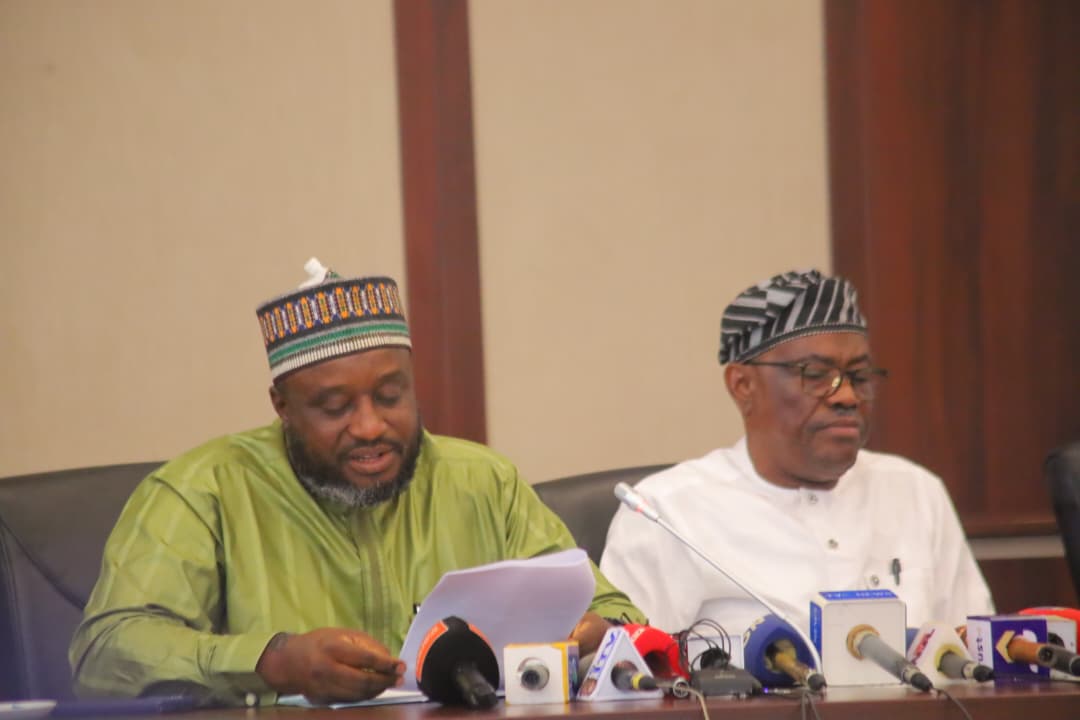
The Minister of the Federal Capital Territory (FCT), Barr. Nyesom Wike, has said that the newly completed bus terminals in Abuja will play a vital role in curbing the menace of “one-chance” robbery incidents and restoring sanity to the city’s transportation system.
Wike made the statement on Tuesday during an inspection tour of several ongoing and completed infrastructure projects in the FCT, including the Mabushi and Kugbo bus terminals.
“You don’t need to stand on the road anymore,” the Minister said. “You go to the bus terminal, and there, we know the drivers, we know the vehicles you have boarded. That, of course, will limit this ‘one-chance’. That’s the whole idea—cleaning up the city and stopping buses from turning every roadside into a motor park.”
The terminals are part of the FCT Administration’s broader infrastructure efforts ahead of the second anniversary of President Bola Ahmed Tinubu’s administration. Wike said several projects have reached advanced stages and will be ready for commissioning.
Among them is the strategic Daki-Biyu road leading to the Court of Appeal, which the Minister hopes will be inaugurated as part of the anniversary activities. “We’ve inspected several projects today, but the road going to the Court of Appeal at Daki-Biyu is one we’re hoping will be part of the president’s second-year anniversary inauguration,” he noted.
Wike, who also visited the Kugbo terminal, expressed satisfaction with the quality of work at Mabushi, highlighting improvements since his last visit.
“The last time I came here, I shouted at them over poor finishing. But what I’ve seen now shows a lot of improvement. The contractor said they haven’t done the final painting yet because they wanted my feedback first. I commend them,” he added.
On the possibility of all projects being commissioned by May 29, the Minister clarified that the events would span a broader timeline. “The commissioning is to mark the anniversary, but it doesn’t mean everything must happen on May 29. The president can give us a date in June. We’ll likely spread the commissioning over two weeks, depending on his approval.”
Wike also addressed concerns around project funding, affirming that the Administration had been prudent in its financial management.
“We don’t just award contracts for the sake of it. We base it on the resources we have. With the little taxes we collect and the support Mr. President has given, we’re able to focus on what really matters,” he explained.
He assured residents that more transformative projects aimed at improving safety, traffic flow, and overall quality of life in the FCT are underway, with the Tinubu administration committed to delivering impactful results.