
Home Blog Page 74

Court of Appeal Deals Final Blow to Gabam’s SDP Chairmanship

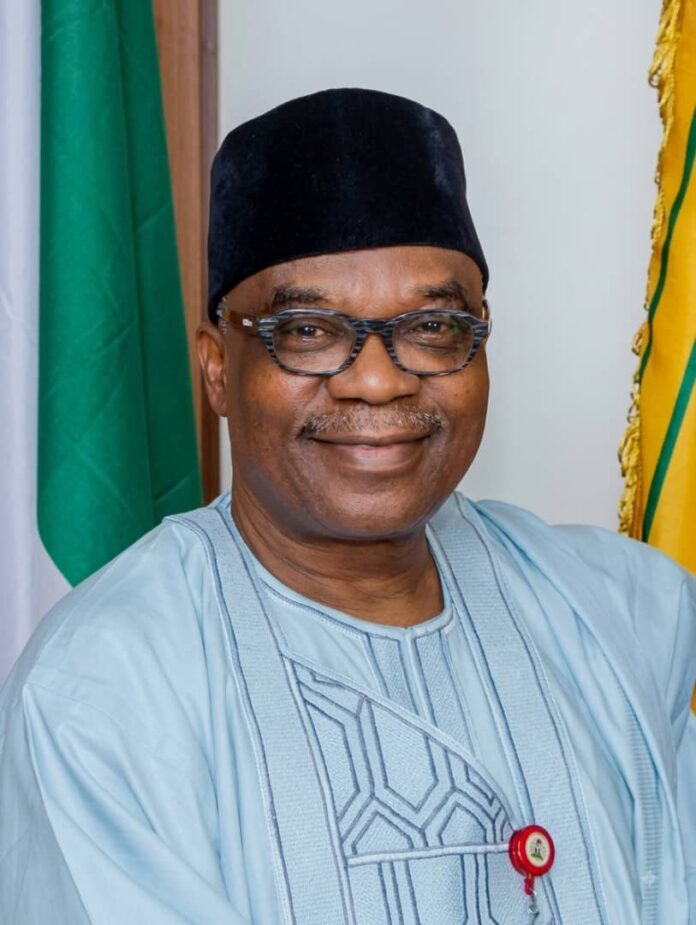
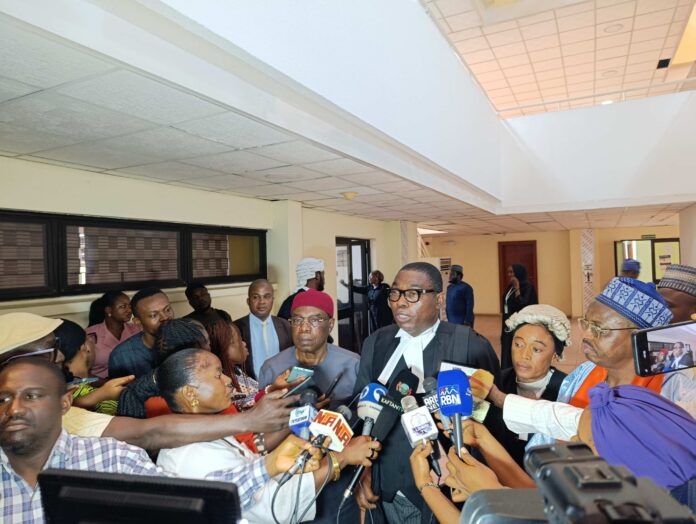
ABUJA — The Court of Appeal sitting in Abuja has nullified the Federal High Court judgment recognising Shehu Gabam as National Chairman of the Social Democratic Party (SDP), in a major victory for the Prof. Abubakar Sadiq Gombe-led faction.

A three-member panel of the appellate court, comprising Justices Fadawu Umaru, M.S. Hassan and L.A. Ganiyu, delivered a unanimous judgment yesterday.

In the lead judgment, Justice Umaru declared null and void the decision of Justice M.G. Umar in Suit No. FHC/ABJ/CS/402/2026, which had recognised Gabam as the party’s national chairman.

The judgment followed an appeal filed by the Gombe-led SDP leadership challenging the decision of the Federal High Court.

The Court of Appeal held that the basis of the lower court’s decision was flawed, noting that the Supreme Court had earlier ruled in favour of the Gombe-led leadership.

Speaking shortly after the judgment, SDP presidential candidate and counsel to the appellants, Prince Adewole Adebayo, said the appellate court ruled in favour of the party in all six applications considered.

Adebayo said the Court of Appeal declared the Federal High Court judgment recognising Gabam null and void because it was inconsistent with an earlier Supreme Court judgment delivered on May 22, 2026.

He said the appellate court also affirmed the nomination of Dr Francis Ajala as the SDP governorship candidate for the Osun State election.

According to him, the Federal High Court erred by entertaining the suit challenging Ajala’s nomination.

Adebayo described the judgment as the culmination of the prolonged legal battle over the leadership of the party, saying it had provided clarity for the SDP and the Independent National Electoral Commission (INEC).

“The judiciary has done very well for Nigeria and has guided INEC very well,” he said.

He expressed confidence that the ruling would put an end to the leadership crisis that had rocked the party.

Also reacting, Gombe commended the judiciary for resolving the dispute, urging INEC to respect the internal affairs of registered political parties, particularly decisions relating to candidate selection and nomination.

He also commended Adebayo for leading the party’s legal team and praised the judiciary for what he described as its contribution to strengthening Nigeria’s democracy.

Gombe equally appreciated the media for its coverage of the prolonged dispute and urged journalists to continue to educate the public ahead of the 2027 general elections.
Wike Shuts Secretariat Handling Sales of FG Houses

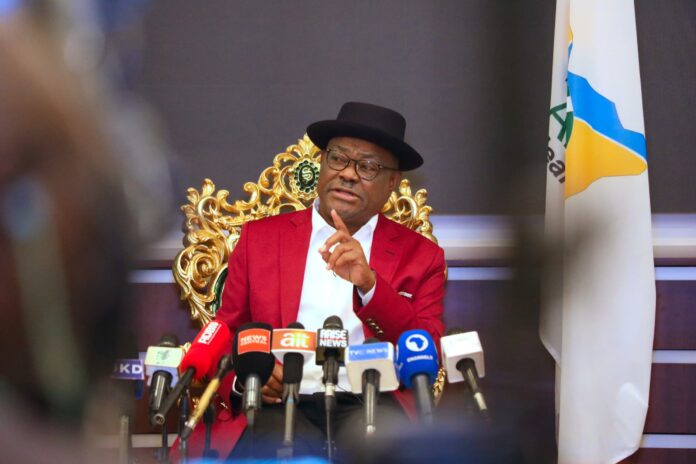
Minister of the Federal Capital Territory (FCT), Nyesom Wike, has ordered the immediate closure of the secretariat of the dissolved Ad-hoc Committee on the Sale of Federal Government Houses in the territory.

The directive was contained in a statement issued yesterday by the Minister’s Senior Special Assistant on Public Communications and Social Media, Lere Olayinka.

Wike also approved the creation of a new division within the Department of Land Administration to take over matters relating to the sale of Federal Government Houses previously handled by the dissolved committee.

The FCT Administration explained that the committee had completed its assignment, but its secretariat was retained temporarily to deal with issues arising from its activities.

However, with the formal closure of the secretariat, members of the public have been directed to henceforth approach the Department of Land Administration for all matters concerning the sale of Federal Government Houses in the FCT.

The administration also raised the alarm over possible fraudulent activities, warning residents to beware of individuals parading themselves as staff, officers or members of the dissolved committee and its secretariat.

It stressed that the committee and its secretariat no longer exist, urging members of the public to be vigilant and avoid dealing with anyone claiming to represent the defunct bodies.

Tinubu Approves Deep Offshore Framework to Unlock $50bn Investment

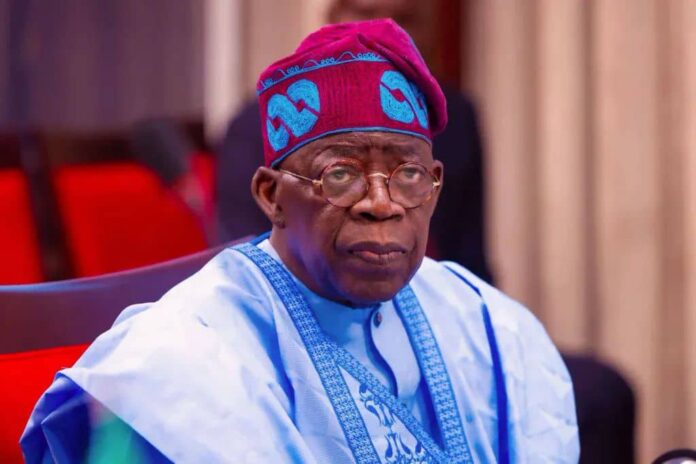
ABUJA — President Bola Ahmed Tinubu has approved a new Deep Offshore Investment Framework designed to unlock up to US$50 billion in new investment and strengthen Nigeria’s position as a major destination for long-term oil and gas capital.

The development was disclosed in a statement issued by the Presidency on Tuesday, August 11, 2026, which highlighted the framework’s focus on investment certainty, Nigerian industrial participation and the expansion of domestic capacity in the deep offshore sector.

A defining feature of the reform is its emphasis on ensuring that qualifying deep offshore projects maximise execution within Nigeria where commercially and technically feasible, according to the President’s Special Adviser on Energy, Olu Verheijen.

Verheijen said the framework is intended to strengthen domestic engineering, fabrication, marine logistics, technical services and project management while creating skilled employment and deepening local supply chains.

“The objective is not only to increase investment and production, but also to create skilled jobs, deepen local supply chains and position Nigeria as Africa’s regional hub for deep offshore project execution,” Verheijen said.

The Presidency said President Tinubu commended the Federal Ministry of Justice, Federal Ministry of Finance, Federal Ministry of Petroleum Resources, Nigeria Revenue Service, NNPC Limited, Nigerian Upstream Petroleum Regulatory Commission (NUPRC) and Nigerian Content Development and Monitoring Board for their contributions to the framework.

The President also acknowledged the role of investing partners and other industry stakeholders whose technical expertise and collaboration helped shape the new investment framework.

Tinubu said the reform was aimed at creating greater certainty for investors and strengthening the institutional environment required to attract long-term capital into Nigeria’s oil and gas industry.

“The countries that attract long-term investment are not necessarily those with the greatest natural resources. They are the ones that provide the greatest certainty,” the President said.

He said the government was working to establish an investment environment based on clear rules, strong institutions and enduring partnerships.

According to Tinubu, the framework is intended to create conditions that allow capital to flow into the country, support the expansion of Nigerian businesses and ensure that the country’s natural resources generate lasting national value.

The approval comes as Nigeria seeks to attract fresh investment into its upstream petroleum sector, increase crude oil production and maximise the economic benefits of its deep offshore resources.

Beyond attracting capital, the framework places emphasis on retaining more project-related economic activity within Nigeria by encouraging domestic participation in engineering, fabrication, logistics and specialised oilfield services.

The Presidency said the initiative is expected to support the development of local supply chains and strengthen Nigeria’s capacity to execute complex deep offshore projects.

The framework also positions Nigeria to pursue a greater role in the regional deep offshore oil and gas services market by developing the technical and industrial capabilities required for large-scale offshore projects.

The Federal Government said the reform reflects its broader effort to establish a more predictable investment environment capable of attracting long-term capital while increasing production, creating jobs and strengthening domestic industrial capacity.

NUPRC Seeks Unified West African Oil Market as Nigeria Boosts Production

ABUJA — The Nigerian Upstream Petroleum Regulatory Commission (NUPRC) has called for an integrated West African crude oil market and harmonised regulations across the region to support rising production, expanding refining capacity and cross-border petroleum trade.

The Commission Chief Executive, Mrs. Oritsemeyiwa Eyesan, made the call on Tuesday at the second West Africa Refined Fuel Market Conference in Abuja, where she said Nigeria’s petroleum industry was undergoing “unprecedented positive changes.”

Eyesan said the gains in crude production and refining capacity must now be matched by regional integration to ensure that countries across West Africa can maximise the economic benefits of a changing petroleum market.

She advocated an integrated crude market covering the upstream, midstream and downstream segments across the sub-region, arguing that countries could no longer afford to operate their petroleum markets in isolation.

The NUPRC chief also called for a unified regulatory framework, saying harmonised rules, standards and market procedures would improve efficiency, encourage investment and facilitate cross-border petroleum trade.

Eyesan highlighted Nigeria’s progress in crude production, noting that the country had crossed the production level set by OPEC. She also pointed to the expansion of domestic refining capacity as a major development that is changing Nigeria’s position in the regional petroleum market.

The increase in refining capacity, she said, creates an opportunity for Nigeria to move beyond meeting domestic demand and become a major supplier of refined petroleum products to neighbouring countries.

The conference, which runs from August 11 to 12 in Abuja, is jointly hosted by the Nigerian Midstream and Downstream Petroleum Regulatory Authority (NMDPRA), S&P Global Commodity Insights and the West Africa Regulators Forum (WARF).

Its theme is “Funding West Africa Infrastructure & Distribution to Create a Transparent Market for Regional Price Benchmarks.”

NMDPRA Chief Executive and WARF Chairman, Mallam Rabiu A. Umar, said the rapid expansion of refining capacity must be supported by investment in storage facilities, pipelines, marine terminals and other logistics infrastructure required to move petroleum products efficiently across the region.

He said African consumers should not continue to bear price shocks originating from outside the continent when regional refining capacity is expanding.

Minister of State for Petroleum Resources (Oil), Senator Heineken Lokpobiri, described the conference as an important step towards strengthening Africa’s energy sovereignty.

Lokpobiri called for continued investment in refining and petroleum distribution infrastructure, saying Nigeria has an opportunity to position itself as a regional energy and trading hub.

Special Adviser to the President on Energy, Olu Verheijen, also stressed the importance of infrastructure development, transparent markets and regulatory coordination to ensure that increased petroleum production translates into efficient regional supply.

The discussions come as Nigeria seeks to consolidate gains in crude production and domestic refining while strengthening its role in the West African petroleum market.

For the NUPRC, the next phase will require stronger cooperation among regional regulators and investment in the infrastructure needed to connect crude production, refining, storage and distribution across national borders.

Nigeria Mourns Colombia Earthquake Victims, Offers Condolences

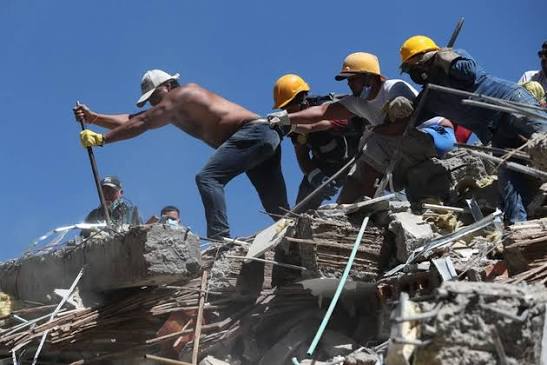
ABUJA — Nigeria has expressed solidarity with Colombia following a devastating magnitude 7.4 earthquake that struck western parts of the country on Monday, August 10, 2026.

The Federal Government conveyed its condolences in a statement issued by the Ministry of Foreign Affairs on Tuesday, signed by its spokesperson, Kimiebi Imomotimi Ebienfa.

Nigeria said it was deeply saddened by the loss of lives, injuries and destruction reportedly caused by the powerful tremor, which affected several regions, including Chocó, Valle del Cauca and Risaralda.

“The Government and people of the Federal Republic of Nigeria express profound sorrow and deepest sympathy to the Government and people of the Republic of Colombia,” the statement said.

The ministry extended condolences to families who lost loved ones and wished those injured a speedy and full recovery, assuring the Colombian people of Nigeria’s solidarity during the period of mourning and recovery.

Nigeria also expressed confidence in the resilience and determination of the Colombian people as authorities undertake search-and-rescue operations and begin efforts to assess and address the damage caused by the earthquake.

The Federal Government said it stood with Colombia during the crisis and prayed for the repose of those who lost their lives.

The statement also conveyed Nigeria’s support for the Colombian leadership and people as they respond to the disaster and begin the recovery process.

Nigerian Army, UK Deepen Defence Ties to Counter Regional Security Threats

ABUJA — The Nigerian Army and the United Kingdom are deepening defence cooperation, with plans for expanded military training, intelligence capabilities and counter-drone support as Nigeria confronts evolving security threats in the country and wider region.

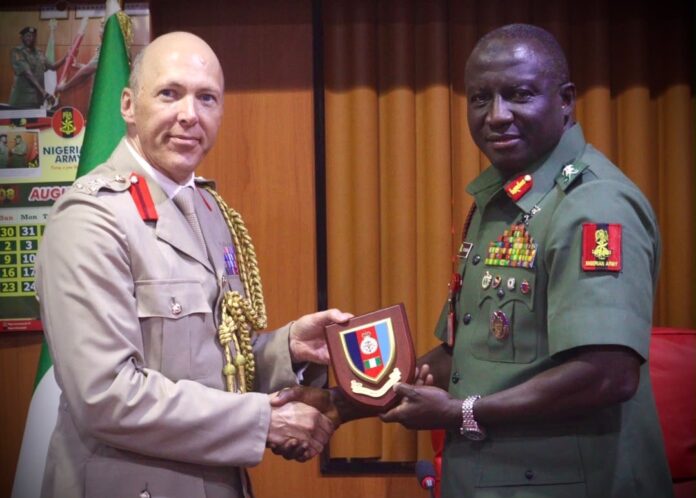
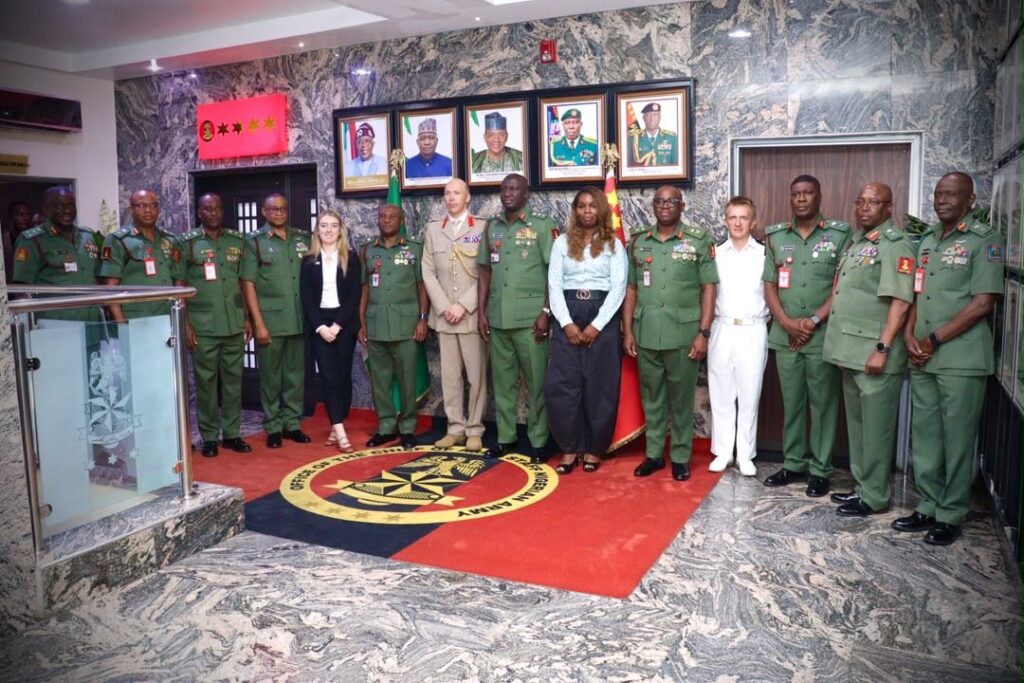
The Chief of Army Staff (COAS), Lieutenant General Waidi Shaibu, stated this on Tuesday when he received the British Defence Adviser to Nigeria, Brigadier Tom Harper, MBE, on a courtesy visit to Army Headquarters, Abuja.

The position was contained in a statement issued by the Acting Director, Army Public Relations, Colonel Appolonia Anele, on Tuesday.

Shaibu said sustained cooperation with trusted international partners remained critical to building a more adaptable, combat-ready and resilient Nigerian Army capable of responding to emerging national and regional security challenges.

He identified operational effectiveness, force protection, intelligence, specialised training and institutional capacity as key areas requiring deeper cooperation between Nigeria and the UK.

The Army chief said asymmetric warfare and operations in difficult terrain, particularly in the North-East, remained major operational challenges requiring stronger intelligence, surveillance and reconnaissance capabilities, technical intelligence, aviation support and continuous situational awareness down to battalion level.

He also highlighted the expansion of the Nigerian Army from eight to 12 divisions, saying the growth would require corresponding investment in advanced training, instructor development and Special Forces capabilities.

According to him, efforts are also being made to strengthen training at the Doma facility while institutionalising operational lessons and preserving military heritage through command curricula and the digitisation of military archives.

Responding, Brigadier Harper reaffirmed the United Kingdom’s commitment to supporting Nigeria under the Security and Defence Partnership (SDP).

He said the UK planned to expand regional train-the-trainer programmes covering combat tactical drills, casualty care and advanced patrolling.

Future Operation HADIN KAI training cohorts, he added, are expected to include personnel from Niger, Cameroon and Chad alongside Nigerian troops, a move aimed at improving interoperability and strengthening regional capacity against common security threats.

Harper also outlined proposed UK support for the establishment of a reference Forward Operating Base within a cantonment environment, as well as counter-unmanned aerial systems and expanded tactical Intelligence, Surveillance and Reconnaissance capabilities to brigade level.

The discussions also covered defence procurement and capability development, including air defence systems, potential transfers of protected mobility vehicles and specialised ammunition support.

The Nigerian Army said the engagements reflected a broader effort to strengthen its ability to anticipate, deter and respond effectively to emerging threats while improving operational and institutional capacity.

The latest discussions further underline Nigeria’s effort to strengthen international defence partnerships as it confronts terrorism, insurgency and other asymmetric security challenges across the country and the wider West African region.

We Don’t Travel for Jamborees,’ Enikanolaiye Says as Nigeria Targets Toronto Deals

ABUJA — The Federal Government has said Nigeria is heading to Toronto to secure concrete investment, trade and job-creation opportunities, with Minister of State for Foreign Affairs, Ambassador Sola Enikanolaiye, declaring that the administration does not travel abroad for “jamborees.”

Enikanolaiye made the declaration on Monday while speaking with journalists at the Nnamdi Azikiwe International Airport, Abuja, before departing for the 2026 Nigeria Diaspora Investment Economic Conference (NIDEC) in Toronto, Canada.

The remarks were contained in a statement signed by Raphael Oni, Special Adviser on Digital Media and Public Diplomacy in the Office of the Minister of State for Foreign Affairs.

The minister said NIDEC 2026 was designed as a results-driven platform to attract investment, strengthen trade ties, increase foreign exchange inflows and connect Nigerian projects with diaspora and international capital.

“This administration does not travel for jamborees. We travel for results,” Enikanolaiye said, describing NIDEC 2026 as “a deal room for Nigeria’s growth.”

He said the approach was consistent with President Bola Ahmed Tinubu’s 4Ds Foreign Policy Agenda — Demography, Development, Democracy and Diaspora — which places greater emphasis on using diplomacy to advance Nigeria’s economic interests.

Enikanolaiye said the high-powered Federal Government delegation was deliberately constituted to ensure that engagements in Toronto translate into investment and commercial opportunities for Nigeria.

The delegation includes representatives of the Central Bank of Nigeria, Nigeria Investment Promotion Commission, Nigerian Export Promotion Council and Nigeria Revenue Service, alongside the National Information Technology Development Agency.

According to the minister, their participation would enable Nigeria to present opportunities in diaspora capital, export expansion, foreign exchange inflows, digital investment and remittance-backed investment.

He said Nigeria was also seeking stronger trade and investment relations with Canada, with senior Canadian and Ontario government officials expected to participate in the conference.

The participation of governors from Anambra, Borno, Kaduna, Plateau and Zamfara, he added, would enable states to directly present investment opportunities in infrastructure, agriculture, technology and mining.

“This decentralises investment and takes opportunities beyond Abuja,” he said.

Enikanolaiye also highlighted the potential of diaspora funds to support productive economic activity in Nigeria, noting that the country received more than $20 billion in diaspora remittances last year.

He said the government wanted to encourage Nigerians abroad to move beyond remittances for consumption and consider investing in businesses, factories and other productive ventures capable of creating jobs.

The minister said NIDEC would also seek to strengthen government-diaspora trust and address challenges faced by Nigerians abroad who want to invest in the country.

He added that technology and skills transfer would form another component of the engagement, with Nigeria seeking partnerships in digital innovation, fintech and information technology capacity building.

The four-day NIDEC 2026, themed “Invest Nigeria, Thrive Abroad,” will hold in Toronto from August 12 to 15.

The conference is organised by the Nigerians in Diaspora Commission in collaboration with the Nigerian High Commission in Ottawa and the Canadian High Commission in Abuja.

Enikanolaiye said the Federal Government expected the conference to deliver measurable economic outcomes.

“NIDEC 2026 is economic diplomacy in action. Nigeria is open for business. And we are going to Toronto to close deals,” he said.

Nigerian Army Opens Applications for 50/2027 Short Service Combatant Course


ABUJA — The Nigerian Army has opened applications for the Short Service Combatant Commission (SSCC) Course 50/2027, inviting eligible civilians and serving military personnel to apply for commission as officers.

The Army said successful applicants will undergo training before being commissioned into the Combat Arms and Combat Support Arms, including Infantry, Armour, Artillery, Engineers, Signals and Intelligence Corps.

Applicants are required to use the official Nigerian Army recruitment portal, nashortservice.army.mil.ng, select the SSCC option and follow the application instructions.

The Army warned prospective applicants against relying on unofficial recruitment portals or announcements, stressing that members of the public should obtain recruitment information only through its official channels.

It also advised applicants to disregard any online application portal or recruitment announcement purportedly opened before the official publication of the exercise.

The application deadline is Saturday, October 17, 2026.

The Army further said prospective applicants and members of the public should watch for official recruitment jingles on television and radio stations following the publication.

For enquiries, applicants can contact the designated telephone lines, 07016874003 and 07047340295, which are available daily between 8:00 a.m. and 6:00 p.m.

The SSCC scheme provides an avenue for qualified Nigerians to join the Nigerian Army as commissioned officers, subject to meeting the stipulated requirements and successfully completing the prescribed training.


Meta

Nigerian Army Opens Applications for 50/2027 Short Service Combatant Course


(160 characters):

Nigerian Army opens applications for SSCC Course 50/2027, inviting eligible civilians and serving personnel to apply before the October 17 deadline.


Tags/Keywords:

Nigerian Army, SSCC Course 50/2027, Short Service Combatant Commission, Nigerian Army recruitment, Army recruitment 2026, military recruitment, SSCC officers, Nigerian Army officers, Army application deadline, Nigeria defence

Osun Election: Shehu Sani Rejects Davido’s Call for Trump’s Intervention

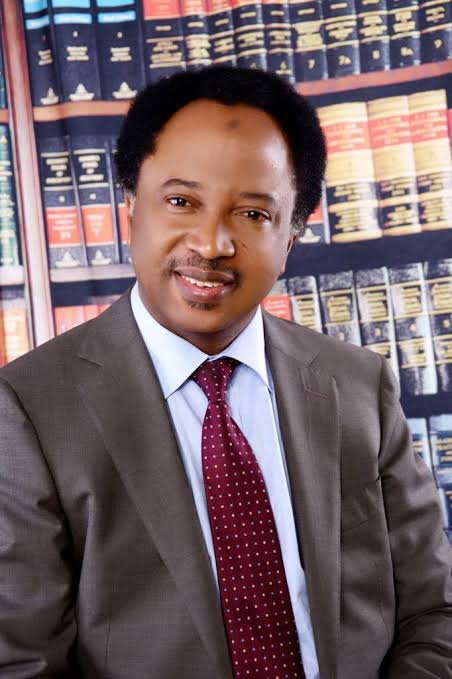
ABUJA — Former Kaduna Central Senator Shehu Sani has dismissed singer Davido’s appeal to United States President Donald Trump to intervene in the forthcoming Osun State governorship election, saying those seeking to involve the American leader are “wasting their time.”

Sani made the remarks in a post on his X handle on Tuesday, shortly after Davido called on Trump to pay attention to the Osun election amid concerns over possible violence and disruption of the democratic process.

“Those who are trying to drag Mr Trump into our elections are just wasting their time,” Sani said.

The former senator argued that Trump was unlikely to prioritise the credibility of African elections, pointing to elections in Tanzania, Uganda and Cameroon as examples.

“Trump is not Obama or Biden. He has least interest in the credibility or otherwise of elections in Africa,” Sani said.

He also suggested that Trump’s foreign policy priorities were currently focused elsewhere, citing tensions involving the Strait of Hormuz, Gaza and Ukraine.

“Mr Trump’s hands is full with Strait of Hormuz, Gaza and Ukraine and most importantly, his party is battling to survive the upcoming Senate and House of Representatives elections,” he added.

Davido had earlier appealed to Trump to pay attention to the Osun governorship election, expressing concern over rising political tension and the potential for violence, intimidation and disruption of the electoral process.

The singer’s appeal comes as political activities intensify ahead of the governorship poll, with concerns over the security of voters, candidates and election officials remaining part of the wider debate surrounding the election.

Sani’s intervention has now added a political dimension to the debate over whether foreign governments, particularly the United States, should take an interest in Nigeria’s electoral process.

The former lawmaker’s position was that responsibility for ensuring credible elections rests primarily within Nigeria’s democratic and electoral institutions rather than with the US president.

The controversy comes amid heightened attention on the Osun governorship election, where political actors and stakeholders are expected to rely on Nigeria’s electoral institutions and security agencies to safeguard the voting process.

INEC’s Impartiality Key to Nigeria’s Survival in 2027, Says PFN President

AKURE — The National President of the Pentecostal Fellowship of Nigeria, PFN, Bishop Wale Oke, has warned that the credibility of Nigeria’s democracy ahead of the 2027 general elections will depend largely on the ability of the Independent National Electoral Commission, INEC, to remain impartial.

Oke, who spoke with journalists at the 38th annual convention of Agape Christian Ministries in Akure, Ondo State, also called on the Federal Government to take decisive action against religious extremists using violence to pursue their agenda.

The PFN president said INEC must operate independently of political parties and resist any attempt to influence its conduct of the 2027 elections.

«“INEC is a government functionary. It is not part of any political party. INEC is to regulate all political parties and to conduct elections, not to take sides with any,” he said.»

He added: “We are demanding that for the exercise of our civil rights, INEC does not partake in partisan politics. The integrity of Nigeria’s democracy hangs in the balance.”

Oke also urged political parties and candidates to avoid using ethnicity and religion as tools for securing political support, saying competence and fairness should take precedence in the choice of leaders.

“Politicians should not play the ethnic card in choosing who leads us. They should not play the religious card,” he said.

The cleric advocated religious balance in political leadership, arguing that Nigeria’s secular character makes inclusiveness important in the composition of government.

“Because Nigeria is a secular state, there is no need for it to be altogether Muslim or altogether Christian. Don’t favour a religion against another. Be neutral. Nigeria must recover equitably,” he said.

Oke seeks tougher action against extremists

On insecurity, the PFN president condemned the use of religion to justify killings, kidnappings and attacks on communities, urging security agencies to deal decisively with perpetrators regardless of their religious affiliation.

“There are radicals who are bent on turning Nigeria into a caliphate state. But the Constitution guarantees freedom of religion and freedom of worship,” Oke said.

He described kidnapping, attacks on schools and killings as criminal acts, regardless of the motive or religious justification offered by perpetrators.

“Kidnapping is criminal. Taking children from school is criminal. Beheading is criminal. If anybody is doing that in the name of religion, he is a criminal, whether he is from the Christian side or from the Islamic side,” he said.

Oke, however, cautioned against portraying the actions of extremists as representative of the wider Muslim community, urging Muslim leaders to assist security agencies in identifying and reporting radical elements.

“It is not the generality of Islam. It is the radicals among them. The Muslim community should identify those radicals and hand them over to law enforcement agencies,” he said.

The PFN president stressed that religious persuasion should be peaceful and voluntary, insisting that violence cannot be justified in the name of faith.

“If you can persuade me to change from being a bishop into becoming a Muslim, and you succeed, God bless you. If I persuade you to convert to Christianity, God bless me. Let it be by persuasion,” he said.

“But if it is by violence, no. There is a difference between criminality and religion. The government must not tolerate criminality.”

Call for equitable governance

Oke also urged Nigerians to seek solutions to the country’s economic and security challenges while calling for greater fairness in governance.

He identified insecurity and economic hardship among the major challenges confronting Nigerians and encouraged citizens to continue seeking divine intervention while supporting efforts to address the problems.

The cleric also clarified his earlier comments on church titles, explaining that titles such as “Senior Pastor” and “Archbishop” may serve administrative purposes as churches expand.

He distinguished between practices not expressly mentioned in the Bible and practices that are inherently unbiblical, arguing that organisational structures can evolve to accommodate the growth of religious institutions.

Niger Detainees’ Deaths: Alake Sends Probe Team to Minna

ABUJA — Minister of Solid Minerals Development, Dele Alake, has ordered the deployment of a high-powered ministerial team to Niger State to investigate the...