


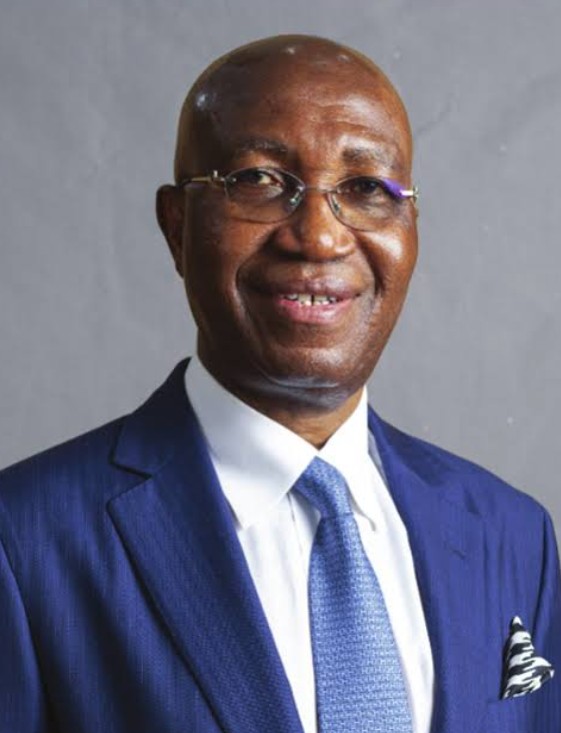
Legal luminary and former President of the Nigerian Bar Association (NBA), Chief Wole Olanipekun, SAN, has warned against the misuse of Nigeria’s cybercrime laws to silence critics, journalists and bloggers, insisting that the law must protect victims of online abuse and those accused of defamation equally.
Olanipekun also called for strong institutional safeguards to prevent cybercrime legislation from becoming “sedition in digital clothing”, stressing that the enforcement of the law must be guided by fairness, restraint and respect for constitutional rights.
The Senior Advocate of Nigeria made the call on Thursday while delivering a distinguished lecture titled, “The Jurisprudence of Criminal Defamation and Cyberstalking Under Nigerian Law.”
He said Nigeria needed effective cybercrime regulation but warned that selective enforcement could undermine freedom of expression and public confidence in the justice system.
According to him, cyber laws should not be used to gag the media or shield powerful individuals from criticism but should provide a fair digital environment where freedom of expression and the rights and reputations of citizens are protected.
Olanipekun maintained that bloggers should enjoy the same legal protection as newspaper organisations, just as victims of cyberbullying should have access to remedies irrespective of their social or political status.
He urged lawmakers, security agencies and the judiciary to ensure that cybercrime laws were applied fairly and consistently, without favouring the powerful over ordinary citizens.
The legal expert argued that investigations involving online speech should ordinarily be supported by demonstrable evidence of serious harm, threats, harassment, knowingly false communication or danger to public order.
He cautioned against making arrest the first response to allegations involving online publications, noting that invitations, formal notices, preservation of evidence or civil proceedings could be more appropriate in certain circumstances.
Olanipekun also called for prosecutorial independence, warning that criminal proceedings must not be driven by personal grudges, political interests or institutional vendettas.
He urged courts to insist on strict proof of knowledge, intention and purpose, particularly in cases involving alleged false communication under Section 24 of the Cybercrimes Act.
He further called for robust protection for public-interest journalism, academic criticism, whistle-blowing and legitimate democratic commentary.
“These safeguards are not obstacles to justice; they are conditions of justice,” he said.
“They ensure that the law remains an instrument of protection rather than intimidation. A carefully restrained law is more defensible than a broadly weaponised one.”
‘Protect victims and critics equally’
Olanipekun anchored his recommendations on the constitutional principle of proportionality, arguing that any restriction on freedom of expression under Section 39 of the Constitution must pursue a legitimate aim and go no further than reasonably necessary to achieve it.
He said restrictions must also maintain a fair balance between protecting individual rights and preserving freedom of expression.
Outlining six key principles for responsible digital conduct, the former NBA president said freedom of expression was indispensable to democracy but did not confer a right to fabricate information or deliberately destroy another person’s reputation.
He noted that digital technology had amplified the potential harm caused by false publications because online content could spread rapidly, remain searchable indefinitely and reach large audiences through anonymity and algorithmic amplification.
He therefore argued that criminalisation of online conduct must be carefully controlled, with prosecution justified only where the law was clear, necessary, proportionate and fairly enforced.
The legal luminary also called for Nigerian jurisprudence to reflect the country’s constitutional values and the African Charter’s emphasis on human dignity and responsibility.
On emerging technological threats, he urged courts, police officers and lawyers to develop expertise in digital forensics, metadata analysis and authentication to tackle artificial intelligence-generated deepfakes, synthetic voices and manipulated videos.
He warned that technological advances had made it increasingly difficult to rely on appearances alone when assessing the authenticity of digital evidence.
Olanipekun insisted that the Cybercrimes Act was intended to apply to everyone, regardless of status or position.
The law, he said, must protect victims and critics, ordinary citizens and public officers, as well as newspapers and bloggers, with equal standards of proof and fair hearing.
He argued that constitutional protections for life, dignity, liberty, privacy and freedom from discrimination would be weakened if citizens were not equally protected against cyberstalking.
“My honest view is that Sections 33, 34, 35, 37 and 42 rights to life, dignity, liberty, private life and freedom from discrimination would be meaningless if citizens are not equally protected from cyberstalking,” he said.
Olanipekun described online harassment as a growing problem, noting that unidentified individuals increasingly use digital platforms to attack, malign and disparage others.
He stressed, however, that the solution required both effective legal safeguards and personal responsibility.
Concluding his lecture, the former NBA president urged Nigerians to treat others online with the same consideration they would expect for themselves.
“Do unto others what you want done to you,” he said.
“Each of us, when we publish, stands in the neighbourhood of others. The law will not do all of the work of restraint; conscience must do the rest.”
FUOYE VC hails legal luminary
Earlier, the Vice-Chancellor of the Federal University Oye-Ekiti (FUOYE), Professor Joshua Ogunwole, represented by the Deputy Vice-Chancellor, Professor Babatunde Afolabi, described the lecture topic as academically stimulating and socially relevant.
He praised Olanipekun as a philanthropist, mentor and distinguished legal authority, adding that his acceptance to deliver the lecture despite his demanding schedule reflected his commitment to legal scholarship and youth development.
Also present at the event as special guest of honour was retired Kogi State High Court judge, Professor Alaba Ajileye.