


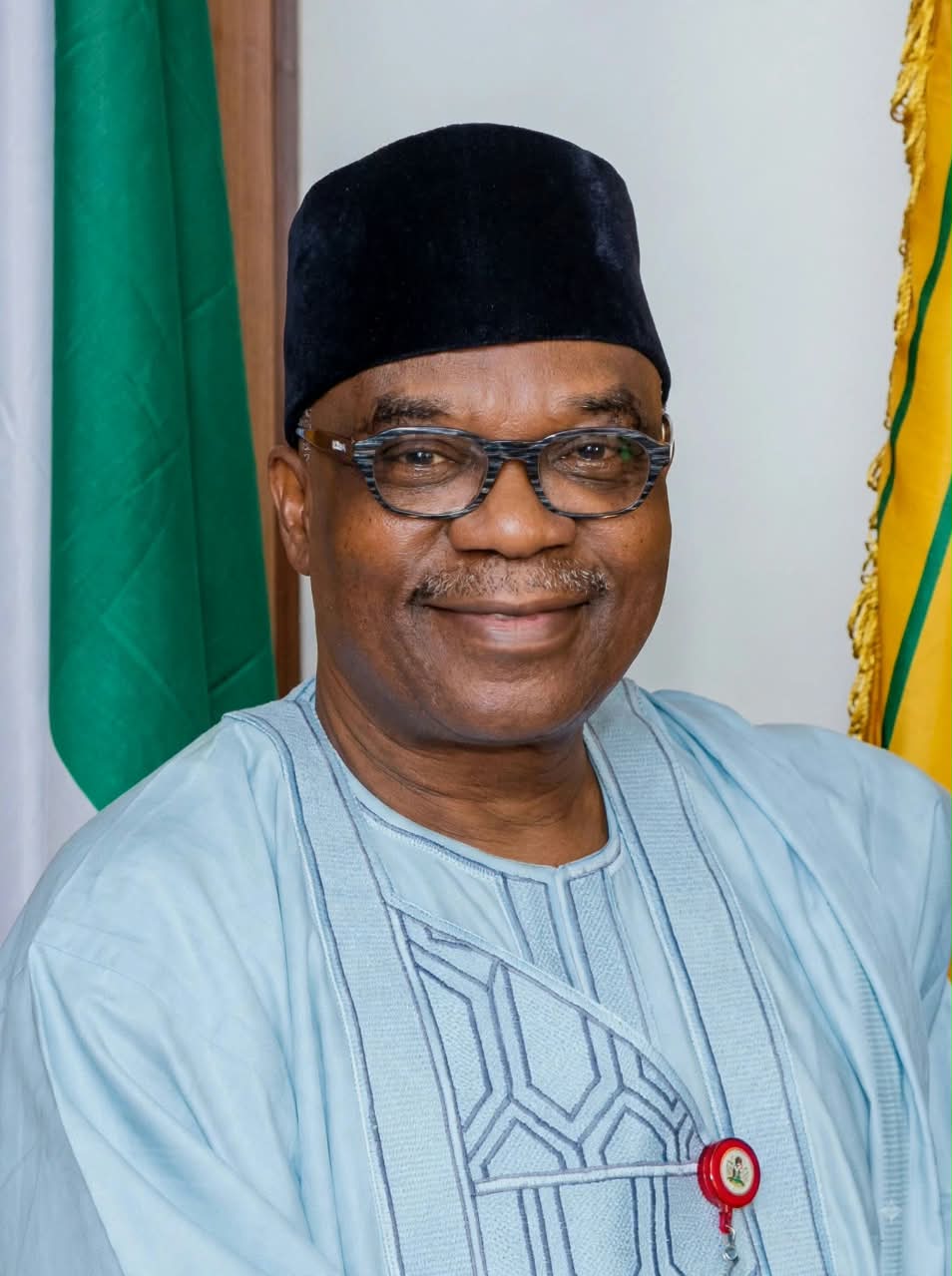
ABUJA — Minister of State for Foreign Affairs, Ambassador Sola Enikanolaiye, has warned foreign missions in Nigeria against bypassing the Ministry of Foreign Affairs when seeking access to the Presidency, ministers and heads of government agencies.
Enikanolaiye said diplomatic missions should route official requests through the Foreign Affairs Ministry rather than relying on direct telephone calls to other arms of government, arguing that established channels are necessary for coordination, consistency and effective follow-up.
The minister made the remarks in a statement titled “Stop Dialing Around Us in the Ministry of Foreign Affairs: Nigeria Is Hospitable, Not Helpless,” in which he stressed that diplomatic engagement must be guided by both substance and procedure.
“In diplomacy, process is as important as substance,” Enikanolaiye wrote, describing direct approaches to the State House, ministers and agency heads outside the recognised diplomatic channel as a growing practice that runs contrary to established procedure.
The intervention follows a September 17 briefing by Foreign Affairs Minister Bianca Odumegwu-Ojukwu with members of the Diplomatic Corps in Abuja, her first formal engagement with the corps since assuming office as substantive minister. At the meeting, Ojukwu similarly urged foreign missions to channel official communications and requests to the Presidency, ministries, departments and agencies through the Foreign Affairs Ministry.
“The Ministry is not an obstacle between you and the Nigerian Government; we are your bridge to the Nigerian Government,” Ojukwu said.
Enikanolaiye said he associated himself fully with the minister’s position, maintaining that Nigeria’s diplomatic institutions should remain the formal bridge between foreign missions and other arms of government.
‘Use the Ministry’
According to Enikanolaiye, the ministry’s role is not to restrict diplomatic access but to ensure that engagements involving foreign governments are properly coordinated and placed within the broader context of Nigeria’s foreign policy.
He argued that bypassing the ministry could result in conflicting information, duplication of efforts and misunderstandings between foreign missions and Nigerian institutions.
“Going forward, strict compliance with diplomatic channels will be expected,” he said, referring to remarks he made while commending ASEAN countries represented in Nigeria for their adherence to diplomatic protocol.
Nigeria’s official cabinet listing confirms Enikanolaiye as Minister of State for Foreign Affairs, while the State House said President Bola Ahmed Tinubu swore him into office on June 8, 2026.
What the Vienna Convention says
Enikanolaiye grounded his argument in the Vienna Convention on Diplomatic Relations, particularly Article 41.
Article 41(2) provides that official business entrusted to a diplomatic mission by its sending state “shall be conducted with or through the Ministry for Foreign Affairs” of the receiving state, or another ministry agreed by the parties.
Article 41(1), meanwhile, requires persons enjoying diplomatic privileges and immunities to respect the laws and regulations of the receiving state and not interfere in its internal affairs.
The provisions provide the international legal framework for the minister’s insistence that official state-to-state business should follow recognised channels.
Enikanolaiye said the requirement should not be interpreted as Nigeria attempting to make diplomatic engagement unnecessarily bureaucratic. Rather, he said, the Foreign Affairs Ministry provides institutional memory, diplomatic expertise and policy context that other government institutions may not have when dealing with foreign missions.
Nigeria says diplomatic operations have been eased
The minister also highlighted changes he said had been introduced to make diplomatic operations easier for foreign missions.
He said newly appointed ambassadors and high commissioners can commence official functions after submitting their copie d’usage, the working copy of their Letters of Credence, to the Ministry of Foreign Affairs without waiting for the formal presentation of credentials to the President.
Such envoys can engage ministries, departments and agencies and conduct bilateral business, except for events and ceremonies requiring the participation of the President, pending formal presentation of their credentials.
Enikanolaiye said the arrangement was introduced in good faith to facilitate diplomatic representation and should therefore be matched by adherence to established diplomatic procedures.
Minister raises concern over diplomatic number plates
The Minister of State also criticised what he described as the use of diplomatic number plates by people who are not authorised to use them.
He said diplomatic plates are provided to facilitate legitimate diplomatic functions and should not be used to evade traffic regulations or law enforcement.
According to Enikanolaiye, misuse of diplomatic privileges can create security concerns and damage the reputation of the diplomatic corps.
He called for an end to what he described as the abuse of diplomatic plates.
Why the ministry wants the channel preserved
Enikanolaiye identified several risks associated with what he termed “backdoor diplomacy”.
Among them, he said, is the possibility that direct approaches to government officials could produce commitments that are inconsistent with the position of the Foreign Affairs Ministry or other relevant institutions.
He also argued that bypassing the ministry could weaken the benefit of professional foreign-policy advice available to the Presidency, create gaps in security and inter-agency coordination, and expose government officials to requests presented without the full diplomatic, legal or policy context.
The minister further invoked the principle of reciprocity, noting that Nigerian diplomatic missions abroad are expected to respect the official channels of their host governments.
His position is that Nigeria should receive the same treatment from foreign missions operating in the country.
Ojukwu outlines Nigeria’s foreign policy priorities
The dispute over diplomatic channels comes as the Foreign Affairs Ministry seeks to reinforce the policy direction of the Tinubu administration.
At her September 17 briefing, Ojukwu restated the administration’s foreign policy around the Four Ds — Demography, Development, Democracy and Diaspora.
The framework places emphasis on Nigeria’s youthful population, economic diplomacy, trade and investment, democratic governance and the contribution of Nigerians in the diaspora.
Ojukwu also said Nigeria would pursue a foreign policy that is Nigeria-centred, Africa-conscious and globally engaged, while maintaining strategic autonomy in its international relations. She stressed that strategic autonomy should not be interpreted as isolation but as preserving Nigeria’s sovereign ability to determine relationships and positions in line with its interests.
The ministry is also seeking to revive dormant Joint Commissions and Bi-National Commissions with other countries, with the aim of expanding cooperation in trade, investment, security, education, technology, health and agriculture.
For Ojukwu, the measure of diplomacy should ultimately be its practical benefits.
“The strength of our diplomatic relationships should be measured not only by the warmth of our engagements, but by the tangible benefits they produce for our respective peoples,” she said.
‘Nigeria is hospitable, not helpless’
Enikanolaiye said Nigeria remains open to cooperation with foreign governments but expects such engagement to respect the institutions responsible for managing the country’s external relations.
“Do not bypass the Ministry of Foreign Affairs to lobby the Villa,” he said, urging diplomatic missions to use the ministry as the formal channel for government engagement.
He summarised the preferred process as:
Embassy → Note Verbale → MFA → MDA/Presidency → MFA → Embassy.
“My Ministry’s job is to make your work easy. Use us,” Enikanolaiye said.
He ended with a direct appeal to foreign missions: “Drop the phone. Pick up the pen. Write the Note Verbale.”