


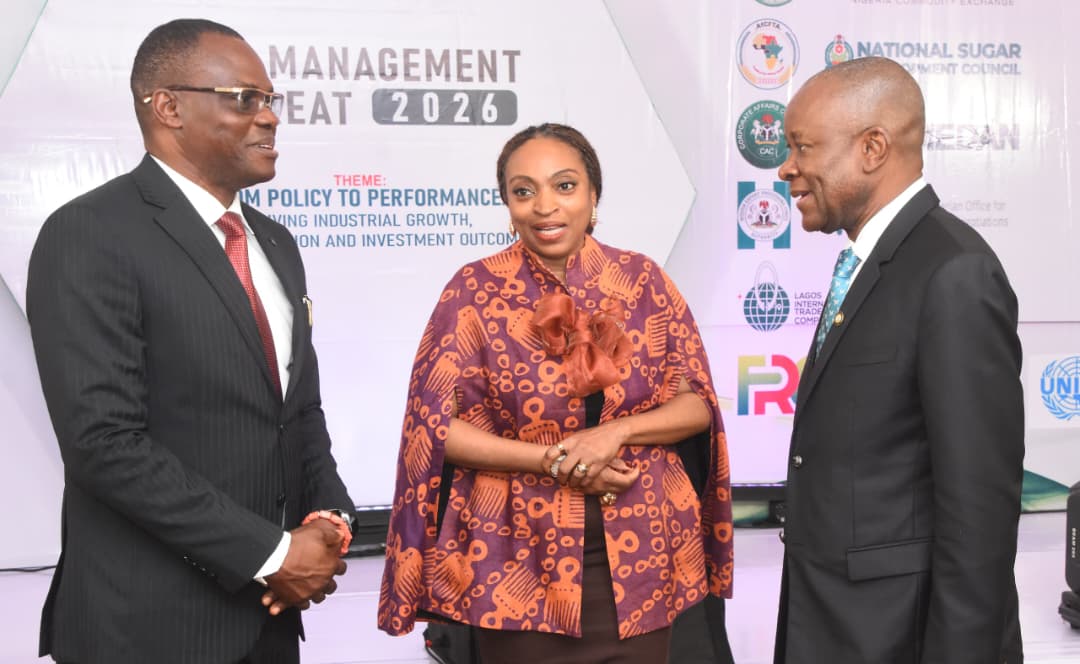
ABUJA, Nigeria — The Federal Ministry of Industry, Trade and Investment (FMITI) has outlined a bold roadmap to drive Nigeria toward a $1 trillion economy, unveiling a four-pronged strategy focused on industrial growth, trade expansion, and investment attraction at its 2026 Top Management Retreat.
Speaking at the two-day retreat held in Abuja from June 22–23, the Minister of Industry, Trade and Investment, Dr. Jumoke Oduwole, said the Ministry is shifting focus from policy formulation to measurable economic outcomes.
“With a clear focus on execution, innovation, and results, we are positioning Nigeria on a sustainable path toward economic transformation and the realization of a $1 trillion economy,” Oduwole stated.
She highlighted key achievements recorded in 2025, including about $21 billion in capital importation, over $6.1 billion in non-oil exports, and support for more than 115,000 Micro, Small and Medium Enterprises (MSMEs) through grants, loans, and trade finance initiatives.

The Minister also disclosed that Nigeria completed Africa’s first comprehensive five-year review of the African Continental Free Trade Area (AfCFTA) implementation, alongside progress in export connectivity, investment facilitation, and intellectual property reforms.
According to her, the Ministry’s 2026 strategy will prioritize expanding demand for Nigerian goods and services, strengthening domestic industrial capacity, attracting strategic investments, and leveraging data, artificial intelligence, and digital infrastructure to enhance service delivery.
Oduwole emphasized the need for stronger coordination across agencies to improve support for businesses and investors, noting that recent efforts have already yielded results, including an 11 percent increase in non-oil exports and over $50 billion in investment announcements since 2024.
Minister of State for Industry, Senator John Owan Enoh, described the retreat as a critical platform to align strategies and drive implementation.
“Policy success depends not only on formulation but also on effective implementation supported by investment, technology, skills, and strong collaboration,” he said.
Enoh revealed that the Ministry has adopted a 90-day implementation reporting cycle to strengthen accountability, adding that progress will be measured by increased production, job creation, higher exports, and improved investor confidence.
Permanent Secretary of the Ministry, Dr. Chris Osa Isokpunwu, stressed that government performance must be judged by tangible outcomes.
“Our success must be reflected in industrial growth, increased investments, expanded exports, and job creation,” he said.
He added that the retreat was designed to review performance, address implementation challenges, and accelerate results across the Ministry and its agencies.
Representatives from the United Nations Industrial Development Organization (UNIDO) and the Senate Committee on Industries commended the initiative, pledging continued support for Nigeria’s industrialization and economic transformation efforts.
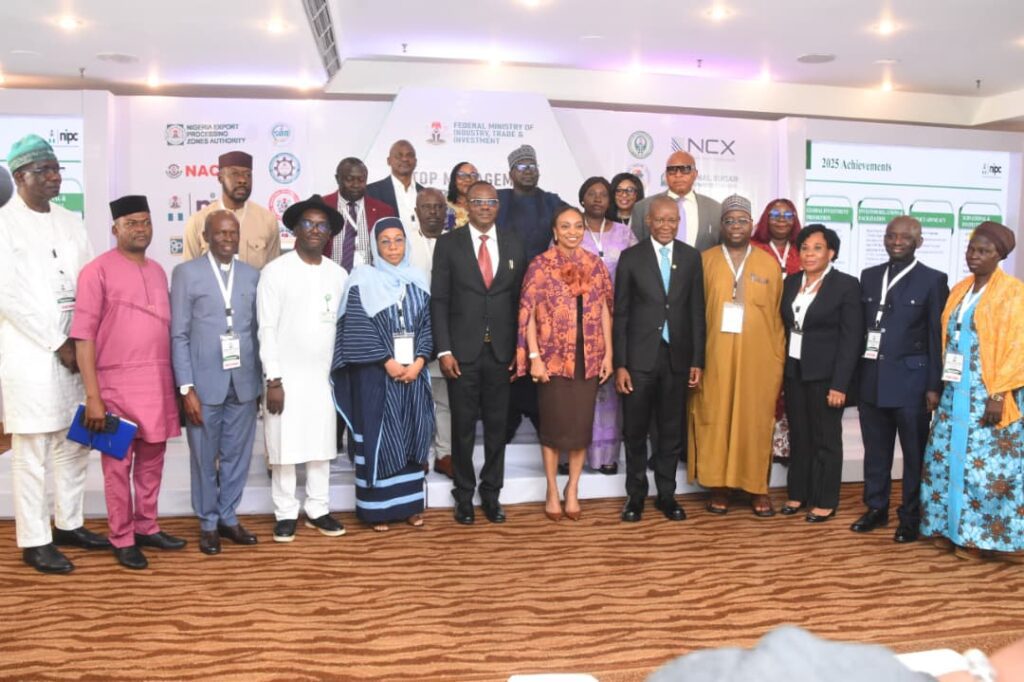
The retreat, themed “From Policy to Performance: Driving Industrial Growth, Trade Expansion and Investment Outcomes,” brought together top government officials and stakeholders to align priorities and strengthen execution frameworks.