


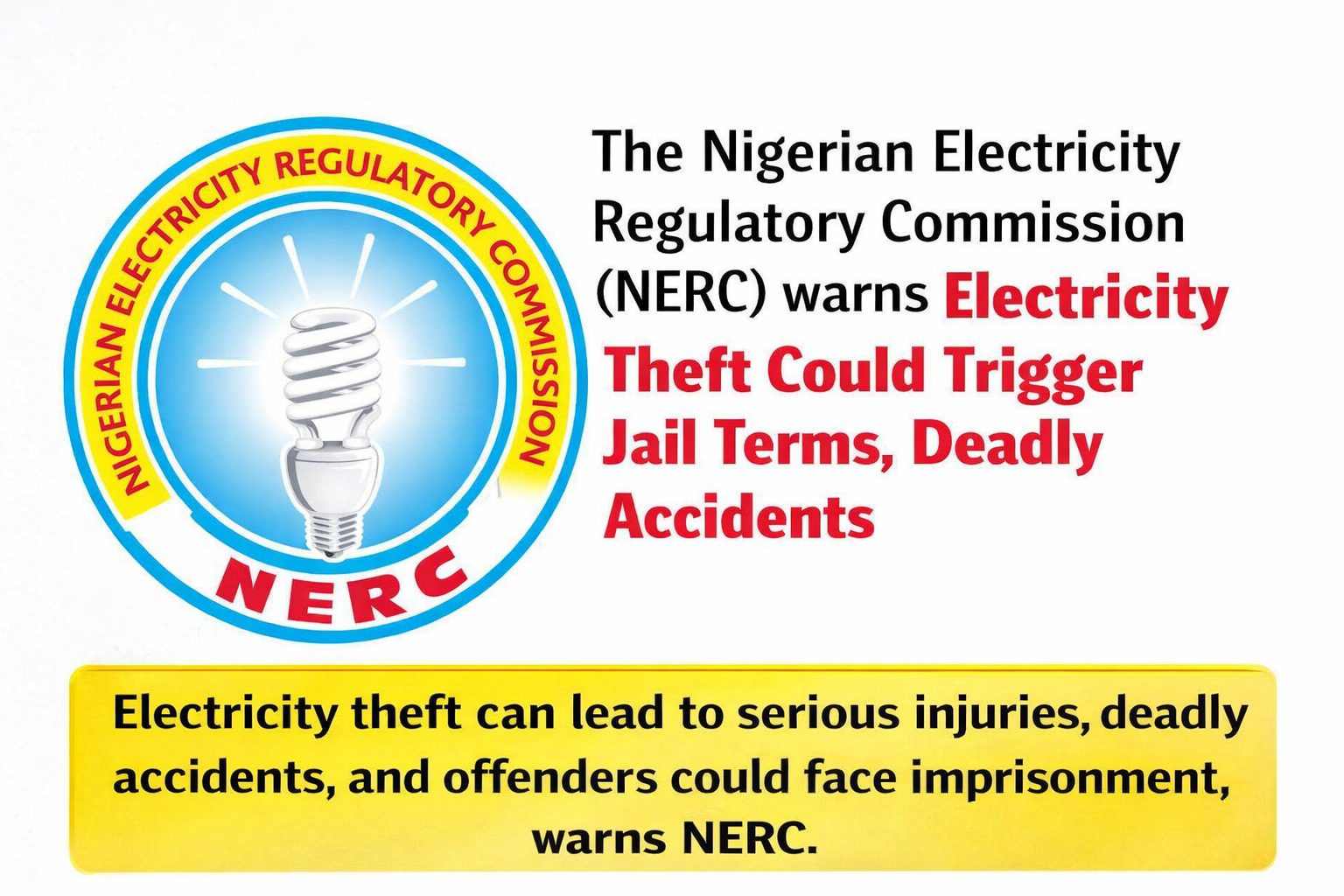
The Nigerian Electricity Regulatory Commission (NERC) has drawn a firm line against electricity theft, warning that illegal connections, meter tampering, and bypassing of supply systems carry severe safety risks, legal penalties, and broader consequences for Nigeria’s fragile power sector.
In a public notice released on Thursday via its official X handle, NERC defined electricity theft as any unauthorised tapping into power lines, illegal wiring, meter tampering, or complete bypassing of the metering and supply infrastructure. The regulator stressed that these practices do not merely undermine revenue — they actively destabilise the entire electricity network.
According to NERC, electricity theft overloads distribution transformers and feeders, often triggering explosions, widespread damage to electrical equipment, and prolonged outages. The resulting revenue shortfalls force operators to seek cost recovery through higher tariffs for compliant customers, effectively penalising those who pay their bills.
The human cost is even more sobering. Tampering with live infrastructure frequently leads to fatal electrocutions and serious accidents that endanger not only the perpetrators but also innocent bystanders and nearby residents.
Legally, offenders face stiff consequences: a minimum of three years’ imprisonment, significant fines, or both upon conviction.
The notice urged public cooperation, calling on Nigerians to promptly report suspected cases of electricity theft to their respective electricity distribution companies (DisCos). Curbing the menace, NERC said, is essential for improving safety and achieving a more stable power supply.
This latest warning comes against the backdrop of persistent high losses and safety challenges in the sector. According to NERC data, Nigeria recorded 192 casualties — 109 deaths and 83 injuries — linked to power sector incidents in 2025, many involving vandalism, electricity theft, and unsafe tampering with infrastructure. Just last February, a suspected vandal was electrocuted in an explosion while attempting to steal cables from a transformer substation in Awka, Anambra State — a grim reminder of the very dangers NERC continues to highlight.
NERC has also been tightening enforcement. In recent months, the commission issued new directives and Standard Operating Procedures requiring DisCos to strengthen detection, investigation, and sanctioning of meter bypass and theft cases. It has equally pushed for better monitoring of transmission losses and accelerated deployment of smart metering infrastructure.
From the regulatory authorities’ perspective, the physics remains unforgiving. Every unauthorised connection disrupts load balance, accelerates equipment failure, and reduces the funds available for maintenance, upgrades, and genuine capacity expansion. When commercial and collection losses remain elevated — often well above regulatory targets — the entire value chain suffers, delaying the reliable power supply Nigerians urgently need.
Electricity theft is not a victimless crime. It strains transformers, inflates costs for honest consumers, destroys critical infrastructure, and claims lives. As NERC intensifies its campaign alongside recent regulatory orders aimed at cutting losses, the message is clear: shortcuts with live power carry consequences that far outweigh any short-term gain.
The commission’s closing call remains direct — do not steal electricity, do not endanger lives, and report violations to the appropriate distribution company. In a sector already battling gas supply constraints and infrastructure deficits, eliminating avoidable losses through theft is one of the more achievable levers for meaningful improvement.