


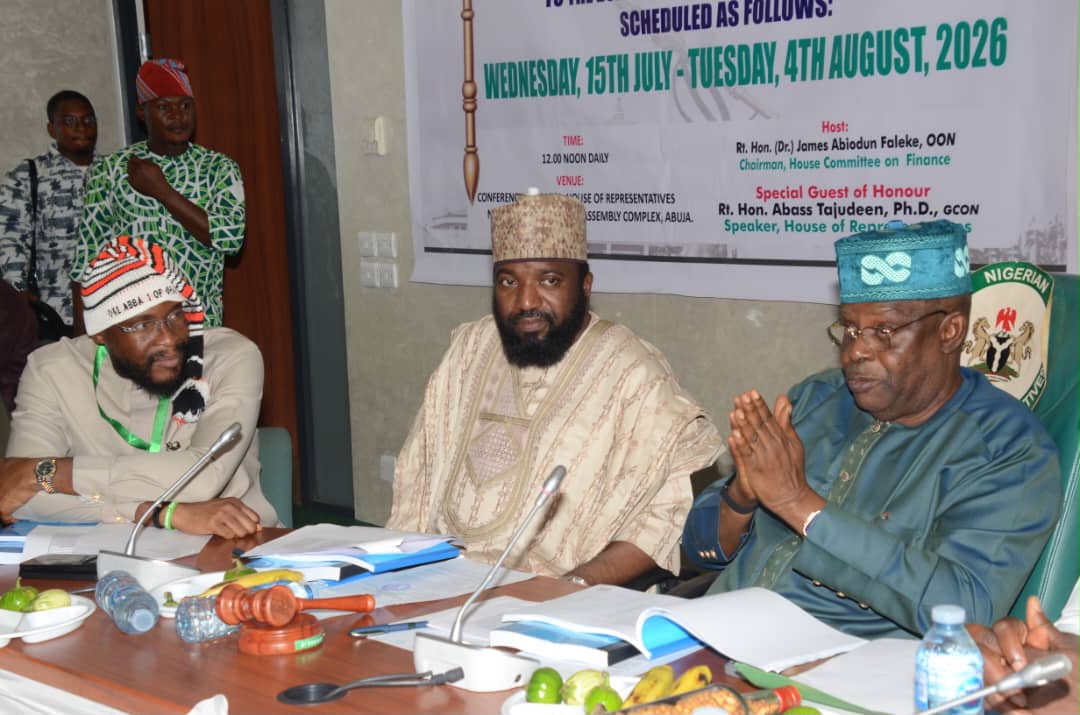
ABUJA — The House of Representatives has demanded full disclosure of about ₦34 trillion in import duty waivers granted in 2025, directing the Nigeria Customs Service (NCS) to provide details of beneficiaries, legal backing and economic impact.
The directive was issued during an oversight session of the House Committee on Finance with Customs officials, as lawmakers intensified scrutiny of fiscal incentives and revenue accountability.
Chairman of the Committee, Hon. James Abiodun Faleke, said while the House supports government policies on waivers, the magnitude of the concessions requires transparency.
“Waiver is good. It is not a bad thing to grant waiver. But we want to know those who benefited from the waiver and the purpose for such waiver,” Faleke said.
He stressed that waivers must align with national economic goals, noting that incentives on sectors such as agriculture and healthcare should translate into tangible benefits like reduced food prices and improved public welfare.
“But we want to know the beneficiaries of this ₦34 trillion waiver,” he added.
Import duty waivers are government-backed incentives designed to reduce or eliminate customs duties on certain imports to boost investment, support key sectors and ease economic pressures. However, the policy has faced persistent criticism over transparency and its impact on government revenue.
Beyond waivers, the Committee also queried discrepancies in Customs’ revenue records, despite the agency consistently surpassing its annual targets.
Faleke expressed concern over inconsistencies in monthly revenue figures and lack of clarity on excess collections.
“We are not going to applaud your efforts now because your account books are not balanced,” he said.
“We know that you want to be transparent, but you have not told us how the excess money you are reporting came about.”
Deputy Chairman of the Committee, Hon. Saidu Mohammed Abdullahi, argued that Customs could generate even higher revenues if given more ambitious targets.
“In 2024, you were given a target of ₦5 trillion and you generated ₦6.1 trillion. In 2025, you were given a target of about ₦6 trillion and you generated ₦7.2 trillion,” Abdullahi said.
“I believe that if we push you enough, you can do better.”
Responding, Deputy Comptroller-General of Customs in charge of Finance, Administration and Technical Services, Kikelomo Adeola, clarified that the Service does not approve waivers but only implements directives from the Federal Ministry of Finance.
She also urged state governments to invest in inland dry ports to ease congestion at seaports and improve cargo clearance.
“Any cargo that is marked for such inland port will not be delayed at the main port,” Adeola said.
Meanwhile, the Committee extended its scrutiny to the Corporate Affairs Commission (CAC), demanding full records of registered businesses and fees collected.
Lawmakers also faulted the Commission for failing to submit audited financial statements to the Fiscal Responsibility Commission since 2019.
A representative of the Fiscal Responsibility Commission told the panel that CAC owes the Federal Government ₦13.9 billion in unremitted operating surplus.
In response, the CAC Registrar-General said reconciliation was ongoing, with an agreement to repay the debt through quarterly instalments of ₦500 million.
The hearing forms part of the National Assembly’s broader effort to strengthen fiscal discipline, enhance transparency and ensure that revenue-generating agencies operate in line with the law and national interest.