


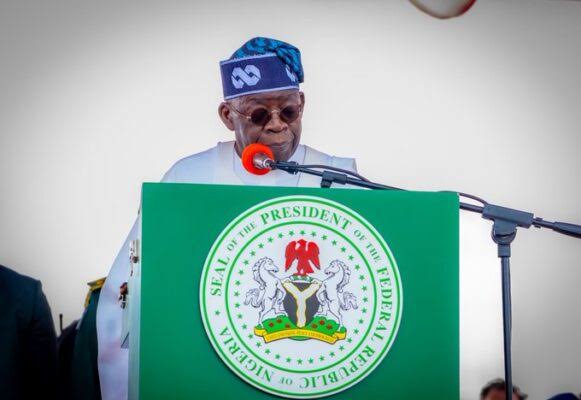
Abuja, June 12, 2026 — President Bola Ahmed Tinubu on Friday declared that Nigeria’s ongoing economic reforms have stabilised the economy and positioned the country for a new phase of sustained growth, citing improved public revenues, renewed investor confidence, and expansion across key sectors.
In his Democracy Day address, the President said the administration’s policy direction since 2023 had shifted Nigeria “from uncertainty to stability,” arguing that the foundation for stronger economic performance had now been established.
He noted that increased federation revenues have strengthened the capacity of state and local governments to fund infrastructure, education, healthcare, and security, describing the improvement as evidence that the reforms are beginning to deliver measurable fiscal gains
According to the President, investor sentiment has also improved significantly, with renewed interest in agriculture, energy, manufacturing, mining, transportation, technology, and the creative industries. He said this reflected growing confidence in Nigeria’s macroeconomic direction and reform agenda.
Tinubu further pointed to expansion in domestic refining capacity as a key milestone in the country’s push for energy security and reduced dependence on imported petroleum products.
While acknowledging ongoing economic hardship faced by citizens, the President maintained that the reform programme was necessary to correct long-standing structural weaknesses in public finances and restore macroeconomic balance.
He said the next phase of government policy would focus on accelerating growth and ensuring that the benefits of reforms are more widely felt across households and communities, adding that “democracy must be felt in the pocket.”
Tinubu also referenced improvements in non-oil exports, agricultural output initiatives, and SME certification for export markets as indicators of economic diversification efforts gaining traction.
However, economic analysts continue to debate the impact of the reforms on inflation, cost of living, and household purchasing power, even as government officials maintain that stabilisation measures are beginning to yield results.
The President concluded that Nigeria was now transitioning from a phase of stabilisation into one of accelerated economic expansion, urging citizens to remain patient as reforms mature into long-term gains.