


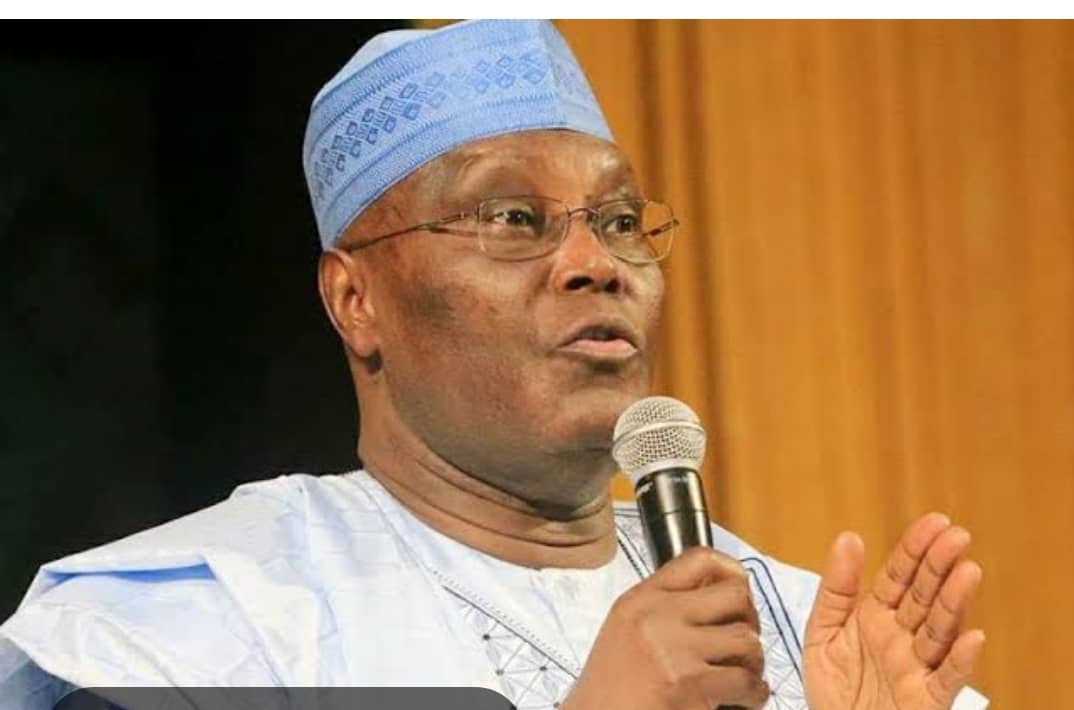
Former Vice President and African Democratic Congress (ADC) presidential candidate, Atiku Abubakar, has said his proposed intervention in the petroleum sector is not a plan to return Nigeria to the era of fuel import subsidy, but a targeted measure to reduce production, transportation and living costs.
Atiku’s position was contained in a statement issued in Abuja on Tuesday by his Senior Special Assistant on Public Communication, Phrank Shaibu, following comments attributed to another spokesperson, Paul Ibe, suggesting that an Atiku administration would restore fuel subsidy before eventually removing it.
Shaibu described the comments as an “unauthorised, imprecise and materially misleading characterisation” of Atiku’s position.
He stressed that policy positions should come directly from the candidate and that spokespersons were only expected to communicate such positions accurately.
“For the avoidance of doubt, policy belongs to the candidate, not the spokesperson. Our responsibility as communicators is to explain Atiku’s position accurately, not create formulations capable of confusing Nigerians or handing opponents convenient talking points,” he said.
According to Shaibu, Atiku has never proposed a return to the old fuel import subsidy regime followed by its removal on a predetermined date.
“That is not his policy and should not be attributed to him,” he stated.
Instead, he said Atiku was proposing a targeted, capped and transparently budgeted intervention that would be independently audited and focused on supporting domestic refining and petroleum production.
The objective, he explained, would be to reduce the cost burden on consumers while improving the efficiency and competitiveness of the petroleum sector.
Shaibu said the intervention would not operate indefinitely, stressing that its continuation would depend on measurable economic conditions rather than an arbitrary withdrawal date.
He explained that government support would gradually become unnecessary as domestic refining capacity increased, petroleum supply stabilised, competition improved and the market became capable of delivering affordable prices without sustained intervention.
“You do not remove scaffolding because the calendar says so. You remove it when the building can stand securely on its own,” he said.
The Atiku camp also urged Nigerians to focus less on the terminology surrounding the policy and more on the need to reduce the rising cost of living.
“The real question is simple: Why has everything become so expensive, and what will Atiku do to make life affordable again?” Shaibu asked.
He accused the administration of President Bola Tinubu of shifting the burden of its economic reforms onto Nigerian households.
According to him, an Atiku administration would instead prioritise measures aimed at reducing production and transportation costs, strengthening domestic refining capacity and restoring the purchasing power of Nigerians.
“The choice is not removal of subsidy versus restoration of subsidy. It is Expensive Nigeria versus Affordable Nigeria,” he declared.