
Wednesday, January 14, 2026
Home Blog Page 288

FCTA ARDS To Reactivate Activities At FCT Aquaculture Center To Empower Vulnerable Group

0

In an effort to empower more vulnerable groups in the nation’s capital,
the Federal Capital Territory Administration (FCTA) through its Agriculture and Rural Development Secretariat (ARDS) has restated the preparedness of the Secretariat to reinvigorate the FCT Aquaculture and Allied Trades Centre for women and youth towards.

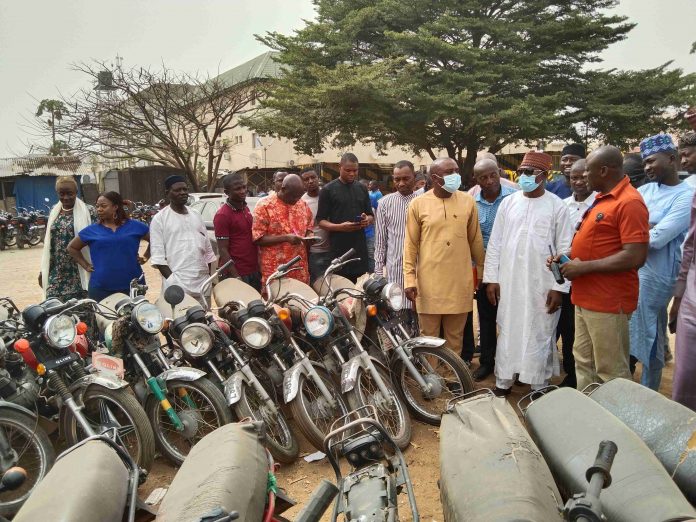
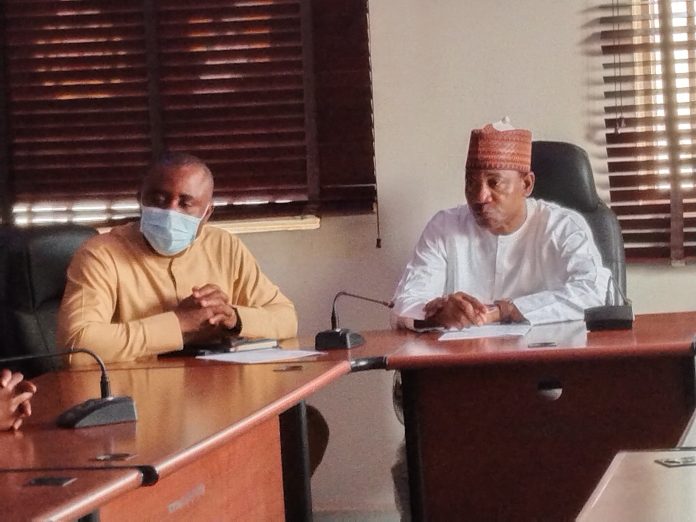
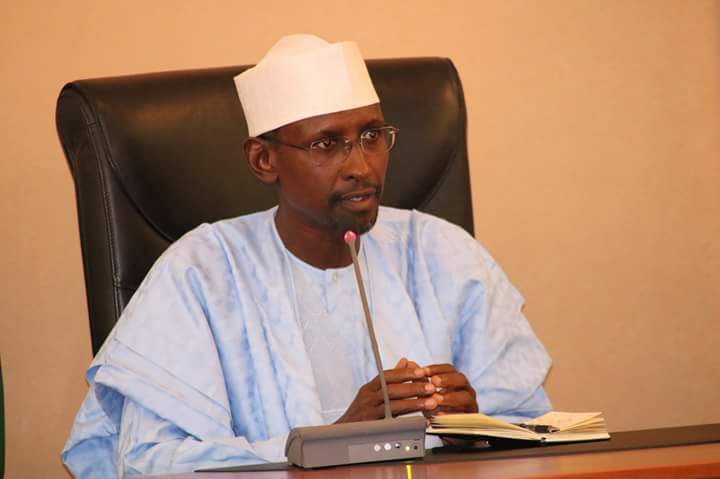
Making this revelation during a visit to the Center at Kuka Village in Kwali Area Council to assess the production activities at the Centre. the Mandate Secretary of the, Agriculture and Rural Development Secretariat (ARDS), Mallam Abubakar Ibrahim assured he will do everything possible to ensure that with the provisions that have been  made in the budget, facilities at the centre will be improved and expanded to accommodate more groups.

According to him in a statement made available to newsmen by Deputy Director Information, Zakari Aliyu stated that, the Centre which was Commissioned by the Minister of State, FCT Dr. Ramatu Tijjani Aliyu in 2020 was part of her grassroot developmental programmes aimed at providing opportunities for vulnerable groups particularly women and youths towards poverty alleviation as well as boosting fish production in the FCT.

He said, ” the vision the Honorable Minister of State Fct, Dr  has is to have a centre that will provide entreprenual skills on a regular basis to the less privileged  and the choice of Aquaculture is very strategic being one that is thriving in terms of demand.

We will ensure that this worthy vision is realised so we are going to put in the required funding to improve on the programmes at the centre”

The mandate Secretary directed the Department of Fisheries to Strenghten its monitoring mechanism to follow-up on the progress of the trainees to ensure that they are bsupported and properly guided on managing their businesses.

In her remarks, the Director of Fisheries in the Agriculture and Rural Development Secretariat Mrs Ifeoma Okeke commended the Secretary for displaying strong commitment towards repositioning the Agric Sector since his appointment.  This she noted has boosted the morale of staff who more encouraged to put in their best.

Okeke hinted that the pilot beneficiaries are all.doing well in thoer businesses and contributing their quota in enhancing nutrition fish production output in the FCT.

One of the beneficiaries Mama Safiya Nokoda who still maintains a pond at the centre, thanked the Honourable Minister of State for the laudable project which she stated has enabled her fend for her family with the proceeds from the fish business.

In another development the Secretary has reiterated the readiness of the Secretariat to work with Area Council Authorities towards improving meat handling and sanitary conditions in the various slaughter slabs in the 6 Area Councils.

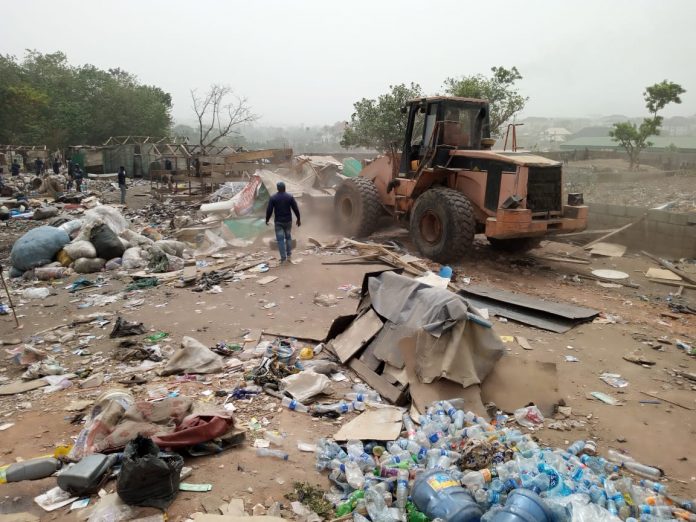
Abubakar who was at the kwali slaughter slabs commended the Charman for the ongoing rehabilitation works taking place at the slaughter slab which he advised should make provision for easy removal of waste.

“I recently held a meeting with the Chairmen of the Area Council and they assured us that they will improve on the conditions in the slaughter slabs and with what we have seen here today the chairman of Kwali has proven to be a man of his words” Abubakar said.

The Chairman Kwali Area Council Hon. Chiya Boboyi welcomed the collaboration with the Secretariat which he noted will help the Area Councils benefit from the expertise of the Secretariat towards improving the quality of services and hygienic conditions.

CBN MPC Retains Benchmark Interest Rate At 11.5%

0

The Monetary Policy Committee of the Central Bank Nigeria (CBN) has voted to retain the monetary policy rate (MPR), which measures interest rate, at 11.5 per cent.

The MPR is the baseline interest rate in an economy, every other interest rate used within an economy is built on the MPR.

Godwin Emefiele, governor of the apex bank, while addressing journalists on Tuesday after the committee’s first meeting for the year at the CBN headquarters in Abuja, said the committee members unanimously retained key rates.

He said the committee voted to maintain the key lending rate at 11.5 percent, with the asymmetric corridor of +100 and -700 basis points around the MPR, the Cash reserve ratio at 27.50%; and liquidity ratio at 30 percent.

The MPC observed that inflation in most developed and emerging economies remain high driven by the persistent exchange rate fluctuations and supply bottlenecks.

The committee hinted that the increase in the country’s inflation rate in December 2021 is attributable to increased demand during the yuletide and hence suggests that the uptick in the numbers could be a temporary development. The members also believe that inflation will moderate further going into the new year driven by the significant interventions in the agricultural sector.

The MPC highlighted that the Nigerian economy is expected to continue with a positive growth following the impressive growth recorded in the third quarter of 2021, reflecting continuous recovery from the recession.

The continuous retainment of the monetary policy rate at 11.5% is in furtherance of the apex bank’s effort to bolster Nigeria’s economic growth through the expansion of credit to the real sector and belief that despite the uptick in inflationary pressure, a hold policy will help to further boost the country’s economy while inflation is expected to moderate in the new year.

Malami Calls For Transparency Over Judiciary Spending

0

Attorney-General of the Federation and Minister of Justice, Abubakar Malami, SAN, has urged the judiciary to be more transparent in the utilization of budgetary allocation on its financial expenses.

He made the call on Tuesday at the Justice Sector Summit 2022 with the theme “Devising Practical Solutions Towards Improved Performance, Enhanced Accountability and Independence in the Justice Sector” held in Abuja.

He maintained that there was the need for the judiciary sector to “open its own book” the same way and manner the legislature and executive subject themselves for scrutiny.

The AGF therefore uurged the judiciary to live up to its responsibility and support initiative that will bring the desired result in administration of justice the country.

On the appointment of the Judges, Malami said, the extant Nigerian laws made the criteria for such appointment very clear.

He said to enhance the quality of the system, there has to be accommodation of merits for consideration as the basis for appointment as against certain standards.

Group Carpets Afenifere Over Stance On Tinubu Presidential Ambition

0

Ahead of the 2023 presidential , election an Islamic human rights organisation, the Muslim Rights Concern (MURIC), has descended on Yoruba socio-cultural group, Afenifere, over its alleged refusal to support the presidential ambition of All Progressives Congress(APC) National Leader, Asiwaju Bola Tinubu.

This was contained in a statement made available to newsmen on Tuesday by MURIC Director, Ishaq Akintola, in a reaction to earlier comment by Afenifere Leader, Chief Ayo Adebanjo on the ambition of Asiwaju Tinubu.

It would be recalled that Chief Adebanjo in a recent interview said his group won’t back any candidate for president in the 2023 general elections until the current 1999 constitution is changed to reflect true federalism and regional autonomy.

But MURIC said it was shocking that Afenifere has remained taciturn two weeks after Tinubu declared his intention to run for the presidency in 2023.

According to the statement, “Afenifere is making a great mistake by distancing itself from Tinubu simply because the latter supported President Muhammadu Buhari. Afenifere is playing parochial politics. There is no scintilla of doubt that regional politics is parochial politics. 

“It is myopic and unpatriotic, a visionary group will extend its horizon. That is what Tinubu has done and his nationalistic mien has earned him nationwide acceptance. You cannot remain locked up in your shell and expect the whole country to embrace you. Afenifere should wise up.

“Afenifere has one or two lessons to learn from the Igbo. Unlike Afenifere’s cold attitude towards the only Yoruba man who has shown interest in the presidency (at least publicly), the Igbo socio-cultural group, the Ohanaeze, has pledged to support two Igbo men (Anyim Pius Anyim and Dave Umahi) who have expressed interest in the presidency with 10 billion naira. That is the spirit.

“We call on Afenifere to sharpen its political instinct. An adage says one good turn deserves another. The Yoruba socio-cultural group should neither reject its best candidate nor remain neutral at a time others are embracing their own,” the statement read in part.

Fuel Subsidy: Lawan Meets Security Agencies, Task Them to Stop Petroleum Smuggling

0

The President of the Sente, Ahmad Lawan yesterday met with heads of security and paramilitary agencies tasking them to do more to checkmate smuggling of petroleum products out of Nigeria.

He advocated for the use of drones and other technologies to checkmate smuggling.

Lawan, in his opening remarks, said that the meeting was a follow up to the Monday meeting with Finance and Petroleum Ministers, which was to find a way forward on the administration and Management of fuel subsidy in Nigeria

The Senate President told his guests: “We are all aware that some of the products particularly the PMS is smuggled out and yet we paid subsidy on what is smuggled out.

“So this meeting is to look into the ways and means of controlling the smuggling of the petroleum products with a view to minimising the cost of fuel subsidy to our country.

“I know individually, these organisations have been carrying out their responsibilities on this but I think that we are coming into a special moment. Our situation is such that we cannot afford anymore to allow this smuggling business to continue because the cost is very huge and debilitating to our people.

“At a point I will hold a meeting with the National Security Adviser, who is supposed to coordinate the entire security apparatus for protecting our borders.”

Lawan added that he will also hold some engagement with the military especially the Navy because a lot of products are shipped out to other countries through the water ways.

He said: “At the end of the day what we hope to achieve is to minimise or where possible eliminate the incidents of smuggling of petroleum products that we import into the country for our people.

“The figures of what we consume in the country continue to fluctuate. At one point it was almost 100 million litres per day and surely this is difficult to believe that we consume almost 100 million litres per day within our borders. Certainly, a good percentage of it goes out.

“This will be the first engagement but certainly this is not the last. We need to look at the strategy, maybe how we undertake our activities at the borders, the different agencies, the inter-agency cooperation that is so essential between the agencies. The application of technology in surveillance and who should host that technology.

“I believe there is a need for deployment of drones and other technologies that are available these days and probably the office of the National Security Adviser should be able to be in charge of that and make the information and data available to all the agencies that need them.

“I believe at one point, we will need the participation of the NCC being the major Institution in our country in charge of the enhancement of technology, the ICT particularly.”

He, however, assured the security agencies that this is going to be a special partnership between the National Assembly and the executive arm of government because today’s situation demands that things are taken differently.

He said: “Our Committees in the Senate that supervise the Customs, the security agencies, will be up to date with their oversight. We need to see in the next six months, what different strategies will bring to us.

“We want to see also our citizens participating in the surveillance. We have to mobilise our citizens especially those at the borders. That when they see trucks conveying petroleum products to our neibouring countries, they should not only say something, they should say it to those who need to know. And that is to our security agencies.

“So we need to mobilise our citizens as well because this is something that affect all of us. Not about government. And anyway, government is about the people.

“What we are trying to do is to reduce the level of snuggling of petroleum products out of Nigeria and that will translate into reducing the bill that we pay as petroleum subsidy.”

Responding, the Comptroller General of the Nigerian Customs Service, Col. Hameed Ali said his agency had been doing a lot in trying to ensure that the smuggling of petroleum products out of Nigeria was minimised to the bearest level.

He however complained of porous borders and absence of governance at the border communities which made their job difficult.

“Let me say here generally speaking, that we have a porous border. You also know we do not have all those equipments you have made mention of in ensuring the surveillance of our borders.

“And one more critical thing is that, within our border communities, there is no presence of governance. Our border communities completely lack presence of governance.

“Therefore, those of us who are shouldered with the responsibility of ensuring that we gate keep, we find it difficult because the ordinary man in Some border does not see reason why he should be compliant, does not see reason why he should work with the security in Nigeria to protect the border.

“This is simply because there is no presence of governance. In some areas, this border community cross to other country to get basic amenities,” Ali said.

In attendance at the meeting were the Comptroller General of Nigerian Customs Service, Col. Hameed Ali (rtd), Commandant General, Nigerian Civil Defence Corps, Ahmed Abubakar Audi, representative of the Director General of the State Security Service, San Gesto and representative of the Comptroller General of Nigerian Correctional Service, Haliru Ishaka Abdulmumini

Boko Haram : Courts To Resume Sitting, AGF

0

Attorney General of the Federation and Minister of Justice Abubakar Malami SAN, said machineries are in motion to ensure the continuation of courts sitting in Kainji, New Bussa for prosecution of Boko Haram cases.

He made this known while receiving the Nigerian Ambassador to the Kingdom of the Netherland, Dr. Eniola Ajayi.

He commended the Ambassador for her tireless efforts and patriotism recalling that Nigeria has cooperated fully with the court through submission of relevant documents which eventually led to its exoneration.

“With due diligence to Nigeria’s mandate under Article 86 of the Rome Statute of ICC, Nigeria cooperated fully with the court through submission of relevant documents, reports of panels of enquiry etc.”

He noted that a committee has already been established for the domestication of Rome Statute in Nigeria.

Speaking earlier, the Ambassador expressed willingness to continue her patriotic service in the interest of the nation.

She promised to rededicate efforts to make positive impact in the discharge of her duties.

Senate Moves To Protect Witnesses In Corruption Cases

0

The Senate has moved to protect witnesses who testify in anti-graft trials.

The move followed a bill titled “Witness Protection and Management Framework,” scaled second reading at the Upper Chamber of the National Assembly.

If passed and signed into law, the bill would be an incentive that encourages witnesses to testify in corruption cases since their protection is guaranteed under the law.

Speaking on the legislation, the President of the Senate, Ahmad Lawan, said that the war against corruption by the President Muhammadu Buhari-led government must be won irrespective of temporary setbacks.

He said that the fight against corruption is one that must be vigorously pursued by government to ensure the eventual elimination of graft, given that same is capable of hindering Nigeria’s development.

According to him, “almost every administration in this country would work against corruption that has bedeviled the development of this country.

“The witness protection bill that we are debating today is a way forward to encourage witnesses to testify against corruption. And by protecting them properly, that will incentivise such witnesses.

“The war against corruption is a must, and it must be won. It is not about the quantum of funds or resources that we have, but how we are able to put to use even our scarce resources.

“So, this is a very important bill, and I’m sure all of us would lend our support.”

In his remarks, the Sponsor of the bill, Suleiman Abdu Kwari, explained that the bill was first read on February 23, 2021.

The lawmaker pointed out that also listed among the bill are items contained in the recent Executive Communication from President Muhammadu Buhari, which was read on the floor of the Senate on the 19th of January 2022.

These teams he added are of interest and international significance.

“Empirical evidence show that one of the major causes of the inability to successfully prosecute criminal cases in our courts is the lack of witnesses.

“Many of them face intimidation and threats just as prosecutors most times do not have the funds and management framework to safely bring witnesses to testify in court.

“The passage of this bill into law will fill this gap as well as fulfill some of our Country’s international commitments to various conventions and protocols, like the United Nations Convention Against Corruption (UNCAC) amongst others”, Senator Kwari said.

He however, recalled that the Witness Protection and Management Bill and Whistle Blower Bill were initially considered as co-joined in a single bill by the 8th National Assembly and passed in 2017.

He added that following a technical stakeholders roundtable comprising of representatives of relevant criminal justice system operators, it was resolved that both bills be unbundled in order to allow Law Enforcement Agencies (LEAS) currently running witness protection programs continue in that wise.

“This necessitates the separation of the two bills and accordingly paves the way for witness protection programmes across the broad spectrum of Law Enforcement Agencies, thereby discouraging duplicity and multiplicity of agencies”, he said.

The legislation further provides for customs and excise management, any legislation dealing with proceeds of crimes, confiscation and forfeiture of assets, and to all justice sector institutions and authorities, including the courts, law enforcement as well as security agencies, and other relevant regulatory institutions towards the protection of witnesses in the course of the investigation, detection and prosecution of offences.

The bill after consideration was referred by the Senate President, Ahmad Lawan, to the Committees on Judiciary, Human Rights and Legal Matters; and Anti-Corruption and Financial Crimes.

The Joint Committee is expected to report back in four weeks.

Meanwhile, a bill seeking to establish the Federal Polytechnic Shagamu also scaled second reading in the Senate.

The bill sponsored by Senator Olalekan Mustapha (Ogun East) was referred by the Senate President after consideration to the Committee on Tertiary Institutions and TETFUND for further inputs.

The Committee was also given four weeks to report back to the chamber in plenary.

Multi-Country African Research Reports High Rates of COVID-19-Related Deaths Among Hospitalized Children, Adolescents In Nigeria

0


According to a recently published study involving researchers from the Institute of Human Virology Nigeria (IHVN), and Ahmadu Bello University, Zaria, Nigeria, African children and adolescents hospitalized with COVID-19 experience high mortality rates.

The study, titled “Assessment of Clinical Outcomes Among Children and Adolescents Hospitalized with COVID-19 in 6 Sub-Saharan African Countries,” was conducted by a collaboration under AFREhealth (the African Forum for Research and Education in Health), a consortium of cross-disciplinary health personnel across Africa.

The AFREhealth study collected data from 25 health facilities across Nigeria, Ghana, Democratic Republic of the Congo, Kenya, South Africa, and Uganda. The study included 469 African children and adolescents aged 3 months to 19 years hospitalized with COVID-19 between March and December 2020, and reported a high overall mortality rate of 8.3%, compared with 1% or less reported from Europe and North America. Furthermore, African children less than a year old and with pre-existing non-communicable diseases were more likely to have poorer outcomes, including intensive care requirement, and death.

Eighteen participants had suspected or confirmed multisystem inflammatory syndrome, and 4 of these children died.

IHVN Senior Technical Advisor for Paediatric and Adolescent HIV Dr. Nadia Sam-Agudu, who is also an Associate Professor of Paediatrics at the University of Maryland School of Medicine, is a co-first author of the publication and led the West Africa team.

According to Dr. Sam-Agudu, “This study provides important information about COVID-19 among African children that was not previously available at this scale.  We now have evidence from multiple countries to show that African children also experience severe COVID-19, they experience multisystem inflammatory syndrome, some require intensive care, and some also die, and at much higher rates than outside Africa.”


She urged Nigerian authorities to act upon study findings “to protect children; including the expansion of vaccine approvals and procurements to include children, as variants emerging since our study’s completion have either caused more severe disease and/or more cases overall. We cannot leave children behind in the pandemic response.”

According to IHVN Chief Executive Officer Dr. Patrick Dakum, “This data from Dr. Sam-Agudu and AFREhealth collaborators puts science from Nigeria and the rest of Africa squarely on the map for pandemic-responsive research, particularly for young populations. We will continually work towards contributing to research discoveries in Nigeria, West Africa and beyond,” he said.

Executive Director of the IHVN International Research Center of Excellence Prof. Alash’le Abimiku also noted that, “The high impact pediatric COVID-19 findings of the collaborative research underscores the value of sustained investments in strong research institutions, collaborations and leadership in Nigeria and across Africa.  We can generate rigorous local data to guide local, regional and international health policy and practice,” she said. 

The Director-General of the Nigeria Centre for Disease Control Dr. Ifedayo Adetifa remarked: “The AFREhealth study findings show that COVID-19 affects children and can cause severe consequences.

Thus, we seriously need to factor children into age-disaggregated COVID-19 disease surveillance and reporting, and consider COVID-19 illness when they present to the hospital.

Furthermore, the high in-hospital mortality rate reported indicates a need for investments in critical care for children in African settings. We need more of such rigorous multicenter studies to inform evidence-based policy-making in Nigeria and other African countries.”


The research was published in the international JAMA Pediatrics journal, the highest-ranked paediatric journal in the world. Prof. Umar Lawal of the College of Medicine, Ahmadu Bello University Zaria led the Nigeria team for the study, which was led overall by Principal Investigator Prof. Jean Nachega of the University of Pittsburgh USA and Stellenbosch University, South Africa.
Reference: Nachega JB, Sam-Agudu NA, Machekano RN, et al. Assessment of Clinical Outcomes Among Children and Adolescents Hospitalized with COVID-19 in 6 Sub-Saharan African Countries. JAMA Pediatr. Published online January 19, 2022. doi:10.1001/jamapediatrics.2021.6436. https://jamanetwork.com/journals/jamapediatrics/fullarticle/2788373

Senate Passes, Re-Amend Electoral Bill To Define Mode Of Primaries

0

The upper chamber of the National Assembly has passed the electoral act to include direct, indirect primaries and how political parties would produce consensus candidate.

The passage, which clearly define the mode of primaries for political parties, followed the re-amended for a second time, the Electoral Act Amendment Bill, 2022.

The re-amendment was sequel to a motion on “rescission on clause 84 of the Electoral Act No. 26 2010 (Amendment) Bill, 2022 and Committal to the Committee of the Whole.”

The motion was sponsored by the Senate Leader, Yahaya Abdullahi (Kebbi North).

The amended bill provides in clause 84 (2) that, “The procedure for the nomination of candidates by political parties for the various elective positions shall be by direct, indirect primaries or Consensus.”

It added in 84(3) that “a political party shall not impose nomination qualification or disqualification criteria, measures, or conditions on any aspirant or candidate for any election in its constitution, guidelines, or rules for nomination of candidates for elections, except as prescribed under sections 65, 66, 106, 107, 131, 137, 177 and 187 of the Constitution of the Federal Republic of Nigeria, 1999 (as amended).”

On Direct Primaries in 84 (4), the amended version provides that, “A political party that adopts the direct primaries procedure shall ensure that all aspirants are given equal opportunity of being voted for by members of the party and shall adopt the procedure outlined below:

“(a) In the case of Presidential Primaries, all registered members of the party shall vote for aspirants of their choice at a designated centre at each ward of the Federation.

“(b) The procedure in paragraph (a) above of this subsection shall be adopted for direct primaries in respect of Gubernatorial, Senatorial, Federal and State Constituencies.

“(c) Special Conventions or Congresses shall be held to ratify the candidate with the highest number of votes at designated centres at the National, State, Senatorial, Federal and State Constituencies, as the case may be.”

On Indirect Primaries, the bill provides under 84(5) that, “A political party that adopts the system of indirect primaries for the choice of its candidate shall adopt the procedure outlined below:

“(a) In the case of nominations to the position of Presidential candidate, the political party shall – (i) hold a Special Presidential Convention at a designated centre in the Federal Capital Territory or any other place within the Federation that is agreed to by the National Executive Committee of the party where delegates shall vote for aspirants of their choice.

“(ii) the aspirant with the highest number of votes cast at the end of voting shall be declared the winner of the Presidential primaries of the political party and that aspirant’s name shall be forwarded to the Commission as the candidate of the party.”

It further provides under 84(7) that, “Where there is only one aspirant or a consensus candidate in a political party for any of the elective positions mentioned in subsection (5)(a), (b), (c) and (d), the party shall convene a special convention or congress at a designated Centre on a specified date for the confirmation of such aspirant and the name of the aspirant shall be forwarded to the Independent National Electoral Commission as the candidate of the party.”

The Electoral Bill provides in 84(8) that, “A political party that adopts the system of indirect primaries for the choice of its candidate shall clearly outline in its constitution and rule the procedure for the democratic election of delegates to vote at the convention, congress meeting.”

On Consensus Candidate the bill in 84(9)(a) provides, “A political party that adopts a consensus candidate shall secure the written consent of all cleared aspirants for the position, indicating their voluntary withdrawal from the race and their endorsement of the consensus candidate.”

It goes further in paragraph (b) that, “Where a political party is unable to secure the written consent of all cleared aspirants for the purpose of a consensus candidate, it shall revert to the choice of direct or indirect primaries for the nomination of candidates for the aforesaid elective positions.”

The bill states in paragraph (c) that, “A Special Convention or nomination Congress shall be held to ratify the choice of consensus candidates at designated centres at the National, State, Senatorial, Federal and State Constituencies, as the case may be.”

In his remarks after the amendment to the electoral bill by the Committee of the Whole, the President of the Senate, Ahmad Lawan said the re-amendment was done to harmonize its position with that of the House of Representatives.

He added that amendment accommodate clearly define provisions for the mode of primaries.

Lawan, however, expressed optimism that the bill would be signed into law when transmitted by the National Assembly to the President for his assent.

He also warned that political parties that fail or refuse to abide with the provisions on the mode of primaries, would miss out on the opportunity to participate during elections.

According to him, “On the mode of conducting primaries by parties to produce candidates, we have concluded our task on the amendment to the Electoral Act No. 6 2010 Bill.

“You would recalled that the Senate and the House passed the Electoral Act amendment Bill with slight difference.

“While the House passed the mode of primaries to be direct and indirect only, the Senate passed the mode of primaries to be direct, indirect and consensus.

“What we have done is to give very clear and sufficient definition to each mode of primaries.

“The direct primaries is well define on how it will be conducted; ditto the Indirect primaries. And for the consensus, the two chambers have produced in this Bill, very clear definition of how a consensus candidate would emerge.

“Therefore, we are very glad that we have been able to achieve this consensus between the two chambers to arrive at this harmonized version, and we are also very optimistic that Mr. President will sign the bill.

“Our desire is to ensure that we reform the electoral processes in Nigeria for better transparency, accountability and Integrity to the satisfaction of Nigerians and the international community.

“Political parties, when this is signed into law, will have the responsibility of ensuring that they follow the law, otherwise they will end up missing the opportunity to participate in elections.”

Reps Charges FG To Increase Funding For Innovation, Technology In Tertiary Institutions In Nigeria

0

House of Representatives has charged the Federal Government to adequately fund Institutions involved in research in the production of electric and solar cars in the country.

They also urged the National Automotive Design and Development Council (NADDC) to design a workable
plan on how to produce electric cars in commercial quantities in Nigeria, using homegrown human capital.

They also mandated the Committees on Tertiary Education and Services, Land Transport, Environment and Science and Technology to engage stakeholders to design a 10–Year Action Plan to improve the research capabilities of Nigeria’s tertiary institutions with the intent to improve the automobile industry.

These resolutions were reached following the adoption of a motion moved by Hon. Babajimi Benson, wherein he noted that the Faculty of Engineering, University of Nigeria, Nsukka (UNN) recently unveiled its first five–seater electric car, Christened “Lion Ozumba 551.”

They also hinted that, “the car, which is said to be part of the drive to accord innovation and technology attention in
the institution was made with 80 per cent locally–sourced materials and can cover a 30–kilometer distance
when fully charged.”

“in 2014, an undergraduate of the Faculty of Engineering, Obafemi Awolowo University, Segun Oyeyiola converted a Volkswagen Beetle into the wind and solar–powered car.”

“…given the wanton environmental pollution and renewed campaign for a greener source of energy and transportation, any vehicle that is environmentally friendly and doesn’t emit toxic gasses should
be encouraged.”

He said tertiary institutions are essential for the discovery, proper dissemination and application of knowledge and countries that prioritize research “are usually more equipped to deal with new challenges and technological advances.”

The lawmaker appreciates the tenacity of tertiary institutions in Nigeria and “high flying students who have, against all odds, continued to push the limits to ensure Nigeria competes favourably with other developed economies.”

Saying, “research is essential to economic and sustainable development and if tertiary institutions in the
country are adequately funded, it could result in an industrial revolution for the country.”