


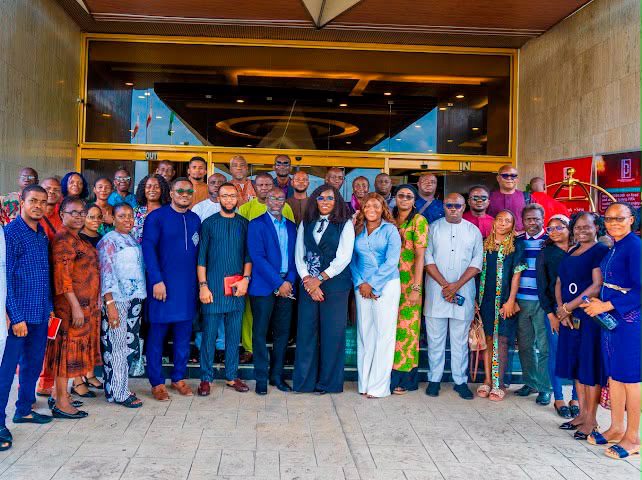
Port Harcourt, Nigeria — The Decade of Gas Secretariat, in partnership with the Presidential Initiative on Compressed Natural Gas and Electric Vehicles (Pi-CNG & EV), has trained journalists in Rivers State to deepen understanding of Nigeria’s energy transition and gas development agenda.
The media capacity-building workshop, held in Port Harcourt, brought together 30 journalists from print, broadcast, and digital platforms to strengthen reporting on the role of natural gas in economic growth, energy security, and industrialisation.
Speaking at the event, Mr. Taofeek Balogun of the Decade of Gas Secretariat said the workshop is part of a nationwide engagement series that began in 2025, with previous editions held in Lagos and Abuja.
“The initiative is designed to equip journalists with the knowledge required to effectively communicate developments in Nigeria’s gas sector and support public understanding of the country’s transition to a gas-powered economy,” Balogun said.
He disclosed that Nigeria’s gas sector has recorded significant progress, with production reaching 7.85 billion standard cubic feet per day, while domestic utilisation has exceeded 2 bcfd. He added that gas exports have risen to their highest level in five years, driven by increased demand across power, industrial, transportation, and residential sectors.
Balogun also highlighted the completion of the Obiafu-Obrikom-Oben (OB3) River Niger Crossing project as a major milestone expected to boost gas transmission, strengthen energy security, and attract investments.
On clean energy access, he reaffirmed the Federal Government’s plan to distribute cooking gas cylinders to five million households by 2030.
“Implementation will begin at the state level, with Bayelsa State set to benefit first in July 2026, where 27,000 households are expected to receive cylinders this year,” he said.
Also speaking, the Chief Operating Officer of Pi-CNG & EV, Mr. Tosin Coker, said the government is scaling up the adoption of compressed natural gas and electric vehicles to provide cleaner and more affordable transportation.
“Over 100,000 vehicles have been converted to CNG nationwide, reflecting growing acceptance of alternative fuels,” Coker said, adding that government agencies are being encouraged to convert fleets and adopt CNG-powered vehicles.
Participants commended the workshop for enhancing their capacity to report accurately on the energy sector and increasing public awareness of Nigeria’s transition agenda.
The organisers reaffirmed their commitment to sustained stakeholder engagement as Nigeria advances towards a gas-powered economy.