


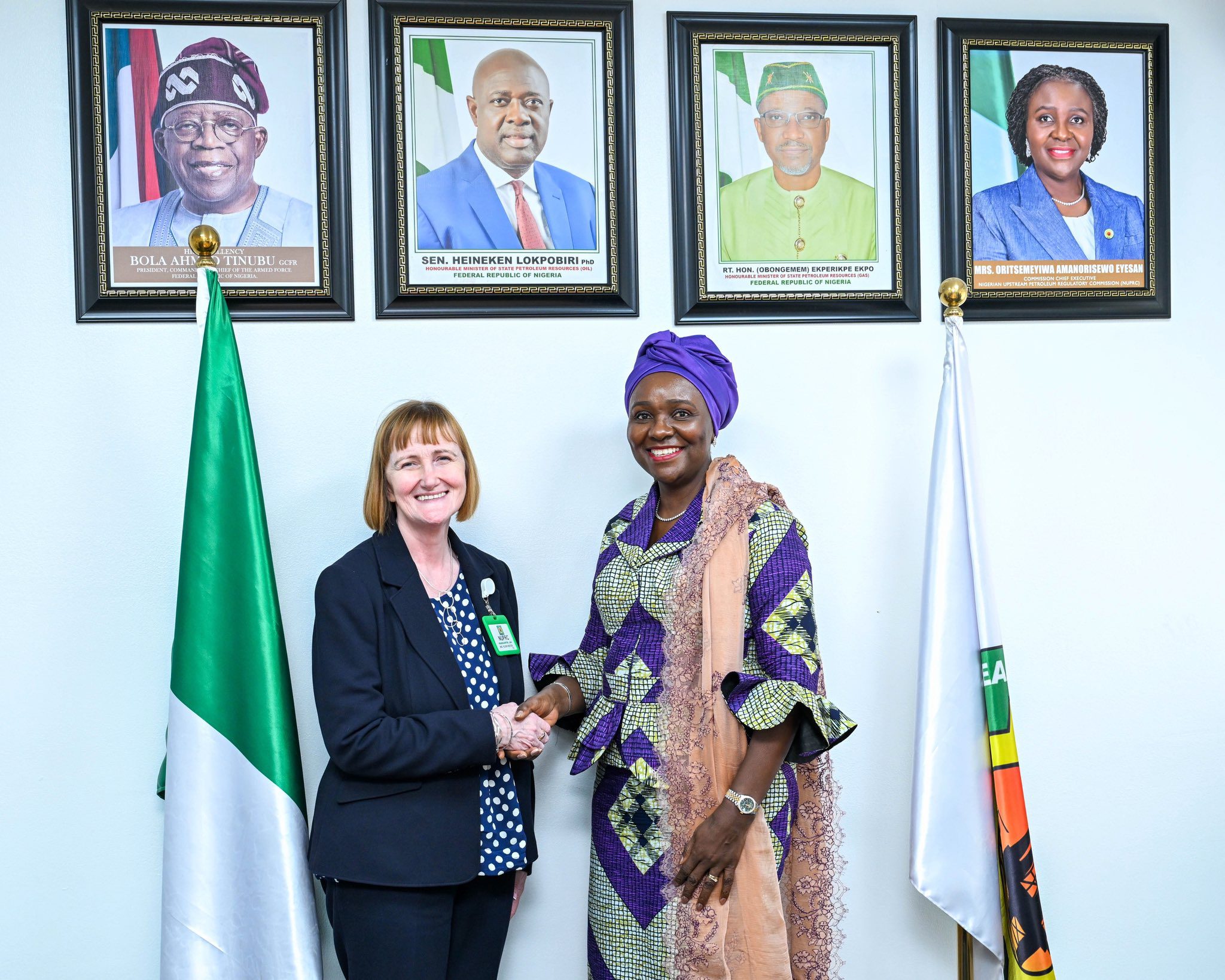
Abuja, Nigeria — The Nigerian Upstream Petroleum Regulatory Commission (NUPRC) has warned that Nigeria must urgently address the growing skills gap in its upstream oil and gas sector to sustain renewed exploration and investment, with Commission Chief Executive Mrs. Oritsemeyiwa Eyesan calling for deliberate human capacity development.
Eyesan said the shortage of skilled professionals—particularly geologists—was largely driven by reduced exploration activities in previous years, which limited technical opportunities and weakened workforce depth across the industry.
“We must deliberately build a workforce that is fit for purpose and capable of meeting the technical demands of the evolving industry,” she said.
She spoke when representatives of Robert Gordon University, Aberdeen, visited the NUPRC headquarters in Abuja to explore collaboration on capacity development, research, and industry partnerships.
Exploration Recovery Raises Demand for Skills
The NUPRC boss noted that exploration activities are beginning to rebound following the implementation of the Petroleum Industry Act (PIA) and investor-friendly reforms introduced by the administration of President Bola Tinubu.


According to her, renewed investment interest in Nigeria’s oil and gas sector presents opportunities for technology transfer and infrastructure development, but warned that human capacity remains the most critical challenge.
“Alongside these investments comes the opportunity for technology transfer and infrastructure development. However, the major challenge remains human capacity development,” Eyesan said.
She added that the industry has experienced a decline in technical depth in key areas, stressing that immediate action is needed to rebuild expertise.
Key Drivers of Sector Growth
Eyesan identified human capital, financial capital, and technology as three essential pillars required to sustain growth and competitiveness in Nigeria’s upstream petroleum sector.
She also highlighted the need to bridge the gap between academia and industry, warning that poor collaboration could slow progress.
“If industry, academia, regulators, and technology providers work together constructively, we will accelerate progress significantly. Without deliberate collaboration, we risk slowing development and shortchanging the system,” she said.
Global Partnerships to Strengthen Capacity
In her remarks, Donella Beaton, Vice Principal (Partnerships) at Robert Gordon University, said the institution is keen to strengthen higher education partnerships in Africa, particularly in Nigeria.
She noted that collaboration would focus on knowledge exchange, research development, and capacity building to support innovation and industry growth.
Beaton also highlighted the university’s Energy Transition Institute, which coordinates work in sustainability, energy innovation, and transition planning, adding that the goal is to deliver practical, industry-focused initiatives with real technical value.
The development was disclosed in a statement signed by Eniola Akinkuotu, Head of Corporate Communications and Media at the NUPRC.
.