


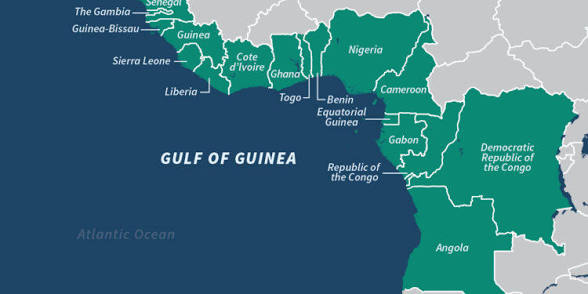
Nigeria has called for a shared regional maritime surveillance network and predictable funding for joint security operations to combat piracy, kidnapping for ransom and other maritime crimes across the Gulf of Guinea.
The Permanent Secretary of the Ministry of Foreign Affairs, Ambassador Dunoma Umar Ahmed, made the proposals while presenting Nigeria’s position at a United Nations Security Council (UNSC) high-level open debate on October 29, 2026, at the UN Headquarters in New York.
The debate, themed “Emerging Technologies and Maritime Security: Implications for Peace and Security”, examined how technological advances could help address growing threats to maritime safety and international security.
Ahmed warned that organised criminal networks were increasingly exploiting emerging technologies, including satellite communications, to facilitate piracy, kidnapping for ransom and other maritime offences.
However, he said governments could also deploy similar technologies to improve maritime surveillance and strengthen responses to criminal activities.
“While organised criminal networks increasingly exploit technologies, including satellite communications, for piracy, kidnapping for ransom, and other maritime crimes, the effective deployment of similar technologies by States has contributed significantly to strengthening surveillance and reducing these crimes,” he said.
Nigeria highlights Deep Blue Project
Highlighting Nigeria’s efforts to improve maritime security, Ahmed cited the Deep Blue Project, which combines unmanned aerial vehicles, maritime domain awareness systems and an advanced central command and control centre.
He said the initiative had strengthened surveillance and response capabilities in the country’s maritime environment while supporting efforts to combat maritime crimes.
The Nigerian representative also emphasised the importance of legal frameworks in ensuring that maritime offenders are prosecuted.
He specifically referenced Nigeria’s Suppression of Piracy and Other Maritime Offences Act, 2019, which provides a legal framework for addressing piracy and related maritime offences.
Ahmed, however, maintained that technological advances alone would not guarantee maritime security without effective information-sharing, regional cooperation and sustained capacity-building.
Nigeria proposes shared Gulf of Guinea surveillance network
As part of efforts to strengthen regional cooperation, Ahmed called for the development of a shared maritime surveillance network that would enable countries in the Gulf of Guinea to exchange information and coordinate responses to security threats.
He urged the UN Security Council, the International Maritime Organisation (IMO) and other international partners to build on Security Council Resolution 2634 (2022) by supporting appropriate technology deployment and capacity-building through the Yaoundé Architecture.
According to him, national surveillance systems should be integrated into an interoperable regional maritime picture, with regional ownership and appropriate human oversight.
He also called for equitable access to maritime security technologies for developing coastal countries, stressing that innovation should not deepen existing inequalities.
“Technological innovation should narrow rather than widen existing capacity gaps,” Ahmed said.
Nigeria seeks predictable funding for joint operations
The Nigerian representative identified sustainable financing as another critical requirement for effective maritime security cooperation.
He advocated predictable and sustainable funding for regional maritime operations, drawing on the framework established under UN Security Council Resolution 2719 (2023).
The resolution provides a framework for adequate, sustainable and predictable financing for African Union-led peace support operations.
Ahmed urged the Security Council to align its financing framework with plans for the operationalisation of the Combined Maritime Task Force for the Gulf of Guinea.
The proposed task force, which is recommended to be headquartered in Nigeria, was endorsed by the African Union Peace and Security Council in April 2025.
Its operationalisation is expected to strengthen regional coordination and support joint responses to maritime security threats.
Nigeria reaffirms commitment to regional cooperation
Concluding his address, Ahmed reaffirmed Nigeria’s commitment to working with Gulf of Guinea countries, Regional Economic Communities, the African Union and the United Nations Security Council to improve collective maritime security.
He stressed the importance of coordinated regional and international action to ensure that emerging technologies become instruments of collective security.
The proposals come amid continuing efforts by countries in the Gulf of Guinea to strengthen maritime cooperation and protect seafarers, coastal communities and international shipping from criminal activities.
SEO DETAILS
Primary Keyword: Gulf of Guinea maritime security
News Angle: Nigeria proposes regional surveillance network and predictable funding to tackle piracy and maritime crimes.
Meta Description (160 characters): Nigeria seeks a shared Gulf of Guinea maritime surveillance network and predictable funding to strengthen joint operations against piracy and kidnapping.
URL Slug: nigeria-seeks-gulf-of-guinea-maritime-security-network
Tags/Keywords: Gulf of Guinea maritime security, Nigeria maritime security, Dunoma Umar Ahmed, piracy in Gulf of Guinea, maritime surveillance, Deep Blue Project, United Nations Security Council, UNSC Resolution 2634, UNSC Resolution 2719, Combined Maritime Task Force, Yaoundé Architecture, maritime crime, kidnapping for ransom, International Maritime Organisation, Nigeria foreign policy.