


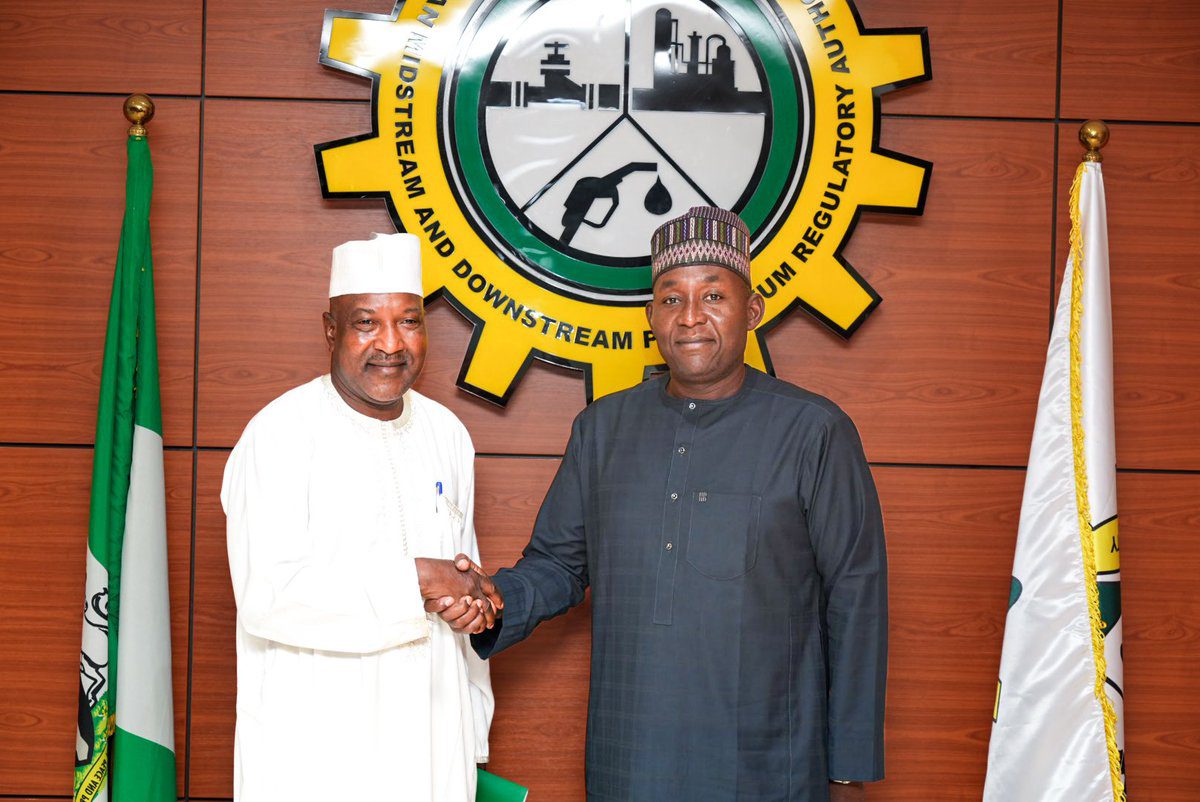
ABUJA — The Nigerian Midstream and Downstream Petroleum Regulatory Authority (NMDPRA) and the Nigeria Extractive Industries Transparency Initiative (NEITI) have agreed to strengthen collaboration on data transparency, accountability and regulatory reforms in the oil and gas sector.
The agreement was reached on Wednesday during a meeting in Abuja where a NEITI delegation, led by its Executive Secretary, Alhaji Musa Sarkin Adar, met with the Authority Chief Executive, Mallam Rabiu Abdullahi Umar.
Umar said NMDPRA is implementing key reforms aimed at improving regulatory efficiency and strengthening data integrity across the midstream and downstream petroleum value chain.
He said the Authority is deploying digital systems under initiatives such as Project NEXUS, focused on improving implementation of the Petroleum Industry Act (PIA), and Project 365, designed to automate regulatory processes and service delivery.

According to him, accurate and reliable data remains central to effective regulation, policy formulation and sector oversight.
The Authority said it is expanding the use of technology for product tracking and operational monitoring across the petroleum supply chain.
Umar reaffirmed NMDPRA’s commitment to working with NEITI to improve transparency and accountability in the sector.
The NEITI Executive Secretary requested enhanced cooperation from NMDPRA in providing data for upcoming industry reports, including information on refinery operations and beneficial ownership in the midstream and downstream sectors.
He also invited the Authority to participate in NEITI’s exhibition at the 2026 Extractive Industries Transparency Initiative global conference scheduled for October 8–9 in Brussels, Belgium.
Officials of NMDPRA, including the Executive Director of Hydrocarbon Processing Plants, Installations and Transportation Infrastructure, Francis Ogaree, and the Executive Director of Economic Regulation and Strategic Planning, Zainab Gobir, said the Authority would support NEITI’s data and transparency initiatives.
Both organisations said the collaboration is aimed at strengthening governance, improving data quality and supporting reforms in the petroleum sector.