


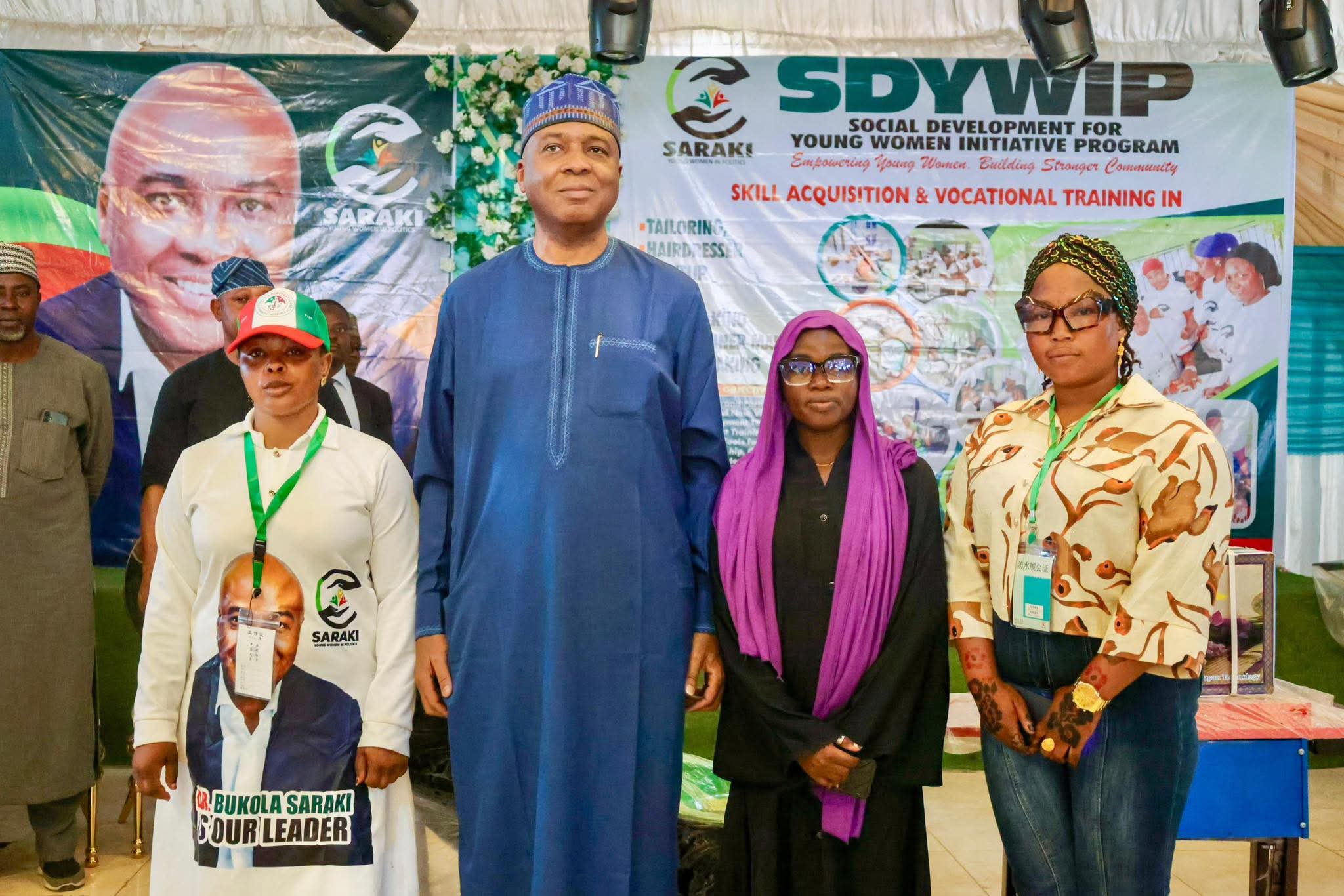
Former Senate President, Dr. Abubakar Bukola Saraki, has urged young women to embrace education, vocational training and active participation in leadership and politics, saying these remain key pathways to personal growth and national development.
Saraki gave the advice in Ilorin during a Young Women Symposium organised by Saraki Young Women in Politics, where hundreds of participants also received empowerment materials and work tools to support their businesses and vocational pursuits.
The former Senate President told the gathering of young women aged between 18 and 25 that they must prepare themselves for future leadership roles by acquiring knowledge, learning skills and contributing meaningfully to society.
According to him, education, vocational training and civic engagement are powerful tools that can help young people, especially women, build successful careers and make positive impacts in their communities.
Saraki expressed delight that many of the participants were already registered voters, describing it as a sign of growing political awareness and readiness to participate in the democratic process.
“I am happy that many of you are not just here by mouth, but are already registered voters, ready to play your part in the democratic process,” he said.
Reflecting on his tenure as governor of Kwara State, Saraki said deliberate investments were made in education, healthcare, sports, aviation and empowerment programmes to create opportunities for young people.
He stressed that sustainable development can only be achieved when women and youths are adequately equipped with the skills and opportunities needed to succeed.
As part of the programme, hundreds of participants received empowerment materials and vocational tools tailored to their various trades following a needs assessment conducted by the organisers.
Saraki commended the organisers, led by the State Coordinator of Saraki Young Women in Politics, Barr. Monsurat Peace Omotoso, for providing practical support and opportunities for young women.
He assured beneficiaries that empowerment initiatives targeted at women and youths would continue, noting that the programme was part of a broader commitment to helping young women become self-reliant, productive citizens and future leaders.
The event featured mentorship sessions, leadership discussions and the distribution of empowerment materials aimed at promoting skills acquisition, self-reliance and greater participation of women in public life.