



A large-scale fake degree operation uncovered in India has raised global concerns about education fraud, professional licensing, and cross-border verification gaps, after police seized nearly 100,000 forged certificates and estimated that up to one million may be in circulation.
The investigation, led by Kerala Police, revealed a structured interstate network producing and distributing counterfeit academic qualifications linked to at least 22 universities across India. The scam reportedly targeted high-demand professions including medicine, nursing, engineering, and other technical fields where credentials are critical to public safety.
Authorities said the operation involved 11 arrests across Kerala, Tamil Nadu, and Karnataka, including the alleged mastermind, Dhaneesh, also known as Dany, a repeat offender previously jailed in 2013 for similar offences. Investigators say the network operated for years before being dismantled in phases between late 2025 and early 2026.
How the fake degree network operated
Police findings indicate a highly organised supply chain rather than isolated forgery. Documents were reportedly printed in industrial hubs in Tamil Nadu, including Pollachi and Sivakasi, areas known for large-scale printing operations.
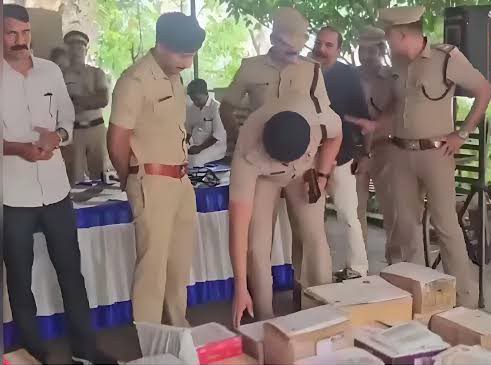
The materials were then routed through Bengaluru for distribution across multiple Indian states, including Kerala, Tamil Nadu, Karnataka, Andhra Pradesh, Maharashtra, Goa, Delhi and West Bengal.
Investigators recovered printing equipment, computers, forged university seals, holograms and fabricated signatures used to replicate official academic documents.
Each fake certificate was reportedly sold for between ₹75,000 and ₹1.5 lakh ($900–$1,800), depending on the qualification level and field of study.
Scale and global impact
Police estimate the syndicate may have supplied more than one million fake certificates over several years. While not all are confirmed to have been used, authorities believe many were deployed to secure employment in both public and private sectors.
Some individuals allegedly used the documents for passport processing, overseas job applications, and work visas, particularly targeting labour markets in the Middle East, United Kingdom, Europe, and Australia.
The case has therefore moved beyond domestic crime concerns, raising questions about global labour verification systems and credential screening processes.
Why this case matters globally
The scandal highlights a persistent vulnerability in international labour mobility: the reliance on paper-based or inconsistently verified academic credentials.
While some countries, particularly in regulated professions like medicine, require additional licensing exams and credential verification, others rely heavily on submitted documents during initial hiring stages.
Experts note that sectors such as healthcare, elder care, and engineering are especially sensitive, as unqualified professionals in these roles can pose serious risks to public safety.
Political and regulatory reactions
The case has triggered international discussion, including in Australia, where concerns were raised about the entry of foreign workers with questionable qualifications into care-related sectors.
In response, attention has shifted toward strengthening cross-border verification systems, digitising academic records, and improving coordination between universities, regulators, and immigration authorities.
Within India, the scandal has intensified calls for tighter oversight of degree issuance and authentication, particularly in professional courses where licensing is mandatory.
The wider pattern of education fraud
This case is part of a broader global issue involving counterfeit academic credentials, diploma mills, and document forgery networks that exploit gaps in verification systems.
Similar schemes have been reported in different regions, often involving:
forged university certificates
fake professional licenses
altered transcripts and seals
third-party “agents” facilitating job placement using falsified documents
Ongoing investigations
Authorities continue to trace the wider network, including possible links to recruitment agents and intermediaries who may have helped circulate the forged credentials.
Officials say the full scale of the scam may take time to determine, given the volume of documents and the duration of the operation.