


Nigeria’s electricity metering rate has increased to 58.57 per cent in February 2026, up from 57.93 per cent recorded in January, according to the latest Metering Status Factsheet released by the Nigerian Electricity Regulatory Commission (NERC).
The report indicates a gradual but steady improvement in efforts to bridge the country’s metering gap, a critical issue in the power sector linked to estimated billing and consumer dissatisfaction.
Data from the Commission shows that total active electricity customers rose to 12,307,314 in February, with 7,208,174 metered, compared to 12,232,130 customers and 7,086,376 metered users in January.
Within the review period, a total of 121,798 new customers were metered in February, slightly higher than the 119,792 recorded in January, reflecting ongoing metering interventions across distribution networks.
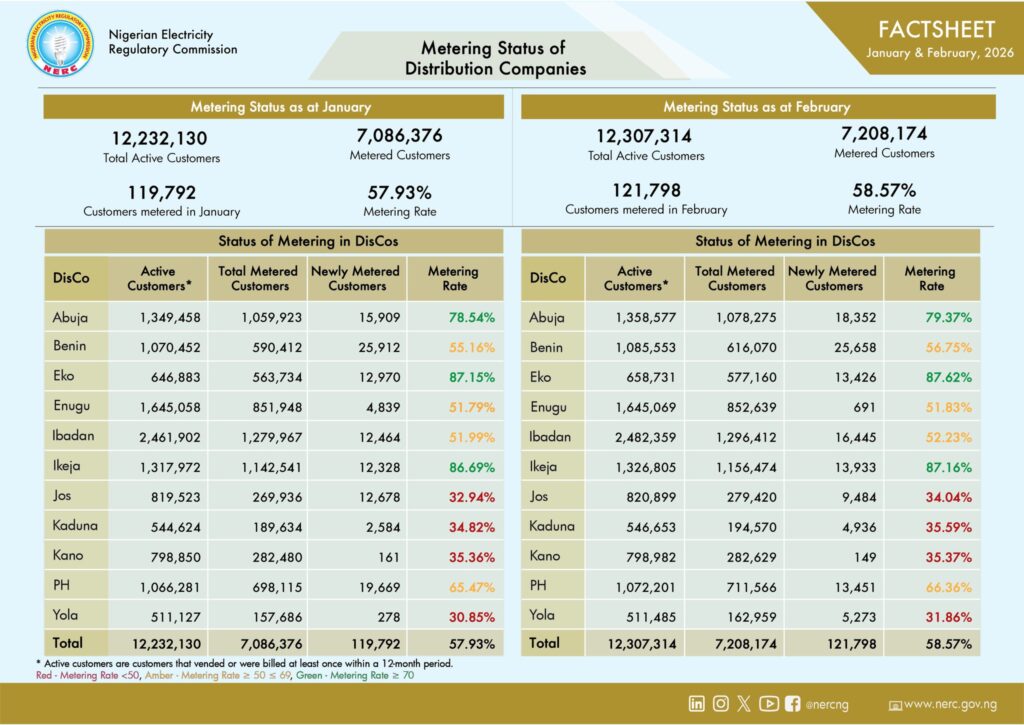
The factsheet further highlights disparities among the 11 electricity distribution companies (DisCos), with Eko, Ikeja and Abuja DisCos maintaining leading positions, each recording metering rates above 78 per cent.
In contrast, Jos and Kaduna DisCos lagged behind, with metering coverage remaining below 36 per cent, underscoring persistent regional imbalances in service delivery.
Industry analysts note that while the marginal increase signals progress, the pace of metering expansion remains insufficient to close the wide gap in the short term.
They stress the need for sustained regulatory enforcement, improved financing frameworks and stronger collaboration between government and private sector players to accelerate meter deployment nationwide.
The NERC has repeatedly maintained that expanding metering coverage is essential to improving transparency, eliminating estimated billing and strengthening consumer confidence in Nigeria’s electricity market.
The Commission also reaffirmed its commitment to ensuring compliance with metering targets as part of broader reforms aimed at enhancing efficiency and accountability in the power sector.